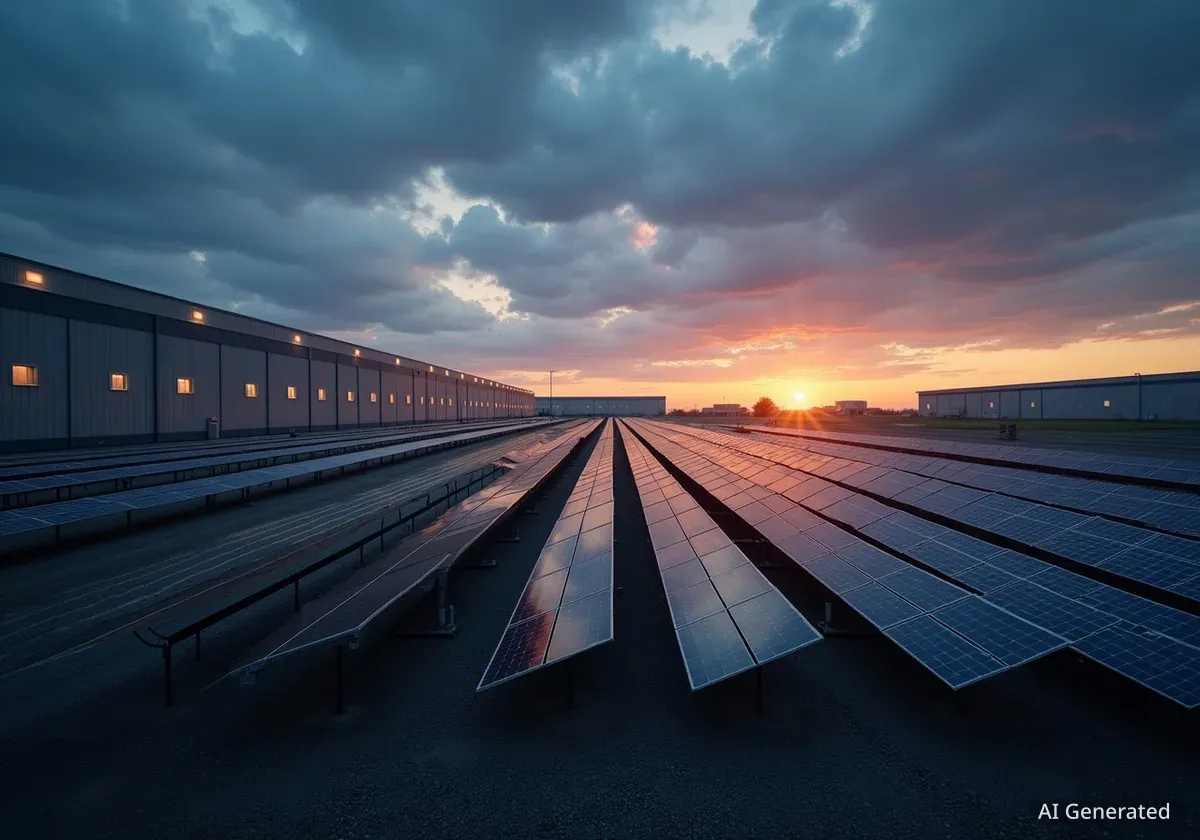





Google has announced a multi-billion-dollar investment to build a new data center campus in West Memphis, Arkansas. The project, one of the largest capital investments in the state's history, is designed to support the company's growing artificial intelligence operations and is expected to create hundreds of permanent jobs.
Key Takeaways
- Google is investing billions to construct a large-scale data center campus in West Memphis, Arkansas.
- The project will create thousands of construction jobs and several hundred permanent operational roles.
- A partnership with Entergy Arkansas will develop new solar and battery storage resources to power the campus.
- Recent Arkansas legislation, including the IMPACT initiative, helped attract the investment by streamlining permitting processes.
A Strategic Investment for AI Advancement
Google's decision to establish a major data center in Arkansas is a direct response to the increasing energy and infrastructure demands of artificial intelligence. The new campus will occupy a site of over 1,000 acres in West Memphis, housing data facilities, a dedicated substation, and operational offices.
Company executives have identified energy infrastructure as a critical component for the future of AI development. This investment reflects a broader strategy to scale up data processing capabilities while ensuring access to reliable and cost-effective power solutions.
The Role of Data Centers in AI
Modern artificial intelligence, particularly large language models and generative AI, requires immense computational power. Data centers provide the necessary servers, storage, and networking equipment. The energy consumption of these facilities is substantial, making power availability and cost key factors in site selection.
The West Memphis location will play a pivotal role in supporting Google's global AI services. The scale of the project underscores the company's long-term commitment to building the physical foundation required for next-generation technology.
Energy Partnership with Entergy Arkansas
A central element of the project is a collaboration between Google and Entergy Arkansas, the state's largest utility provider. Google will fund the development of new energy resources to meet the campus's significant power requirements, focusing on solar power and battery storage.
According to Ruth Porat, President and CIO of Alphabet and Google, the power needed to support AI presents both challenges and opportunities. This project is a clear move to address these challenges by integrating renewable energy solutions directly into its infrastructure planning.
This partnership aims to bring new, clean energy sources to the Arkansas grid. Laura Landreaux, CEO of Entergy Arkansas, highlighted the collaboration as a milestone, demonstrating how utilities can support large-scale industrial users while benefiting local communities.
The agreement ensures that the data center's energy needs are met without placing a strain on existing resources for other customers. This model of corporate-utility partnership is becoming increasingly important for the technology sector.
Legislative Support Creates Favorable Environment
Arkansas has actively worked to position itself as a competitive destination for major technology investments. Recent legislative measures were instrumental in securing the Google project.
The Arkansas IMPACT initiative, passed in 2025, significantly reduced the permitting timeline for large energy projects from over a year to just six months. This accelerated process is highly attractive to companies operating on rapid development schedules.
Key State Legislation
- Arkansas IMPACT Initiative: Streamlined permitting for large-scale projects.
- Generating Arkansas Jobs Act: Supported infrastructure spending to attract major employers.
- Act 548: Provided tax exemptions for equipment and software purchased for data centers.
These laws created a more predictable and financially viable environment for building large-scale infrastructure. State officials have emphasized their commitment to fostering innovation and diversifying the state's economy through such policies.
Economic Impact and Job Creation in the Delta
The economic benefits of Google's investment are expected to be substantial for West Memphis and the surrounding Delta region. The construction phase alone is projected to generate thousands of jobs, providing a significant short-term economic boost.
Once operational, the data center will employ several hundred people in permanent, high-tech roles. These positions will contribute to long-term economic stability and introduce new skill sets into the local workforce.
West Memphis Mayor Marco McClendon described the project as a turning point for the region, positioning the area as a key player in the deployment of digital infrastructure and AI capabilities.
The influx of investment and job opportunities is seen as a catalyst for further development. By attracting a global technology leader like Google, Arkansas aims to build a new economic pillar based on the digital economy, creating a ripple effect that could benefit other local businesses and services.