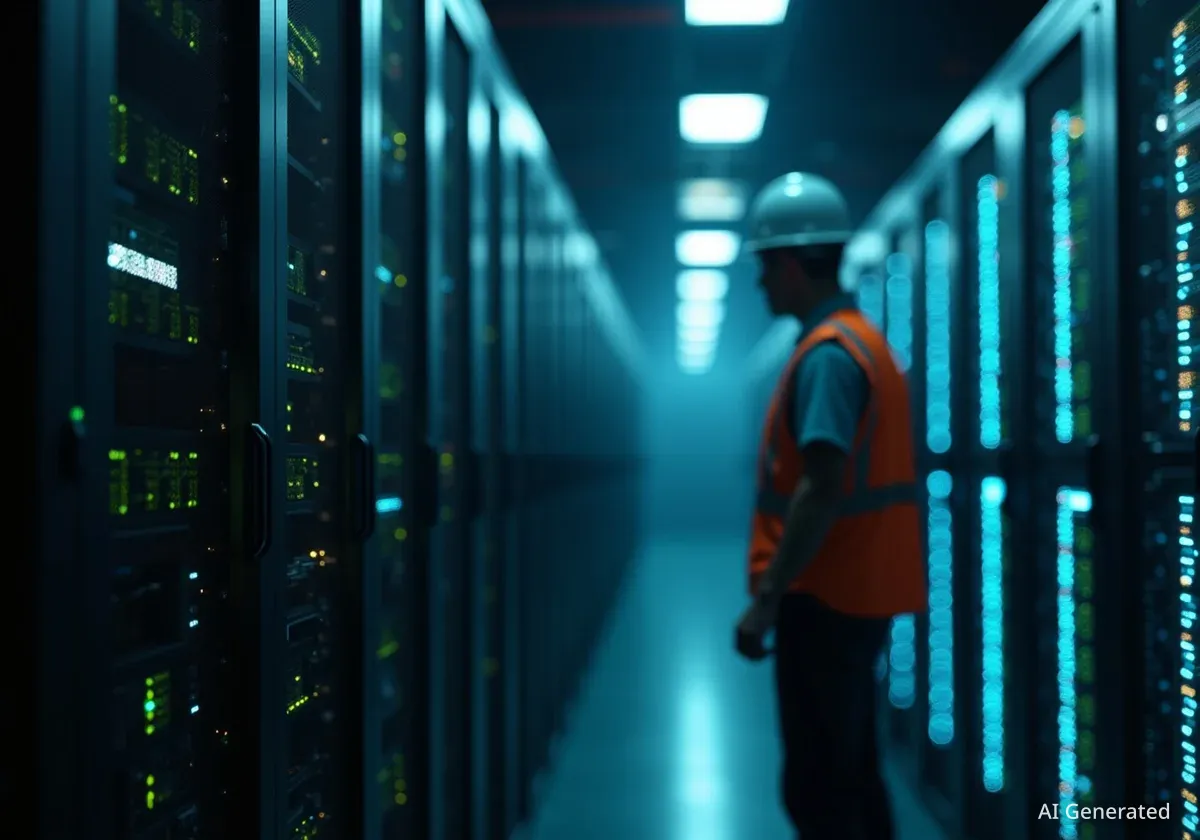




Residents in the Mid-Atlantic region, including Baltimore, are seeing a significant rise in their electricity bills. This increase is happening even as some consumers actively reduce their power usage. The primary cause appears to be the surging demand for electricity from the world's largest cluster of data centers, located in Northern Virginia, which are rapidly expanding due to the growth of artificial intelligence.
Utility customers in Maryland and Washington, D.C., are among the first to experience the financial impact of this data center boom. These higher costs are being spread across monthly bills, often tucked into general electricity supply charges, making them less obvious to the average consumer.
Key Takeaways
- Electricity bills are rising for residential customers in the Mid-Atlantic.
- Data centers, especially those supporting AI, are driving this increased demand.
- Costs are not just for current usage but also for future electricity generation and infrastructure.
- Consumer advocates are pushing for data centers to bear more of these costs.
Rising Bills Impact Households
Nike Carstarphen, a Baltimore resident, noticed her electricity rate jump by 20% from August to September. This happened despite her cutting usage by 40% in a milder month. Her power provider, Baltimore Gas and Electric (BGE), an Exelon-owned company, saw average prices increase by an additional $32 per month in September for its customers.
These rising costs are not explicitly listed as a "data center fee" on bills. Instead, they are integrated into the electricity supply charges, which typically reflect monthly energy consumption. This makes it difficult for consumers to identify the specific drivers of their increased expenses.
"Existing customers are taking hits now and will take much greater hits going forward," said Maryland People’s Counsel David Lapp, the state's leading official for consumer advocacy in utility matters.
Carstarphen, who uses AI for her work, believes that companies benefiting from AI should cover these increased electricity needs. She argues it is unfair to pass these costs onto all consumers, especially those who do not use AI.
Did You Know?
A 2024 report by the US Department of Energy estimated that data centers could consume between 6.7% and 12% of the nation’s electricity by 2028.
The Role of Data Centers and AI
Data centers have been essential for powering the internet for many years. However, the rapid expansion of artificial intelligence technology is projected to require an unprecedented amount of power. This demand necessitates not only more electricity but also costly upgrades to existing infrastructure to deliver it.
The Mid-Atlantic region is particularly affected because Northern Virginia hosts the world's largest concentration of these power-hungry facilities. The sheer scale of operations in this area is creating a significant strain on the regional power grid.
Future Demands and Infrastructure
The higher costs are not solely due to current energy consumption. They also stem from anticipated future needs. Maryland is one of 13 states, along with Washington D.C., that are part of PJM Interconnection. This nonprofit organization ensures that there is enough electricity to meet demand and moves it where it is needed across the region.
PJM's recent price auctions have shown dramatic increases. Prices jumped over 1,000% compared to two years prior in the most recent auction. This spike reflects the expected future demand from data centers and a simultaneous decline in regional generation capacity.
What is PJM Interconnection?
PJM Interconnection is one of 10 regional grid operators in the United States. It plays a crucial role in managing the flow of electricity, ensuring reliability, and conducting energy markets for a large portion of the Eastern U.S.
Jeffrey Shields, a PJM spokesperson, confirmed that regional data center growth is "substantially" contributing to higher prices due to a normal supply-and-demand imbalance. However, an independent watchdog group, Monitoring Analytics, stated that it would be "misleading" to call this a simple mismatch. Their report indicated that data centers alone inflated PJM’s latest power price auction by over $9.3 billion.
Who Should Pay?
The question of who should bear these rising costs is becoming a contentious issue. Big tech companies, including Microsoft and Google, state that they already cover their energy consumption and infrastructure costs. Microsoft's Vice President of Energy, Bobby Hollis, emphasized that the company pays for the electricity it consumes and its share of infrastructure expenses.
"Microsoft pays for the electricity we consume and for our share of infrastructure costs to generate and deliver that electricity to our sites," Bobby Hollis stated. He added, "This work helps ensure that our neighbors and the local community do not pay for our share."
However, a recent Harvard Law School paper found that Virginia and Maryland ratepayers are shouldering a large portion of the transmission infrastructure costs. This infrastructure is being built primarily to accommodate data center growth, not residential demand.
Costly Upgrades
In the last two years, PJM has proposed over $11 billion in transmission upgrades in the region. These upgrades are mainly to serve new data center load growth. With the rate of return, the total cost could reach around $40 billion, according to consumer advocate David Lapp.
Consumer advocates like David Lapp are pushing for reforms to ensure that data centers are fully responsible for all the costs they generate. Ohio has already taken steps in this direction by designating data centers as a new type of utility customer, requiring them to pay more for power and equipment.
The Broader Impact
The issue of rising electricity bills is not confined to the Mid-Atlantic. Other areas experiencing significant data center growth, such as Ohio and Georgia, are also seeing power bill spikes. This trend highlights a growing national concern about the economic impact of the digital economy on everyday consumers.
Maryland is already facing an "affordability crisis," according to Lapp, partly due to high gas bills. The state's electricity generation heavily relies on gas prices. Last winter, some Baltimore gas bills surged by hundreds, or even over a thousand, dollars due to cold weather and infrastructure costs.
Consumers like Nike Carstarphen are feeling the strain. She is exploring electrifying her home and adding rooftop solar to reduce her dependence on the grid and lower her costs. Despite her efforts to be more energy-efficient, she feels unrewarded as her bills continue to climb.
This situation contributes to a widespread sentiment among Americans that they are paying more for essential services like groceries, utilities, and taxes, yet receiving less value for their money. The ongoing debate about who should bear the costs of the data center boom will likely continue as energy demands for AI escalate.