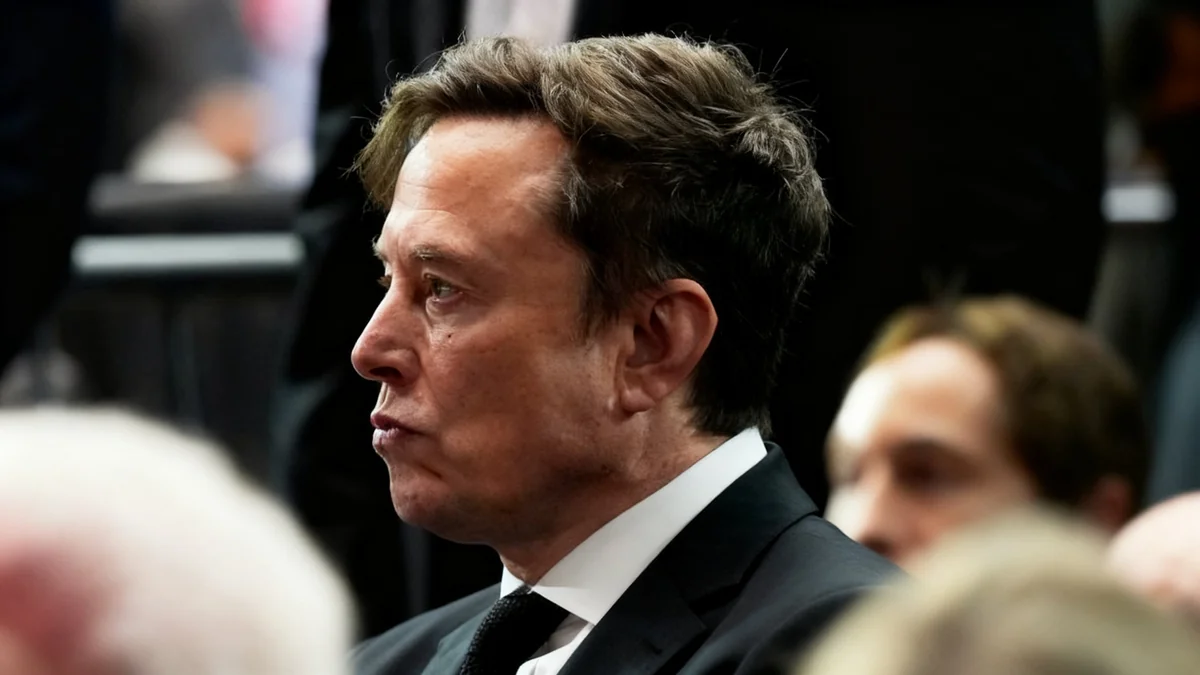


Elon Musk has stated that the immense energy demands of artificial intelligence will force the technology to move from Earth to space within the next 30 to 36 months. He argues that scaling AI infrastructure on our planet is becoming unsustainable due to power grid limitations.
During a recent appearance on the Dwarkesh Podcast, the technology entrepreneur outlined a future where AI systems are primarily powered by solar energy in orbit, a move he believes is not only necessary but also more cost-effective.
Key Takeaways
- Elon Musk forecasts that AI operations will be forced to relocate to space in 30 to 36 months.
- The primary driver for this shift is the massive and growing energy consumption of AI, which strains Earth's power grids.
- Musk proposes that space-based solar power is the most viable solution, claiming it is significantly cheaper and more scalable.
- He predicts that more AI will be launched and operated in space annually than the total cumulative amount on Earth.
A Ticking Clock for Terrestrial AI
Elon Musk has set a firm timeline for a fundamental shift in how artificial intelligence is powered and housed. His prediction is not a distant sci-fi concept but a near-term necessity driven by practical constraints.
"My prediction is that by far the cheapest place to put AI will be space in 36 months or less, maybe 30 months," Musk stated during the podcast interview. "Less than 36 months, mark my words."
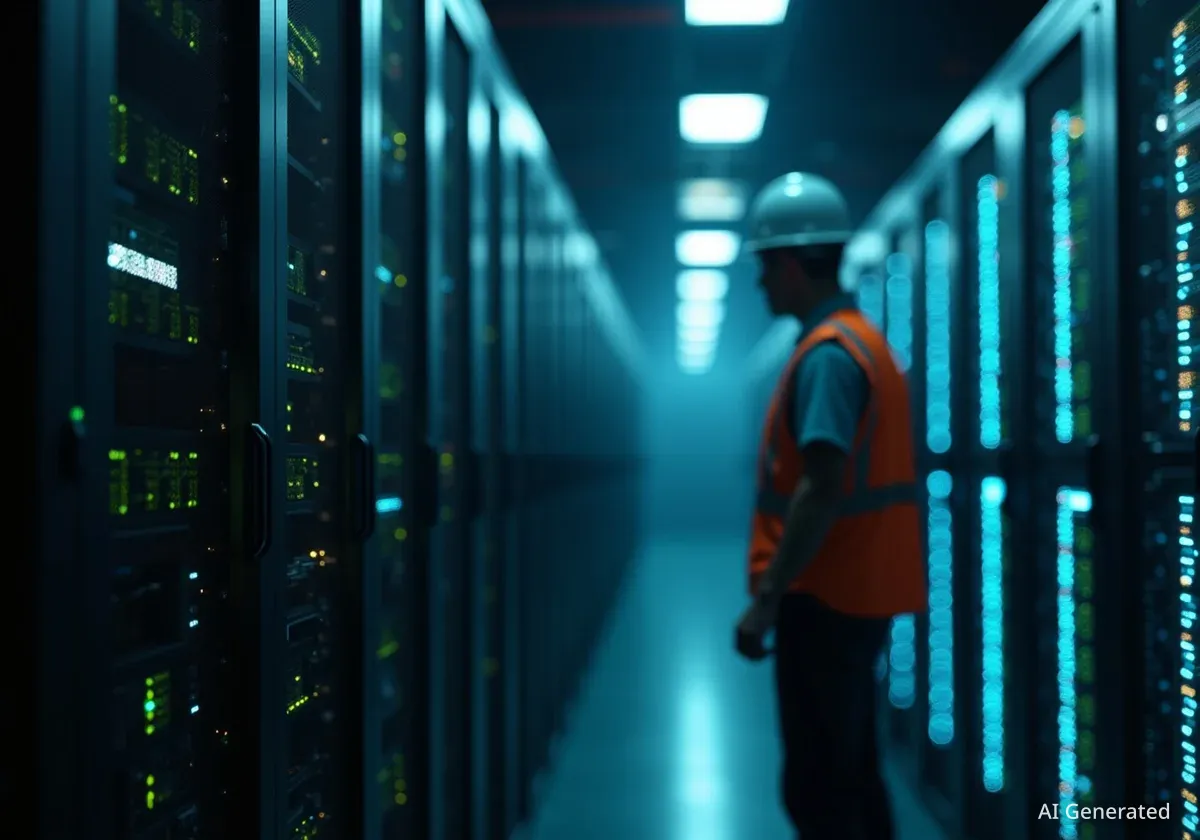
This assertion stems from the exponential growth of AI models, which require vast data centers and server farms to function. These facilities are incredibly power-hungry, creating a bottleneck for further development on a global scale.
The issue is not just about finding more energy, but the logistical challenge of generating and distributing it. Musk emphasized the difficulty of rapidly expanding our current infrastructure to meet this unprecedented demand.
The Unquenchable Thirst for Power
The core of Musk's argument is the sheer scale of energy that advanced AI requires. The current trajectory of AI development suggests that its power needs will soon outstrip what terrestrial grids can realistically supply.
Putting Energy Use in Perspective
To illustrate the magnitude of the problem, Musk pointed to the total energy consumption of the United States. He explained that the entire country runs on an average of about half a terawatt of power. The prospect of doubling this capacity just to support AI growth is a monumental engineering and logistical challenge.
"Imagine trying to build enough power plants to double that," Musk said. "People don’t realize how hard that actually is."
This energy strain is already being felt. Concerns are rising about the impact of large-scale data centers on local power grids and the environment. Beyond electricity, these centers also consume vast quantities of water for cooling, adding another layer of environmental pressure. The demand for hardware, such as specialized processors and RAM, is also surging, affecting global supply chains and prices.
Space: The Final Frontier for Data Centers
Musk's proposed solution is to move the hardware into orbit, where it can be powered directly by the sun. This approach, he claims, bypasses many of the limitations faced on Earth.
"Solar cells are already very cheap, around 25 to 30 cents a watt in China," he explained. "Put them in space and it’s effectively 10 times cheaper because you don’t need batteries."
The Advantage of Orbital Solar
In space, solar panels can receive uninterrupted sunlight, 24 hours a day, without atmospheric interference. On Earth, solar power is intermittent due to nighttime, clouds, and weather. This means terrestrial solar farms require large, expensive battery systems to store energy for continuous operation, a costly component that space-based systems would not need.
This vision aligns with the capabilities of Musk's other ventures, particularly SpaceX, which is developing reusable rockets capable of launching heavy payloads into orbit at a decreasing cost. A network of orbital AI data centers could potentially be serviced and expanded using this launch infrastructure.
A New Scale of Operation
The ambition behind this idea is vast. Musk doesn't see this as a niche solution but as the primary future for large-scale AI. He believes the transition will happen quickly and decisively once it begins.
"We will be launching and operating more AI in space every year than the cumulative total on Earth," he confidently predicted.
This suggests a future where Earth-based AI might handle smaller, localized tasks, while the most powerful and energy-intensive models operate from orbit. This shift would fundamentally change the infrastructure of the digital world.
Musk concluded his point by framing it as an inevitable step in energy harvesting. "You start thinking in terms of what percentage of the Sun’s power you’re harnessing. Then you realize you have to go to space. You can’t scale very much on Earth."
The conversation around AI has often focused on software, ethics, and societal impact. Musk's comments forcefully pivot the discussion to the physical world of hardware, energy, and planetary limits, suggesting the next great leap for artificial intelligence may not be on this planet at all.