




The rapid expansion of artificial intelligence is projected to generate as much carbon dioxide in 2025 as the entire city of New York, according to new research. The study also reveals that AI's water consumption has already surpassed the total global demand for bottled water, raising significant questions about the technology's hidden environmental costs.
Key Takeaways
- A new study estimates the AI industry's 2025 carbon footprint could reach 80 million tonnes of CO2, comparable to New York City's annual emissions.
- AI's water usage is estimated at 765 billion litres, exceeding the global demand for bottled water.
- The findings highlight a lack of transparency from major tech companies regarding the true environmental impact of their AI systems.
- Experts are calling for stricter reporting requirements as the construction of energy-intensive datacentres accelerates worldwide.
A Growing Environmental Footprint
As tools like ChatGPT and Google Gemini become integrated into daily life, their underlying infrastructure is placing an unprecedented strain on global resources. A study published in the academic journal Patterns provides one of the first detailed estimates specifically for AI's impact, separate from the broader datacentre industry.
The research, conducted by Dutch academic Alex de Vries-Gao of Digiconomist, projects that AI systems could be responsible for up to 80 million tonnes of CO2 emissions in 2025. This figure is not only equivalent to the carbon output of New York City but also represents more than 8% of the entire global aviation industry's emissions.
What is a Datacentre?
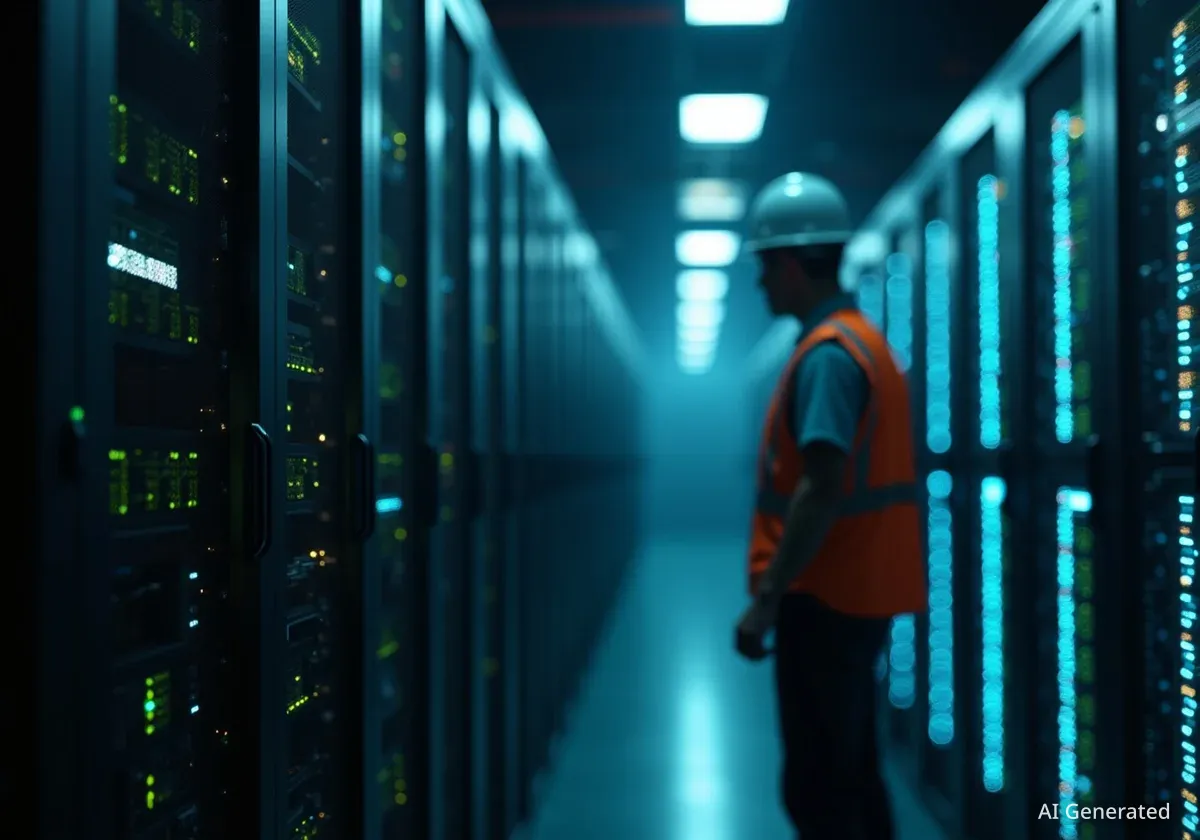
Datacentres are secure buildings that house thousands of computer servers and data storage systems. They are the physical backbone of the internet and cloud computing. Training and running large AI models require immense computational power, which is provided by vast networks of servers in these energy-intensive facilities.
De Vries-Gao argues that the public is shouldering the environmental burden while tech companies profit from the technology's rapid adoption.
"The environmental cost of this is pretty huge in absolute terms," said de Vries-Gao. "At the moment society is paying for these costs, not the tech companies. The question is: is that fair?"
The Unseen Demand for Water
Beyond carbon emissions, the study uncovers AI's staggering thirst for water. The systems require vast amounts of water for cooling the powerful processors running in datacentres. The research estimates AI's annual water consumption could reach 765 billion litres.
This figure is more than a third higher than previous estimates for the water usage of all datacentres combined and surpasses the world's total consumption of bottled water. This massive demand puts additional pressure on local water supplies, particularly in regions already facing water stress where many datacentres are located.
The issue is compounded by what researchers describe as insufficient reporting. De Vries-Gao noted that when Google recently reported on the impact of its Gemini AI model, it failed to account for the water used to generate the electricity powering its systems—a significant omission that hides the full scope of its water footprint.
Global Surge in Energy Consumption
The AI boom is fueling a global datacentre construction frenzy. The International Energy Agency (IEA) has warned that electricity consumption from datacentres is on track to more than double by 2030. The agency compared the power draw of AI-focused datacentres to that of energy-hungry aluminum smelters.
Global Power Distribution
According to the IEA, the United States currently accounts for the largest share of datacentre electricity consumption at 45%, followed by China (25%) and Europe (15%).
This surge in demand is creating new challenges for energy grids and climate goals. In the United Kingdom, a single large datacentre planned for a former power station site is projected to emit over 180,000 tonnes of CO2 annually, the equivalent of more than 24,000 homes.
In developing nations, the problem can be even more acute. India is investing $30 billion in new datacentres, but concerns are growing that an unreliable national power grid will force these facilities to rely on massive diesel generator farms for backup power. A recent KPMG report called this a potential "massive ... carbon liability."
Calls for Greater Accountability
Advocacy groups argue that the new data is just the beginning of understanding AI's true cost. They are urging governments to implement stricter regulations requiring tech companies to be more transparent about their environmental impact.
"This is yet more evidence that the public is footing the environmental bill for some of the richest companies on Earth," said Donald Campbell, director of advocacy at Foxglove, a UK non-profit. "Worse, it is likely just the tip of the iceberg. The datacentre construction frenzy, driven by generative AI, is only getting started."
While some companies are making strides in procuring clean energy, the pace of AI development is outstripping the deployment of renewable sources. Google reported a 12% reduction in energy emissions from its datacentres in 2024 but also acknowledged that achieving its long-term climate goals has become "more complex and challenging."
As the AI industry continues its exponential growth, the debate over who should pay for its environmental consequences is set to intensify. Without greater transparency and regulation, experts warn the hidden costs of our digital assistants and AI-powered services will continue to mount.