


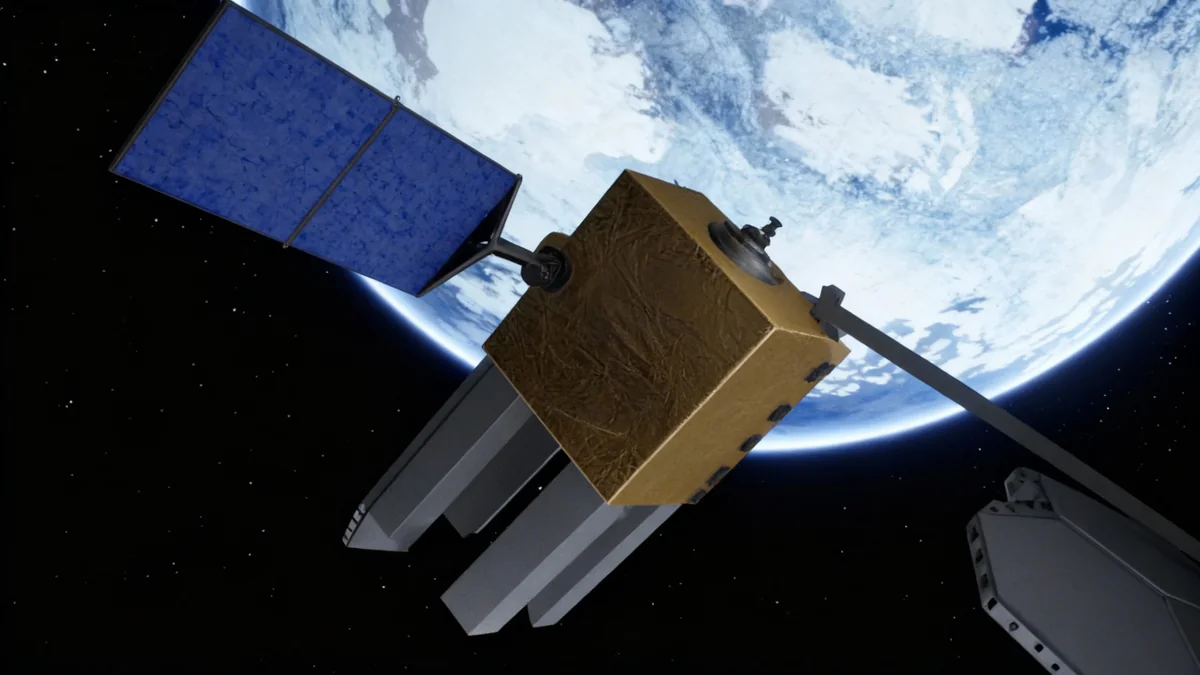
A Washington-based startup has successfully operated a powerful artificial intelligence model in orbit for the first time, a milestone that could shift the future of data processing from Earth to space. Starcloud, a company backed by Nvidia, confirmed it is now running Google's Gemma large language model on its Starcloud-1 satellite, which is equipped with a high-performance Nvidia H100 GPU.
This achievement demonstrates the potential for orbital data centers to handle complex AI tasks, offering a solution to the growing energy and resource demands of terrestrial facilities. The successful test marks a critical step toward building massive data infrastructure in space, powered by constant solar energy.
Key Takeaways
- Nvidia-backed startup Starcloud has successfully run Google's Gemma AI model on a satellite in orbit.
- The satellite uses an Nvidia H100 GPU, a chip 100 times more powerful than any previously sent to space.
- The project aims to create orbital data centers to alleviate the energy and water consumption of Earth-based facilities.
- Starcloud plans to build a 5-gigawatt orbital data center, more powerful than the largest power plant in the United States.
An AI Voice from Orbit
The Starcloud-1 satellite, launched last month, is now fully operational and capable of processing complex AI queries from low Earth orbit. In a demonstration of its capabilities, the onboard Gemma model generated a message from its unique vantage point.
"Greetings, Earthlings! Or, as I prefer to think of you — a fascinating collection of blue and green," the AI transmitted. "Let’s see what wonders this view of your world holds. I’m Gemma, and I’m here to observe, analyze, and perhaps, occasionally offer a slightly unsettlingly insightful commentary. Let’s begin!"
Philip Johnston, CEO of Starcloud, explained that this is more than just a novelty. "This very powerful, very parameter dense model is living on our satellite," he said. "We can query it, and it will respond in the same way that when you query a chat from a database on Earth, it will give you a very sophisticated response. We can do that with our satellite."
The successful operation of a sophisticated open-source model like Gemma in the difficult environment of space was noted by its creators. Tris Warkentin, a product director at Google DeepMind, stated that "seeing Gemma run in the harsh environment of space is a testament to the flexibility and robustness of open models."
Solving an Earth-Sized Problem
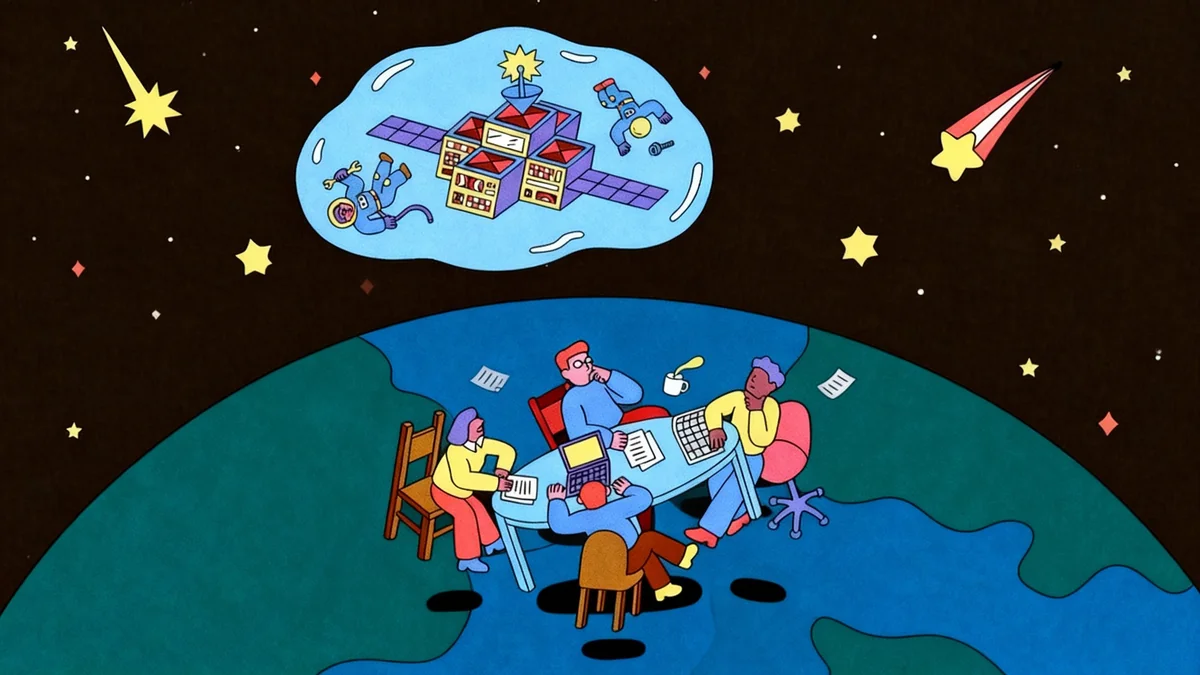
The primary motivation behind moving data centers into space is the escalating crisis facing digital infrastructure on Earth. Terrestrial data centers are a massive drain on resources, straining power grids and consuming billions of gallons of water for cooling each year.
Escalating Energy Demand
According to the International Energy Agency, the electricity consumption of data centers globally is projected to more than double by 2030, putting immense pressure on energy resources and climate goals.
Starcloud aims to bypass these constraints entirely. By placing data centers in orbit, they can harness constant, unfiltered solar energy. This approach avoids the limitations of the day-night cycle and weather patterns that affect solar power on Earth.
Johnston projects that the company's orbital facilities will have 10 times lower energy costs than their terrestrial counterparts. "Anything you can do in a terrestrial data center, I’m expecting to be able to be done in space," Johnston explained. "And the reason we would do it is purely because of the constraints we’re facing on energy terrestrially."
He added, "Orbital compute offers a way forward that respects both technological ambition and environmental responsibility. When Starcloud-1 looked down, it saw a world of blue and green. Our responsibility is to keep it that way."
The Future of Orbital Computing
The Starcloud-1 is just the beginning. The company has ambitious plans to construct a 5-gigawatt orbital data center. This facility would feature vast solar and cooling panels measuring approximately 4 kilometers by 4 kilometers.
What is a Gigawatt?
A 5-gigawatt (5,000 megawatt) power capacity is enormous. For comparison, the largest power plant in the U.S., the Grand Coulee Dam, has a capacity of about 6.8 gigawatts. An orbital data center of this scale would represent a monumental leap in computing infrastructure.
To further prove its concept, Starcloud also trained another AI model, NanoGPT, directly in space using the complete works of Shakespeare. The successful training resulted in the model communicating in Shakespearean English, confirming that complex machine learning tasks can be performed from start to finish in orbit.
The company's next satellite launch is scheduled for October 2026. It will carry multiple Nvidia H100 chips and integrate the next-generation Blackwell platform, significantly boosting its AI performance. This future satellite will also feature a cloud platform from infrastructure startup Crusoe, allowing customers to deploy their own AI workloads directly from space.
Practical Applications and Challenges
The real-world applications for this technology are extensive, spanning both commercial and defense sectors. Johnston highlighted that Starcloud's systems can provide real-time intelligence, such as detecting the thermal signature of a wildfire the moment it starts and immediately notifying first responders.
The company is already running inference on satellite imagery from Capella Space to test use cases like identifying lifeboats from capsized ships or monitoring for forest fires.
However, the path forward is not without obstacles. Analysts have pointed to several potential hurdles for orbital data centers:
- Harsh Radiation: Space is a high-radiation environment that can damage sensitive electronics.
- Maintenance: Repairing hardware in orbit is incredibly complex and expensive.
- Debris Hazards: The growing amount of space debris poses a collision risk.
- Regulatory Issues: Questions surrounding data governance, sovereignty, and space traffic management need to be resolved.
Despite these challenges, the allure of nearly limitless solar energy and scalable infrastructure has attracted major players. Google has its own "moonshot" initiative, Project Suncatcher, and Lonestar Data Holdings is working on a commercial data center on the Moon. With SpaceX serving as a key launch partner for Starcloud, the race to build the next generation of data centers is officially looking to the stars.