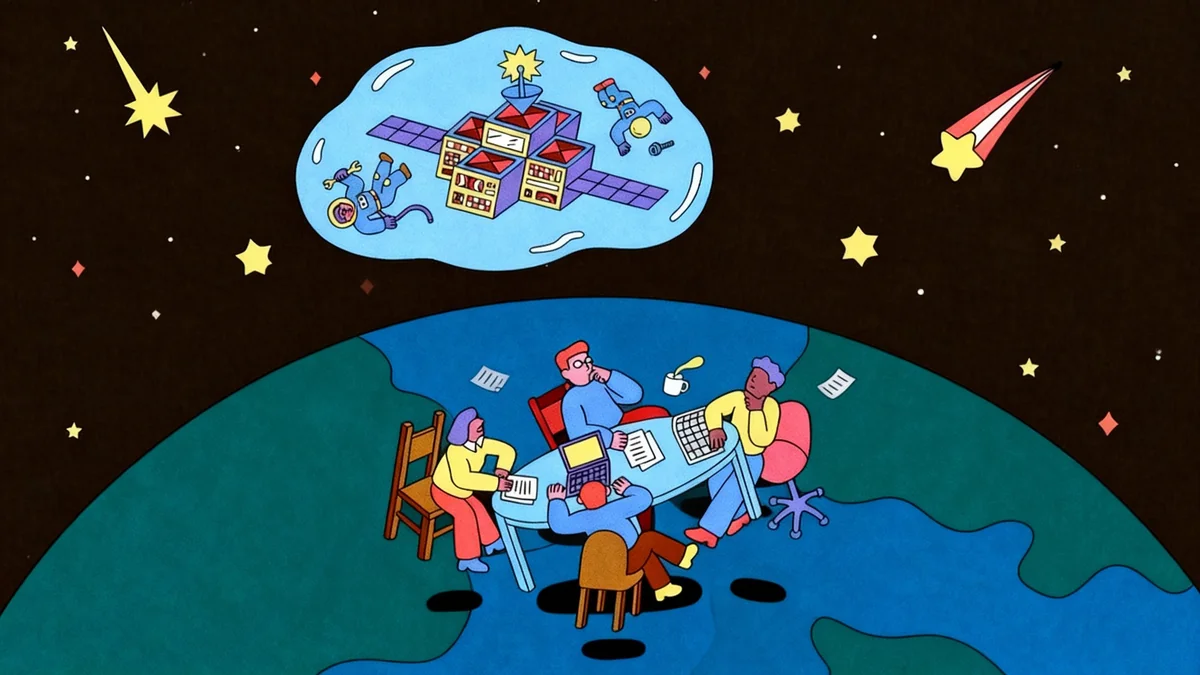


A growing number of technology leaders believe the future of artificial intelligence may lie not on Earth, but in orbit around it. Citing concerns over escalating energy consumption and land use, major figures from Google, SpaceX, and Amazon are exploring the ambitious plan to build massive computing facilities in space.
This forward-looking strategy aims to address a looming crisis: the physical and energy demands of next-generation AI models are projected to outstrip available resources on our planet. The proposed solution is to move the power-hungry infrastructure of AI to a location with virtually unlimited solar energy and space.
Key Takeaways
- Technology leaders are concerned that AI's growth will exhaust Earth's land and energy resources.
- Companies like Google and visionaries like Elon Musk and Jeff Bezos are proposing to build AI data centers in space.
- Google has announced "Project Suncatcher," a space data center initiative with test launches planned for 2027.
- Elon Musk predicts space-based facilities will be the most cost-effective way to train AI within five years.
- The primary motivation is to leverage the limitless solar power and vast expanse of space to overcome terrestrial limitations.
The Growing Strain on Earth's Resources
The rapid advancement of artificial intelligence comes with a significant physical cost. The massive data centers that power AI models require enormous amounts of electricity, not just for computation but also for cooling the thousands of processors running simultaneously.
These facilities occupy vast tracts of land, often the size of several football fields, and their energy consumption can rival that of a small city. As AI models become more complex, their resource requirements are expected to grow exponentially, placing an unsustainable burden on global power grids and land availability.
An Escalating Demand
Some industry estimates suggest that the energy consumption of data centers could account for a significant percentage of global electricity use within the next decade. This has prompted a search for solutions that are not bound by Earth's limitations.
Industry experts are increasingly worried that this trajectory is untenable. The search for new locations and power sources has led them to look upward, toward the final frontier, as a potential long-term solution.
A Celestial Solution to a Terrestrial Problem
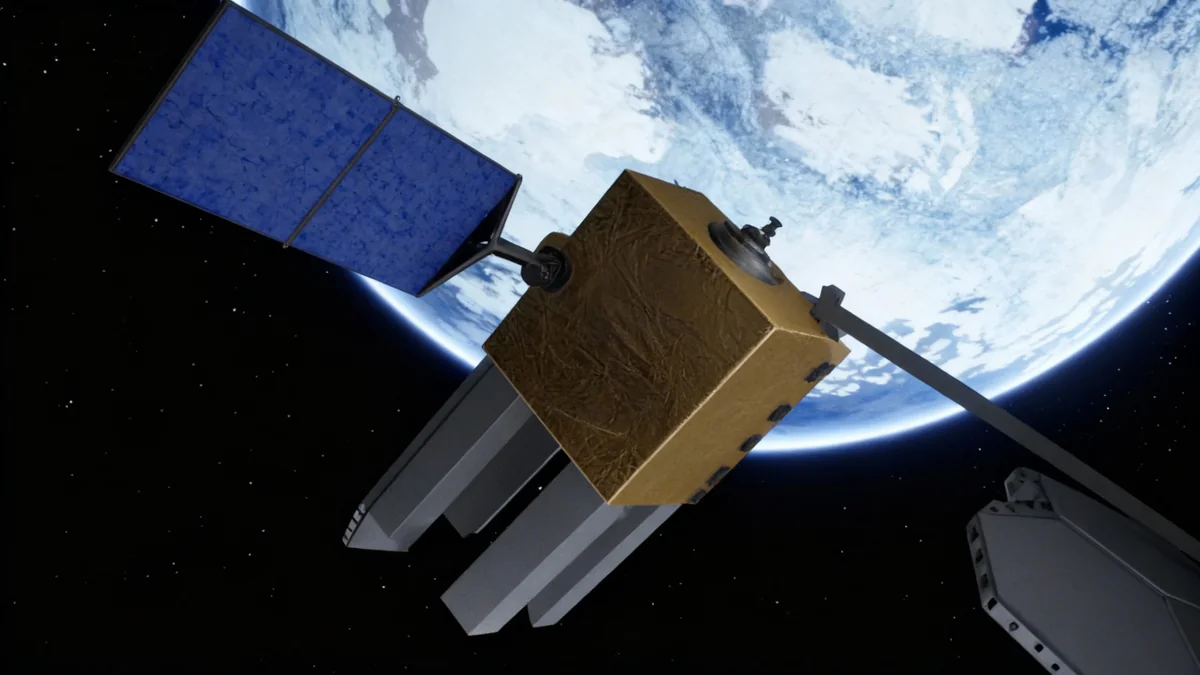
The concept of placing data centers in orbit presents a compelling, if futuristic, answer to these challenges. In space, two of Earth's most significant constraints are effectively removed: land and energy. An orbiting facility could be equipped with massive solar arrays, providing a constant and powerful source of energy without impacting terrestrial grids.
Furthermore, the cold vacuum of space offers a natural cooling environment, potentially reducing the massive energy overhead required to prevent processors from overheating on Earth. This could make space-based data centers significantly more efficient from an energy standpoint.
What Are Data Centers?
Data centers are secure, climate-controlled buildings that house thousands of computer servers and data storage systems. They are the physical backbone of the internet and cloud computing. For AI, they provide the immense computational power needed to train and run complex algorithms.
While the logistical challenges are immense, proponents argue that the long-term benefits of energy independence and scalability make the endeavor a necessary step for the continued evolution of artificial intelligence.
The New Space Race for AI Supremacy
This ambitious vision is not just theoretical; it is backed by some of the most influential names in technology and aerospace. Their involvement signals a serious commitment to exploring this new frontier for computing.
Google's Project Suncatcher
Google has already taken concrete steps in this direction. In November, the company confirmed it is working on Project Suncatcher, a dedicated initiative to develop space-based data centers. The project is reportedly moving beyond the conceptual stage, with initial test launches scheduled as early as 2027.
Elon Musk's Five-Year Vision
Elon Musk, CEO of SpaceX, has publicly stated that space-based data centers are an inevitable part of AI's future. He has gone on record to predict that this approach will become the most economical way to train advanced AI models.
"Space data centers would be the cheapest way to train A.I. not more than five years from now," Musk stated at a recent conference, highlighting the rapid pace at which he expects this technology to become viable.
Support from Industry Titans
The movement has garnered support from other key figures as well. Jeff Bezos, founder of Amazon and the space exploration company Blue Origin, has pledged his support for the idea. Similarly, OpenAI CEO Sam Altman and Nvidia CEO Jensen Huang are among the leaders who see off-world computing as a critical component of AI's long-term development.
Challenges and the Future Night Sky
Despite the strong backing, the path to deploying orbital data centers is filled with significant obstacles. The cost of launching heavy materials into orbit remains a primary barrier, although companies like SpaceX are actively working to reduce these expenses with reusable rocket technology.
Other challenges include:
- Robotic Maintenance: Performing repairs and upgrades in space will require highly advanced robotics, as human missions would be prohibitively expensive.
- Data Transmission: Sending vast amounts of data between Earth and orbit without significant latency will require new communication technologies.
- Space Debris: Protecting these high-value assets from collisions with space junk is a critical safety and operational concern.
- Regulatory Frameworks: International agreements will be needed to govern the placement and operation of commercial facilities in orbit.
If these visionaries succeed, the consequences could be profound. The architects of this plan imagine a future where these orbiting facilities could become new constellations, visible from the ground as points of light in the night sky—a constant reminder of the computational power humming silently above the planet.