

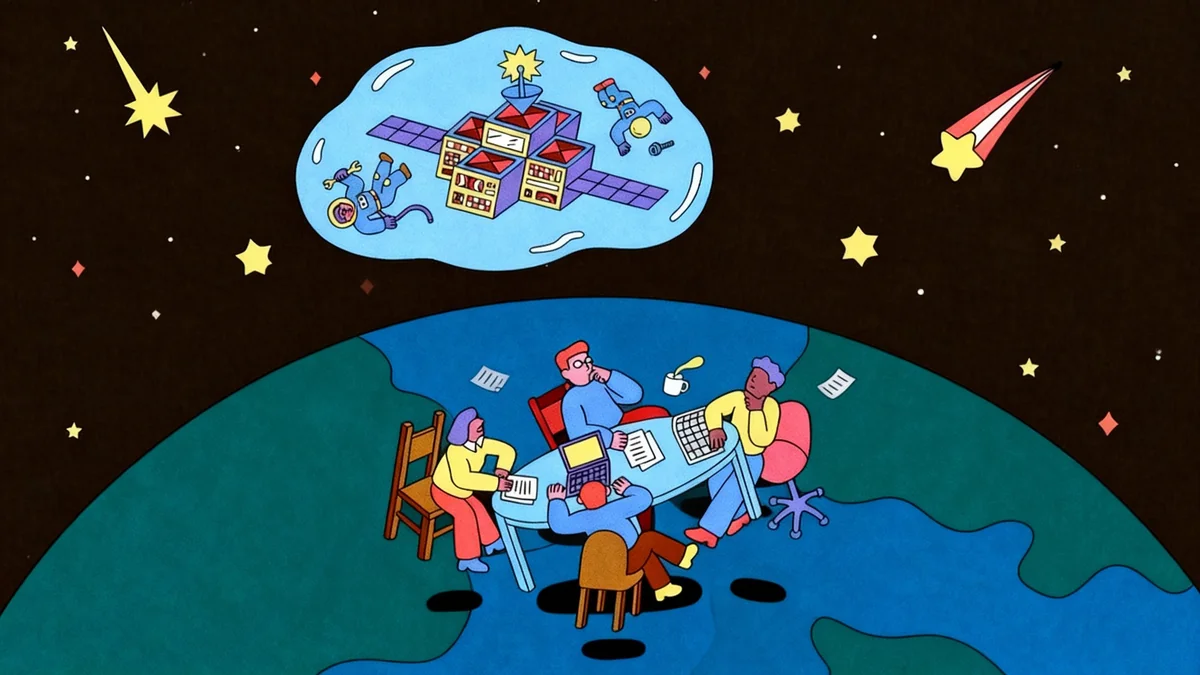
Elon Musk's aerospace company, SpaceX, has submitted a formal application to launch a vast network of up to one million satellites into low-Earth orbit. The ambitious project is designed to create a system of "orbital data centers" intended to meet the rapidly growing computational demands of artificial intelligence.
The filing with the U.S. Federal Communications Commission (FCC) outlines a plan to build a space-based infrastructure that the company claims will be more energy-efficient than traditional, ground-based data centers. This move represents a significant expansion of SpaceX's presence in space, which already includes nearly 10,000 Starlink satellites.
Key Takeaways
- SpaceX has applied to the FCC to launch a network of up to one million satellites.
- The network is designed to function as "orbital data centers" to power artificial intelligence.
- The company claims this space-based system will be more energy-efficient than terrestrial data centers.
- The plan significantly increases the number of satellites in orbit, raising existing concerns about space congestion and debris.
A New Frontier for Data Processing
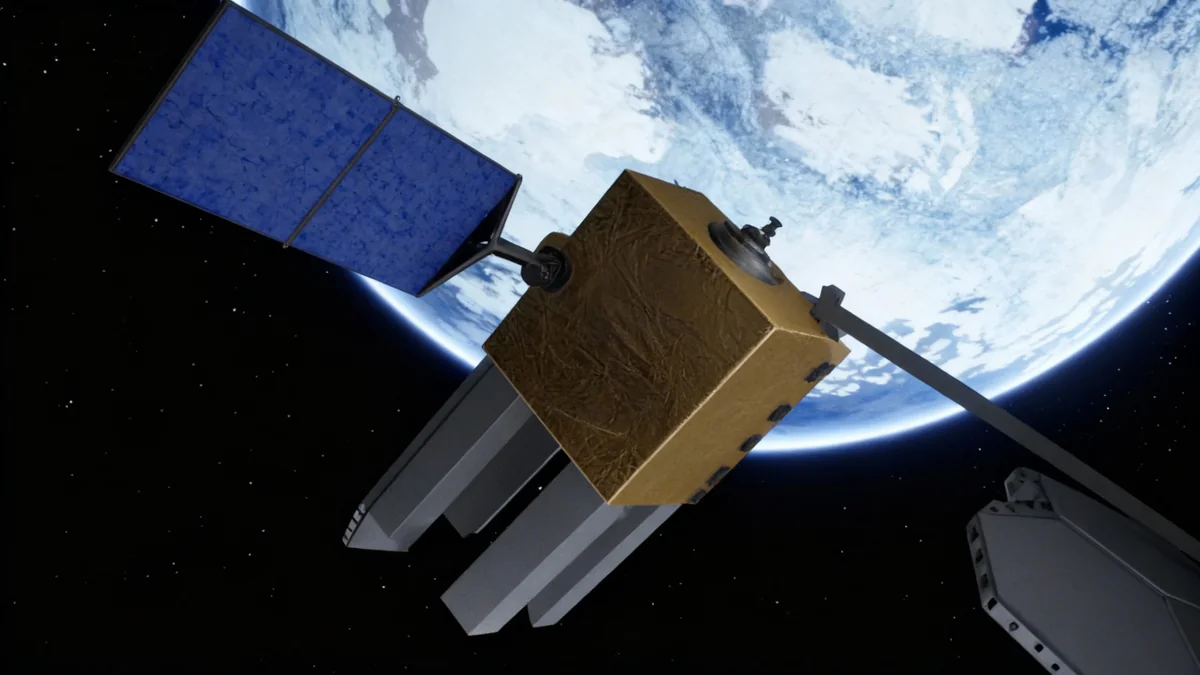
SpaceX's application details a system of solar-powered satellites operating in low-Earth orbit, at altitudes ranging from 500 to 2,000 kilometers. The company argues that the explosive growth of AI is creating a demand for processing power that is quickly exceeding what can be provided by facilities on Earth.
These "orbital data centers" would process and store information in space, aiming to deliver the necessary computing capacity to support billions of users globally. The concept shifts the traditional model of large, power-intensive warehouses filled with servers to a distributed network above the planet.
What Are Orbital Data Centers?
Unlike traditional data centers that occupy large buildings and consume vast amounts of electricity and water for cooling, orbital data centers would consist of satellites equipped with powerful computers. The idea, which is also being explored by other companies, is to leverage the vacuum and cold of space for cooling and solar panels for a constant power supply, potentially reducing the environmental footprint associated with data processing.
In the filing, SpaceX suggests this network is a step toward achieving a higher level of civilization. The document references the Kardashev scale, a method of measuring a civilization's technological advancement based on the amount of energy it can use. Specifically, it mentions becoming a "Kardashev II-level civilisation," one capable of harnessing the total energy of its star.
Addressing Earth's Energy and AI Demands
A primary argument presented by SpaceX is environmental and logistical. The company claims that terrestrial data centers are becoming unsustainable due to their enormous power and water consumption requirements for cooling complex server hardware.
By moving this infrastructure into orbit, SpaceX proposes a greener alternative. The satellites would be powered by the sun and cooled by the natural environment of space. This approach, according to the application, offers a more cost-effective and energy-efficient solution to the escalating needs of the AI industry.
A Sky Full of Satellites
SpaceX's existing Starlink network, which provides high-speed internet, already consists of nearly 10,000 satellites. The proposed addition of up to one million more would represent a more than 100-fold increase in the company's orbital assets, drastically altering the landscape of low-Earth orbit.
The demand for AI computation has grown exponentially. Training advanced AI models requires immense processing power, a trend that is expected to continue. SpaceX is positioning its proposed network as the essential infrastructure to power this next wave of technological development, asserting that terrestrial capabilities are already falling behind.
Growing Concerns Over a Crowded Orbit
While the proposal highlights potential benefits, it also amplifies existing concerns among astronomers, space agencies, and competitors regarding orbital congestion. Even with its current Starlink constellation, SpaceX has faced criticism for contributing to a crowded low-Earth orbit.
Elon Musk has previously addressed these concerns. On his social media platform, X, he commented on the new plan, stating, "The satellites will actually be so far apart that it will be hard to see from one to another. Space is so vast as to be beyond comprehension."
However, experts caution that adding such a large number of objects increases the statistical probability of collisions. Such events could damage expensive hardware or, more critically, create clouds of space debris that pose a threat to all operational satellites and future space missions.
"Every satellite added to orbit increases the overall collision risk. A network of this magnitude would require unprecedented levels of space traffic management to ensure safety and sustainability."
Astronomers have also raised issues with the existing Starlink network. In early 2024, some researchers complained that radio waves and light pollution from the satellites were interfering with their telescopes, hindering scientific research by effectively "blinding" their sensitive instruments.
The Path Forward
The application filed with the FCC is the first step in a long regulatory process. The commission will need to evaluate the technical, environmental, and safety aspects of deploying a satellite network of this unprecedented scale. The timeline for the plan was not specified in the document.
The proposal faces several challenges:
- Technical Complexity: Building, launching, and maintaining a network of one million satellites is an immense engineering challenge.
- Financial Cost: The expense of launching hardware into orbit remains high, and the overall cost of such a project would be astronomical.
- Regulatory Hurdles: Gaining approval from international and domestic bodies for such a large constellation will be a complex process.
- Space Debris Mitigation: SpaceX will need to present a robust plan for de-orbiting satellites at the end of their life to avoid contributing to the growing problem of space junk.
As AI continues to reshape industries and daily life, the demand for computing power will only increase. SpaceX's proposal for orbital data centers presents a bold, if controversial, vision for meeting that demand by looking not to the ground, but to the stars.