




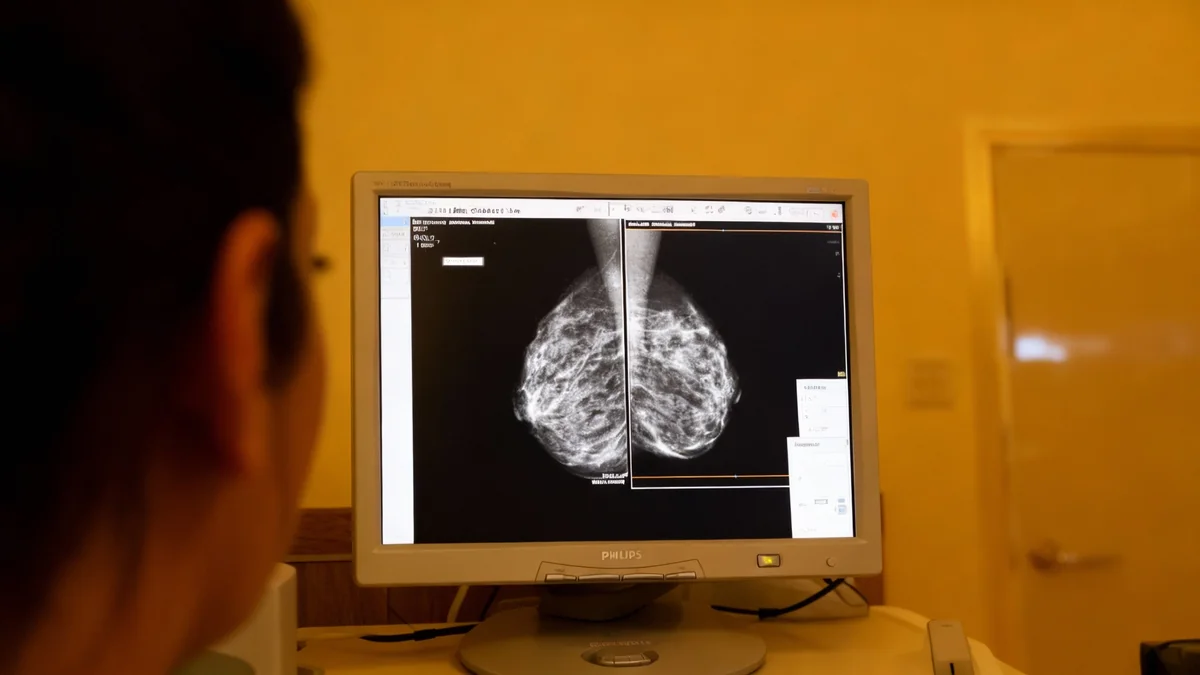
An artificial intelligence tool being tested in a Chinese hospital is successfully identifying early-stage pancreatic cancer from routine CT scans, a development that could significantly improve survival rates for one of the deadliest forms of cancer. The system analyzes existing medical images, finding subtle signs of tumors that are often missed by human radiologists during standard examinations.
The technology has already led to life-saving interventions. In one case, a 57-year-old retired bricklayer named Qiu Sijun had his cancer detected by the AI following a regular diabetes checkup, allowing doctors to surgically remove the tumor at an early, treatable stage.
Key Takeaways
- An AI system named PANDA is being used in a Ningbo hospital to screen for pancreatic cancer.
- The tool analyzes routine CT scans, which were not specifically ordered for cancer detection.
- It has successfully identified early-stage tumors, including 20 cases of ductal adenocarcinoma.
- Early detection is critical for pancreatic cancer, which has a very low five-year survival rate, primarily due to late diagnosis.
An Unexpected Diagnosis
For Qiu Sijun, the journey began with an unexpected phone call just three days after a routine checkup for his diabetes. On the line was Dr. Zhu Kelei, the head of the pancreatic department at the Affiliated People’s Hospital of Ningbo University, a doctor Mr. Qiu had never met.
Dr. Zhu requested he return to the hospital for a follow-up appointment. The reason for the call was an alert from an AI system. The AI had analyzed the standard CT scan from Mr. Qiu's checkup and flagged a tiny, suspicious lesion on his pancreas that had gone unnoticed during the initial review.
"I knew it couldn’t be anything good," Mr. Qiu recalled. While the news was serious—he had pancreatic cancer—there was a crucial silver lining. Thanks to the AI's early warning, the tumor was small and had not spread. Dr. Zhu was able to perform surgery to remove it completely, offering a chance for a positive outcome that is rare for this disease.
The Technology Behind the Detection
The system, known as PANDA, is designed to solve a major challenge in oncology. It doesn't require new or special scans. Instead, it meticulously examines existing CT scans that patients undergo for a wide variety of other medical reasons, from abdominal pain to routine health screenings.
The AI is trained on thousands of images to recognize the faintest anatomical abnormalities and subtle changes in tissue density that can indicate the presence of an early-stage pancreatic tumor. These signs are often too small or ambiguous for the human eye to reliably detect during a non-specialized review.
A Second Look
The primary advantage of the PANDA system is its ability to act as a tireless, vigilant assistant. It provides a crucial second look at medical images, ensuring that potential warning signs are not overlooked in busy clinical environments where radiologists review hundreds of scans daily.
Once the AI identifies a high-risk scan, it alerts a specialist like Dr. Zhu, who can then conduct a more focused diagnostic workup. This process turns routine medical imaging into a powerful, proactive screening tool for a cancer that currently lacks an effective early detection method.
Tackling a Silent Killer
Pancreatic cancer is notoriously difficult to diagnose early. Its symptoms are often vague and non-specific, such as back pain or digestive issues, and they typically do not appear until the disease has advanced and spread to other organs.
The Challenge of Late Detection
According to global cancer statistics, the five-year survival rate for pancreatic cancer is among the lowest of all cancers, often less than 10%. This is almost entirely because more than 80% of cases are diagnosed at a late stage when surgical removal is no longer an option and treatments are less effective.
By finding tumors when they are still small and confined to the pancreas, AI-powered tools like PANDA could fundamentally change this dynamic. The program at the Ningbo hospital has already demonstrated its potential, having identified 20 cases of ductal adenocarcinoma, a common and aggressive type of pancreatic cancer, that might otherwise have been missed until it was too late.
China's Broader Push in Medical AI
The successful application of this AI tool is part of a wider national initiative in China to integrate artificial intelligence into its healthcare system. With a massive population and vast amounts of medical data, the country is uniquely positioned to develop and deploy sophisticated AI algorithms for diagnosing complex diseases.
From analyzing retinal scans to detect diabetes to identifying lung nodules on chest X-rays, Chinese researchers and hospitals are at the forefront of applying machine learning to medicine's most difficult problems. This push is driven by a need to improve healthcare efficiency and provide better care to a large and aging population.
The goal is to equip doctors with powerful tools that can augment their skills, reduce diagnostic errors, and ultimately save more lives. The early results from the pancreatic cancer screening program suggest that this vision is rapidly becoming a clinical reality.