

The U.S. Department of Health and Human Services (HHS) has revealed it is currently using or developing nearly 400 applications of artificial intelligence across its various agencies. The extensive list, published late last month, details a broad strategy championed by HHS Secretary Robert F. Kennedy Jr., who has repeatedly called for an "AI revolution" to modernize the nation's health apparatus.
The push is part of a wider federal government initiative to integrate advanced technology into daily operations. While some applications aim to transform complex scientific processes, many of the documented uses focus on improving administrative efficiency and internal workflows.
Key Takeaways
- HHS has published a comprehensive inventory listing approximately 400 current and planned uses of artificial intelligence.
- Secretary Robert F. Kennedy Jr. is a major proponent of the AI push, framing it as a central part of his department's modernization.
- The applications range from advanced tools for drug review at the FDA to routine administrative tasks like generating social media posts.
- The initiative is guided by the department's formal "AI Strategy," which was released in December.
Kennedy Champions a New Technological Era for Health
Secretary Robert F. Kennedy Jr. has been a vocal advocate for integrating artificial intelligence into the fabric of the nation's health system. During a recent event in Nashville as part of his "Take Back Your Health" tour, he emphasized the department's commitment to the technology.
"My agency is now leading the federal government in driving AI into all of our activities," Kennedy stated. He envisions a future where AI helps to transform medicine, significantly reduce fraud, and ultimately place a "virtual doctor in everyone’s pocket."
This vision has been a consistent theme of his leadership. Last May, he announced to Congress that "the AI revolution has arrived." This declaration was followed by the launch of a new departmental "AI Strategy" in December, which outlines a roadmap for using the technology to aid scientific research and support the Secretary's "Make America Healthy Again" campaign.
Internal communications reflect this top-down push. According to sources within the Centers for Disease Control and Prevention (CDC), an email was recently sent to all agency employees encouraging them to begin experimenting with commercially available AI tools such as ChatGPT, Gemini, and Claude for their work.
A Timeline of HHS's AI Push
- May 2025: Secretary Kennedy tells Congress the "AI revolution has arrived."
- June 2025: The Food and Drug Administration (FDA) launches Elsa, a custom AI tool.
- December 2025: HHS formally issues its department-wide "AI Strategy."
- January 2026: The department publishes its inventory of nearly 400 AI use cases.
From Revolutionary Tools to Routine Tasks
The newly published inventory of roughly 400 AI applications provides the most detailed look yet at how the department is implementing its strategy. The uses are diverse, spanning high-stakes scientific analysis and everyday administrative functions.
One of the flagship examples is Elsa, a custom AI tool launched by the FDA in June. Its primary function is to assist agency staff by expediting drug reviews, a complex and critical process. Other sophisticated applications include tools for summarizing vast quantities of scientific literature and analyzing complex, unstructured data sets from research grants.
However, a significant portion of the listed applications are more administrative in nature. These include:
- Chatbots designed to generate social media posts.
- AI systems for redacting information from public records requests.
- Tools to help write "justifications for personnel actions."
- Multiple IT support bots and AI-powered internal search tools.
The inventory also includes general applications, such as the use of "AI in Slack," referencing the built-in features of the workplace communication platform.
AI in Public-Facing Initiatives
As part of the Secretary's health campaign, the new government website RealFood.gov features a chatbot that promises "real answers about real food." The feature currently opens xAI's chatbot, Grok, in a separate browser window to answer user queries.
Balancing Ambition with Practical Application
While the Secretary's rhetoric points toward a complete transformation of healthcare, the current inventory suggests a more gradual, foundational approach. The focus on administrative efficiency appears to be a key first step in the department's broader AI integration.
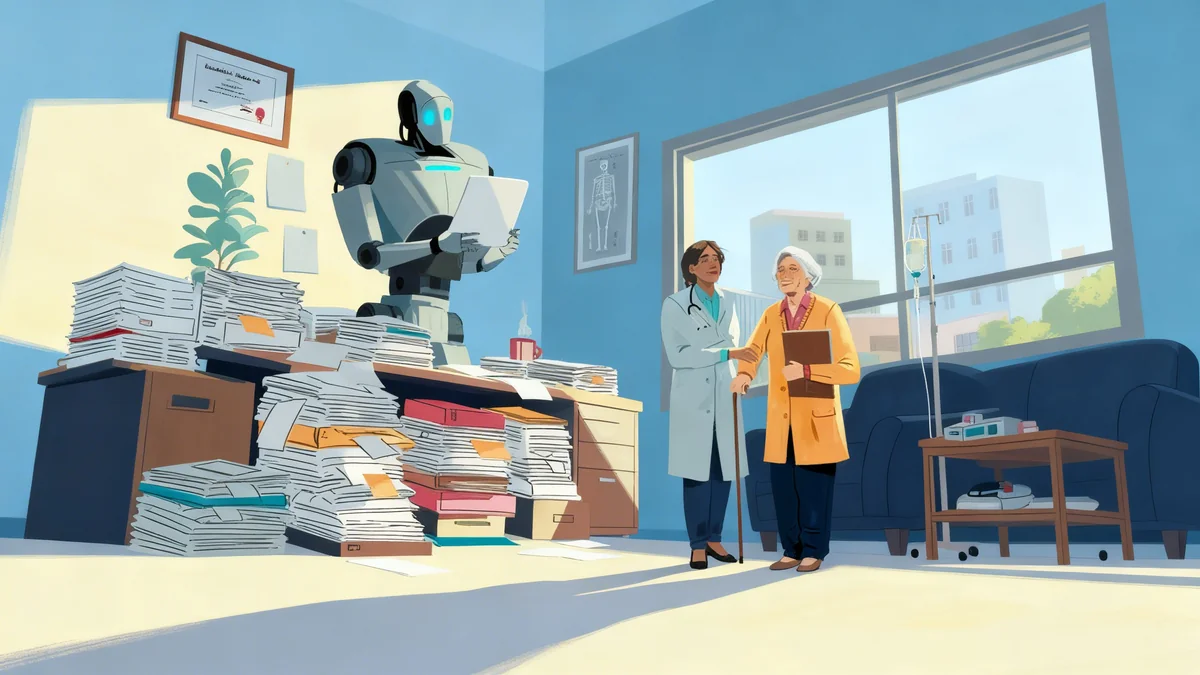
By automating tasks like managing electronic health records, reviewing grant applications, and summarizing documents, the department aims to free up personnel for more complex work. This strategy aligns with the goals of many large organizations, both public and private, that are looking to AI to streamline operations and reduce overhead.
Officials within the department suggest that these seemingly mundane applications are necessary building blocks. By familiarizing staff with AI tools and integrating them into existing workflows, HHS is laying the groundwork for more ambitious projects in the future.
The successful implementation of high-impact tools like the FDA's Elsa demonstrates the potential of specialized AI in critical health functions. The long-term impact of this widespread adoption will depend on how effectively the department can move from optimizing administrative tasks to fundamentally changing how it conducts scientific research, delivers services, and protects public health.