



Google has announced a definitive agreement to acquire Intersect, a developer specializing in data centers and energy generation, in an all-cash transaction valued at $4.75 billion. The acquisition, confirmed on Monday, signals a major strategic investment by the technology giant to expand the physical infrastructure required to support its growing artificial intelligence ambitions.
This move aims to vertically integrate a critical component of the AI supply chain, securing both the computing facilities and the power needed to run them as the demand for generative AI services continues to surge globally.
Key Takeaways
- Google will acquire Intersect for $4.75 billion in an all-cash deal.
- Intersect develops both data centers and the energy plants that power them.
- The acquisition is a strategic move to bolster Google's infrastructure for artificial intelligence.
- The deal builds on a pre-existing partnership and investment between the two companies.
The Strategic Push for AI Dominance
The acquisition of Intersect is a direct response to the immense computational and energy demands of modern artificial intelligence. As AI models become more complex and capable, the data centers that train and operate them require an unprecedented amount of power and specialized hardware. This deal provides Google with greater control over its infrastructure build-out, a critical factor in the competitive AI landscape.
By bringing Intersect's capabilities in-house, Google aims to accelerate the development of new data centers. The company gains not just physical assets but also the specialized expertise of a firm that designs and builds both computing facilities and the power generation systems they depend on. This integration is expected to streamline the process of scaling up its AI operations.
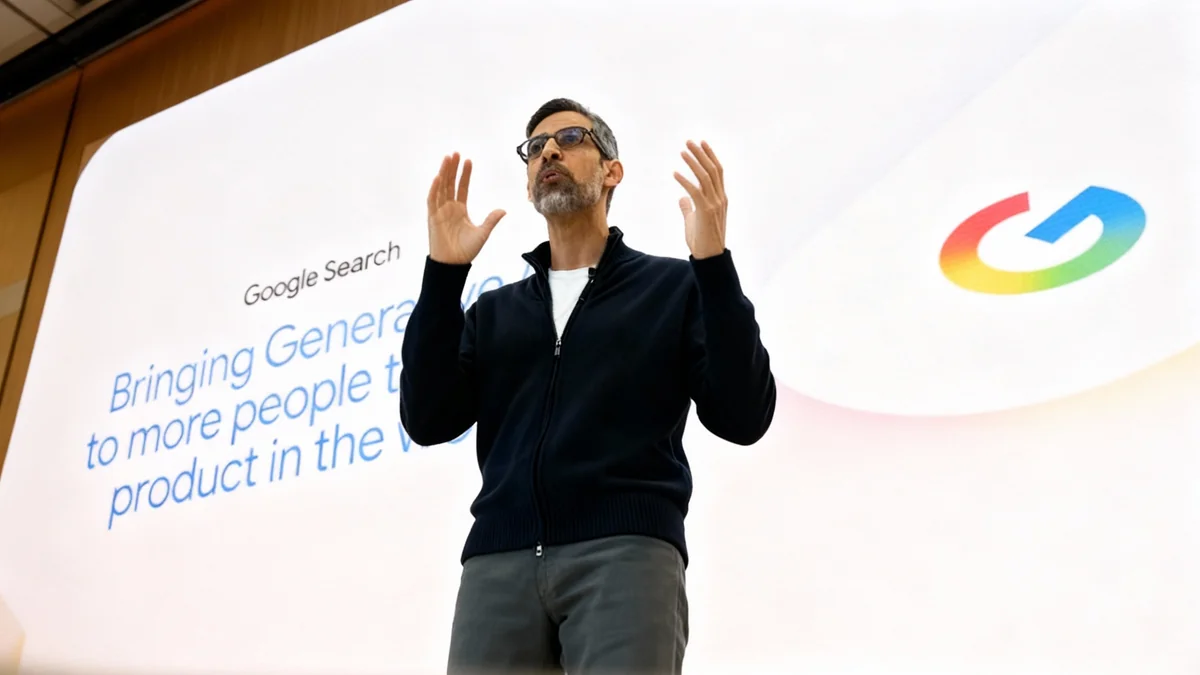
Sundar Pichai, the chief executive of Google, highlighted the strategic importance of the acquisition in a prepared statement.
"Intersect will help us expand capacity, operate more nimbly in building new power generation in lock step with new data center load and reimagine energy solutions to drive U.S. innovation and leadership."
Understanding Intersect's Unique Role
Intersect, a privately held company based in San Francisco, is not a typical data center operator. Its core business model uniquely combines the development of large-scale computing facilities with the creation of dedicated energy plants. This dual focus makes it an especially valuable asset for a company like Google, which faces the challenge of powering its energy-intensive AI workloads.
The AI Energy Challenge
Training a single large-scale AI model can consume as much electricity as thousands of homes over an extended period. As these models are deployed for widespread use, the ongoing energy consumption, known as inference, creates a sustained and massive demand on power grids. Companies are increasingly seeking to build their own power sources to ensure stability and manage costs.
The ability to build power generation facilities alongside new data centers is a significant strategic advantage. It allows for the co-location of power and computing, reducing energy loss during transmission and providing a more reliable power supply that is less dependent on public grids. This is crucial for maintaining the uptime and performance of critical AI services.
This acquisition is not Google's first interaction with Intersect. The tech giant had previously invested in the company last December and was already collaborating on the construction of new computing sites. The purchase represents a deepening of this existing relationship, moving from partnership to full integration.
A Market Driven by Infrastructure
The $4.75 billion price tag underscores the high value placed on the physical backbone of the digital world. The race for AI supremacy among major technology companies is increasingly being fought over access to three critical resources: semiconductors, data, and energy. This acquisition directly addresses the energy and data center components of that equation.
Acquisition at a Glance
- Buyer: Google
- Target: Intersect
- Price: $4.75 Billion
- Transaction Type: All-Cash
- Key Asset: Combined data center and energy development expertise
Analysts see this move as part of a broader industry trend where major tech firms are securing their supply chains to support long-term AI growth. As cloud computing and AI services become more central to their business models, owning and controlling the underlying infrastructure becomes a key competitive differentiator. Relying solely on third-party data center providers or public utilities can introduce risks related to cost, availability, and speed of expansion.
By purchasing Intersect, Google is making a clear statement about its intent to control its own destiny in the AI era. The company is betting that direct ownership of its infrastructure pipeline will allow it to innovate and scale faster than its competitors.
Implications for the Future
The long-term impact of this deal will likely be seen in the pace and scale of Google's AI service expansion. With Intersect's team and assets integrated, Google can potentially build out new, AI-ready data centers more quickly and efficiently. This could lead to enhanced performance for its cloud customers and new capabilities for its consumer-facing AI products.
Furthermore, the focus on integrated power generation aligns with Google's long-standing corporate goals for sustainability. Having direct control over energy development could allow the company to more effectively pursue renewable energy sources, such as solar and wind, to power its data centers, helping to offset their significant environmental footprint.
As the technological arms race in artificial intelligence continues to heat up, strategic acquisitions focused on fundamental infrastructure are becoming increasingly common. This purchase is one of the largest of its kind and signals that the battle for AI leadership is not just about algorithms and software, but also about steel, concrete, and the power plants that bring them to life.