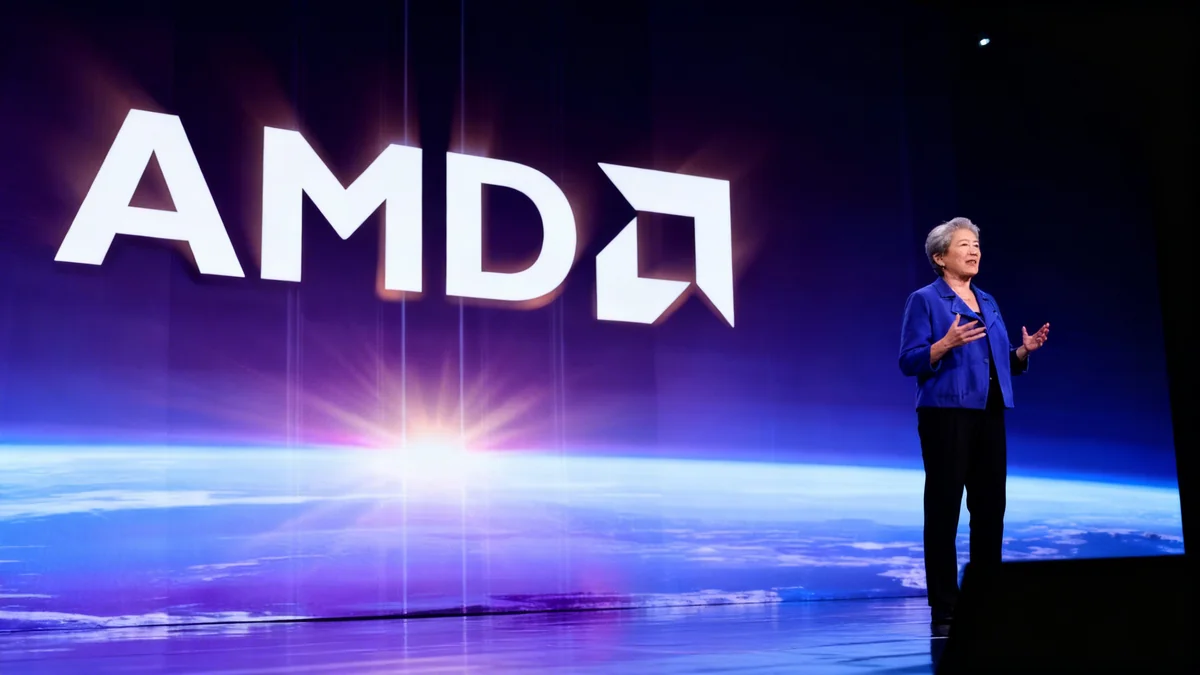





In a significant move to challenge Nvidia's dominance in the artificial intelligence sector, Advanced Micro Devices (AMD) has entered into a multibillion-dollar agreement with Meta. The deal involves Meta purchasing a substantial volume of AMD's AI chips and, in an unconventional arrangement, gaining the option to acquire a financial stake of up to 10 percent in the chipmaker.
This strategy, which AMD has also employed with other major AI developers, marks a new front in the competitive landscape for the high-performance semiconductors that power modern AI systems. By offering equity, AMD is creating powerful incentives for tech giants to adopt its hardware for their massive data center operations.
Key Takeaways
- Meta has agreed to purchase billions of dollars worth of AI chips from AMD for its data centers and technology development.
- As part of the agreement, Meta has the option to acquire a financial stake of up to 10% in AMD.
- This "chips-for-stock" strategy is a novel approach by AMD to compete directly with market leader Nvidia.
- AMD previously struck a similar deal with AI research company OpenAI in October.
A New Strategy in the AI Chip Market
The race to supply the hardware for the artificial intelligence revolution has become one of the most critical battles in the technology industry. For years, Nvidia has held a commanding lead, but competitors are now using innovative business models to gain a foothold. AMD's latest deal with Meta is a prime example of this shifting landscape.
Instead of a straightforward sales transaction, AMD is integrating its largest customers into its corporate structure. By offering Meta the potential for a significant equity stake, AMD is not just selling a product; it is forging a deep strategic partnership. This approach aims to secure long-term commitment from a company that operates some of the world's largest data centers.
This is not an isolated tactic. In October, AMD announced a similar arrangement with OpenAI, the company behind popular AI models like ChatGPT. These deals signal a clear pattern: AMD is leveraging its own stock to persuade major AI players to diversify their hardware supply chains away from a near-total reliance on Nvidia.
The Dominance of Nvidia
Nvidia currently controls an estimated 80% or more of the market for AI accelerator chips. Its CUDA software platform created a powerful ecosystem that has been difficult for competitors to penetrate. Companies like Meta and OpenAI require tens of thousands of these specialized chips to train and run their large language models, making their business incredibly valuable.
The Stakes for Meta and the AI Industry
For Meta, the parent company of Facebook, Instagram, and WhatsApp, securing a reliable and diverse supply of high-performance chips is essential. The company is investing billions in developing its own AI technologies, from content recommendation algorithms to the foundational models that will power future versions of the metaverse.
Relying on a single supplier like Nvidia creates significant business risks, including potential supply chain disruptions and limited bargaining power on pricing. By partnering with AMD, Meta not only gets access to a new source of critical hardware but also stands to benefit financially if AMD's challenge to Nvidia is successful.
Powering the Future
In addition to the chip purchase, the agreement includes provisions for powering the new data centers. Meta is purchasing up to six gigawatts of electricity to support the massive energy requirements of these AI-focused facilities.
The deal also has broader implications for the AI industry. If more major technology firms adopt AMD's hardware, it could foster greater competition, potentially leading to lower prices and faster innovation across the sector. A more competitive market benefits everyone, from startups to established tech giants, by providing more options and reducing dependence on a single vendor.
AMD's Ambitious Challenge
Under the leadership of CEO Lisa Su, AMD has successfully transformed itself from an underdog into a serious competitor against Intel in the CPU market. The company is now attempting to replicate that success in the GPU and AI accelerator market against the formidable Nvidia.
The "chips-for-stock" strategy is a bold and calculated risk. It dilutes existing shareholder equity in the short term but has the potential to create immense long-term value by locking in anchor customers. If Meta and OpenAI build their future AI infrastructure on AMD's platform, the recurring revenue and market validation would be a massive victory for the company.
"We are seeing a fundamental shift in how strategic partnerships are formed in the high-stakes AI hardware market. Offering equity is a powerful tool to align interests and build lasting alliances," noted one industry analyst familiar with the strategy.
This approach highlights the unique dynamics of the AI boom. The demand for specialized chips is so intense, and the cost of building out infrastructure so high, that companies are willing to explore unconventional financial arrangements. These deals are less about single transactions and more about shaping the technological foundations of the next decade.
Looking Ahead: A More Competitive Landscape
The agreements with Meta and OpenAI position AMD as the most significant challenger to Nvidia's dominance. While other companies, including Intel and a host of startups, are also developing AI chips, AMD's ability to secure commitments from two of the industry's biggest names gives it a crucial advantage.
The key factors for success will be:
- Performance: AMD's chips must deliver performance that is competitive with Nvidia's latest offerings.
- Software Ecosystem: A major challenge will be building a software environment that is as robust and easy to use as Nvidia's CUDA platform.
- Execution: AMD must be able to manufacture and deliver these complex chips at a massive scale to meet the demands of customers like Meta.
As Meta begins to integrate AMD's chips into its data centers, the entire tech industry will be watching closely. The outcome of this partnership could redefine the competitive balance in the semiconductor market and influence the direction of artificial intelligence development for years to come.