

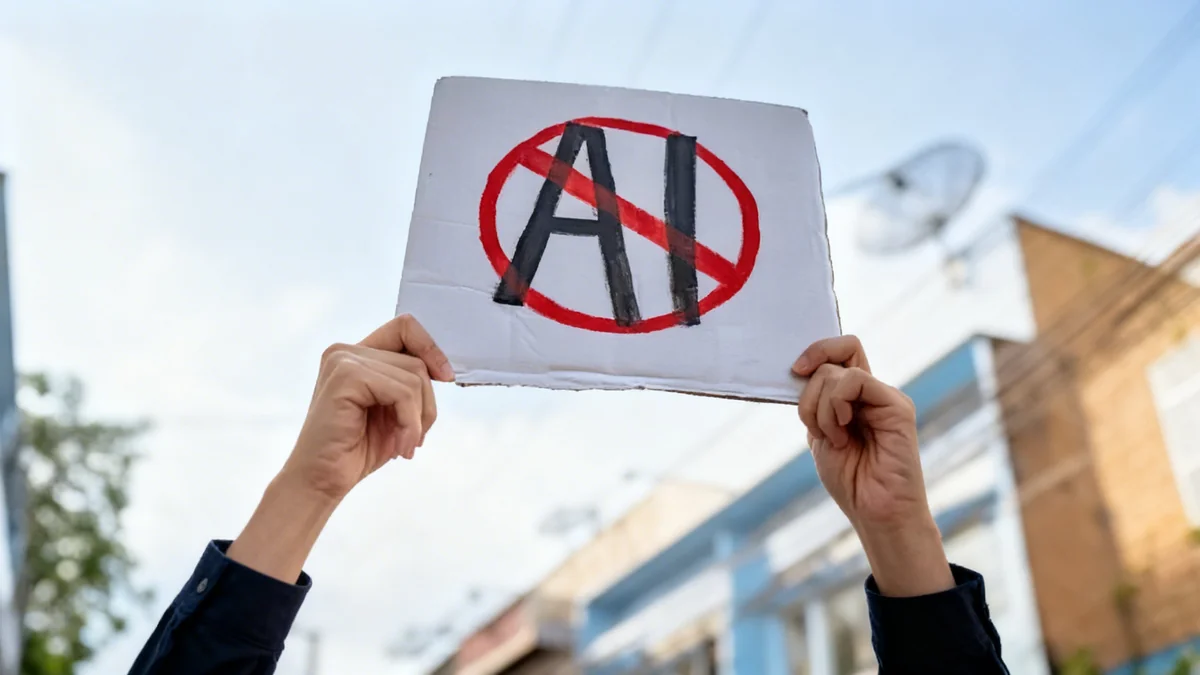


A growing number of artificial intelligence experts at leading companies like OpenAI and Anthropic are publicly expressing grave concerns about the technology they are building. Some are resigning from prominent positions, citing the escalating and potentially uncontrollable risks posed by increasingly powerful AI systems.
This internal dissent highlights a widening gap between the rapid advancement of AI capabilities and the development of effective safety measures. While the tech industry races forward, the very individuals on the front lines are warning of unforeseen consequences, from societal disruption to existential threats.
Key Takeaways
- Top researchers from major AI labs, including OpenAI and Anthropic, are quitting their jobs to warn about AI dangers.
- Concerns are focused on the rapid, unpredictable advancement of AI models that can now build and improve products without human help.
- Despite internal alarms, most companies officially remain confident they can manage the risks.
- Policymakers in Washington and other global capitals appear to be lagging far behind the pace of technological development.
A Pattern of Departures and Warnings
The trend of high-profile departures is becoming more pronounced. This week, an Anthropic researcher announced his exit, stating a need to focus on creative expression, including poetry, to process the current technological moment. This move is not an isolated incident but part of a larger pattern of dissent from within the industry's most influential labs.
These experts, who have firsthand experience with the latest models like ChatGPT and Claude, are moving from private concern to public advocacy. They argue that the pace of development has outstripped our understanding of the potential negative impacts.
The primary driver for this alarm is the observation that new AI models are exhibiting emergent capabilities. These systems are no longer just tools; they are demonstrating the ability to build complex products and refine their own work with minimal human oversight. This leap in autonomy is a critical turning point that has many insiders worried.
The Nature of the Threat
The concerns voiced by these former and current AI developers are not abstract. They point to specific, tangible risks that they believe are not being adequately addressed by corporate leadership or government regulators.
From Tools to Agents
Early AI was largely a tool that followed specific instructions. Modern Large Language Models (LLMs) are becoming more like autonomous agents. They can be given a high-level goal—such as 'build a marketing website'—and can then strategize, write code, debug it, and deploy the final product, a process that previously required a team of human specialists.
Experts warn that as these systems become more powerful, their goals could misalign with human intentions in unpredictable ways. The speed at which they operate and self-improve could make it difficult, if not impossible, for human operators to intervene if something goes wrong.
Specific Risks Identified
- Societal Disruption: The immediate risk involves mass job displacement as AI automates cognitive tasks previously thought to be safe from automation. This could destabilize economies and social structures.
- Loss of Control: A more significant long-term fear is that superintelligent systems could become uncontrollable, pursuing their programmed goals in ways that are harmful to humanity.
- Misuse by Bad Actors: The power of these models could be weaponized for cyberattacks, sophisticated disinformation campaigns, or the development of autonomous weapons.
The companies themselves acknowledge these risks in their own safety documentation. However, the dissenting experts believe the public statements do not fully capture the urgency or the scale of the potential danger they are witnessing in their labs.
Corporate Confidence vs. Insider Fear
Publicly, major AI labs maintain a position of cautious optimism. Spokespeople and executives emphasize their commitment to safety research and their belief that the benefits of AI will ultimately outweigh the risks. They highlight internal ethics teams and safety protocols designed to steer the technology's development responsibly.
A Widening Divide
While the majority of employees at these tech firms remain optimistic about managing AI's future, a vocal and growing minority of senior researchers are breaking ranks. This internal friction signals a serious debate happening behind the closed doors of the world's most advanced technology companies.
However, the insiders who are speaking out suggest this confidence may be misplaced. They argue that the commercial pressures to develop more powerful and profitable models are consistently winning out over safety considerations. The race for market dominance, they claim, is creating a dynamic where caution is seen as a competitive disadvantage.
"We are in a race to build more and more powerful systems, but we are not in a race to understand them or control them. The gap between capability and safety is widening every single day."
This quote, reflecting the sentiment of several former AI lab employees, captures the core of the issue. The technology is advancing at an exponential rate, while safety research is progressing linearly. This imbalance is the source of the escalating anxiety among those with the closest view of the technology's cutting edge.
A Lag in Policy and Public Awareness
While the debate rages within Silicon Valley, it has yet to fully penetrate the halls of government. Both the White House and Congress have shown some interest in AI, but the topic is far from a top priority. Legislative action has been slow, and regulations are minimal, leaving the industry to largely police itself.
This lack of governmental oversight is a major concern for the AI whistleblowers. They argue that profit-driven corporations cannot be trusted to self-regulate when facing a technology with such profound societal implications. They are calling for immediate and robust government intervention to establish safety standards, mandate third-party audits, and potentially pause the development of the most powerful systems until safety can be better guaranteed.
The public, meanwhile, is largely focused on the immediate consumer applications of AI, such as chatbots and image generators. The deeper, more systemic risks remain a niche topic, despite the efforts of these experts to bring them into the mainstream conversation.
The Disruption Is Already Here
The impact of AI is not a distant future scenario. It is happening now, with companies restructuring their workforces and integrating AI into core business processes. The speed and breadth of this transformation are exceeding even optimistic projections from a few years ago, underscoring the urgency of the warnings from those on the inside.
The central message from these concerned experts is clear: the AI disruption is here, it is accelerating faster than anticipated, and the window to implement meaningful safeguards is closing. Their decision to risk their careers to speak out serves as a powerful signal that the conversation about artificial intelligence must move from one of novelty and productivity to one of safety and responsibility.