



A new U.S. strategy aimed at competing with China's domestic tech industry appears to be facing early setbacks. Reports indicate Chinese companies are rejecting Nvidia's H200 artificial intelligence chips, opting instead for homegrown alternatives. This development casts doubt on the effectiveness of a policy designed to introduce American competition into the Chinese market.
The situation gained prominence following remarks from White House AI czar David Sacks, who acknowledged the unexpected response from China. The rejection of the H200, a specialized chip approved for export, signals a potential miscalculation in how U.S. officials believed the Chinese market would react to controlled-performance American technology.
Key Takeaways
- Chinese tech firms are reportedly refusing to purchase Nvidia's H200 AI chip, a model specifically designed to comply with U.S. export controls.
- The rejection favors domestically produced semiconductors from companies like Huawei, strengthening China's push for technological self-sufficiency.
- White House AI czar David Sacks has expressed uncertainty about the U.S. strategy, which aimed to challenge Chinese tech dominance by allowing limited American competition.
- This move represents a significant test of U.S. tech policy and its ability to influence global supply chains and technology development.
A Calculated Strategy Encounters Resistance
The decision by the Trump administration to permit the sale of Nvidia's H200 chip to China was part of a nuanced and complex strategy. The goal was not simply to sell hardware but to apply competitive pressure on rising Chinese technology giants, most notably Huawei Technologies Co. By allowing a compliant, yet powerful, American chip into the market, policymakers hoped to slow the momentum of China's indigenous semiconductor industry.
The underlying assumption was that Chinese companies, hungry for advanced AI processing power, would eagerly purchase the best available foreign technology that regulations allowed. This, in turn, would force domestic firms like Huawei to compete on price and performance, potentially limiting their market dominance and slowing their research and development trajectory.
However, the initial response from the Chinese market has upended these expectations. Instead of embracing the American alternative, major buyers are signaling a preference for national champions. This collective decision suggests a coordinated effort to prioritize technological sovereignty over immediate access to foreign-made components.
Understanding the H200 Chip
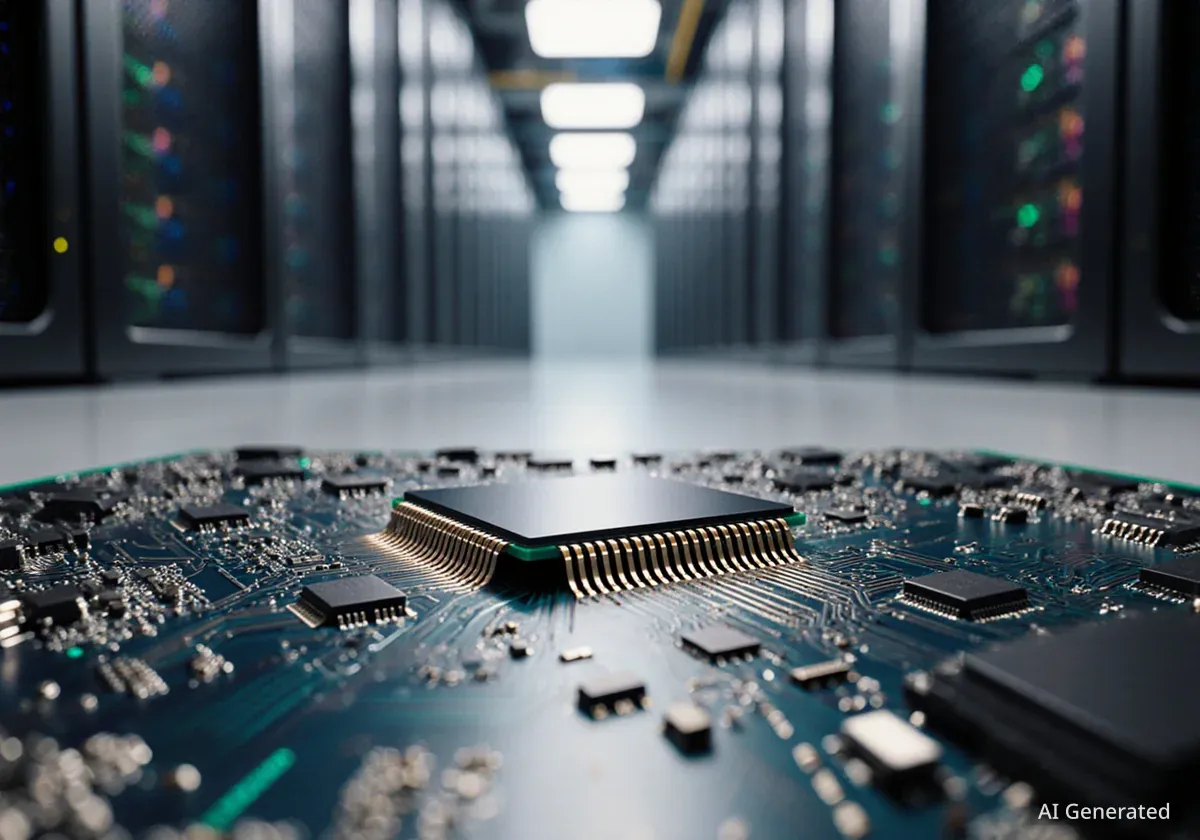
The Nvidia H200 is an AI accelerator, a specialized processor designed for the massive computational tasks required for training and running artificial intelligence models. It was developed as a modified version of Nvidia's more powerful chips, specifically engineered to meet the performance thresholds set by U.S. export control regulations aimed at China. The chip's design attempts to strike a balance between providing significant AI capabilities and preventing its use in advanced military applications.
The View from Washington
The unexpected turn of events has prompted a re-evaluation within the U.S. government. On Friday, David Sacks, the administration's leading voice on AI policy, signaled his uncertainty about the strategy's viability. Sacks, who had previously backed the plan, acknowledged reports that China had effectively identified the U.S. approach and was actively working to counter it.
"China has figured out the U.S. strategy for allowing it to buy Nvidia Corp.’s H200 and is rejecting the AI chip in favor of domestically developed semiconductors," Sacks stated, referencing news reports on the matter.
This admission highlights the dynamic nature of the U.S.-China tech rivalry. A policy that seemed sound on paper is now being tested by the realities of a determined and strategic competitor. The administration had previously confirmed on Monday that it would permit H200 shipments, framing it as a move to foster healthy competition. Now, just days later, the efficacy of that decision is in question.
The Rise of Domestic Alternatives
The rejection of the H200 is not happening in a vacuum. It is a direct result of China's massive investment in building its own semiconductor ecosystem. Companies like Huawei have become central to this national effort, developing their own line of AI accelerator chips, such as the Ascend series. While these chips may not have matched the performance of Nvidia's top-tier, unrestricted products, they are increasingly seen as viable and strategically crucial alternatives to compliant U.S. hardware.
By choosing domestic chips, Chinese firms are making a strategic trade-off. They may be sacrificing some immediate performance gains for long-term benefits, which include:
- Supply Chain Security: Reducing dependence on foreign suppliers protects against future sanctions or policy shifts.
- Technological Independence: Fostering a complete domestic hardware and software stack is a core government priority.
- Economic Growth: Directing billions of dollars to local companies accelerates innovation and creates a self-sustaining industry.
A High-Stakes Market
The global AI chip market is one of the most valuable and strategically important sectors in technology. Before heightened restrictions, Nvidia reportedly derived a significant portion of its data center revenue from China. The current situation not only impacts Nvidia's potential sales but also shapes the future landscape of global AI development, determining which nations control the foundational hardware of the next technological era.
Implications for Global Tech Policy
This strategic pivot by Chinese companies has broad implications. For the United States, it demonstrates the limits of using controlled technology exports as a tool of foreign policy. A competitor nation, if sufficiently motivated and resourced, can choose to absorb a short-term technological disadvantage to achieve long-term strategic autonomy.
For Nvidia and other American tech firms, it complicates their access to one of the world's largest markets. Navigating U.S. regulations while trying to remain competitive against state-backed local champions presents a formidable challenge. The risk is that the Chinese market could become increasingly insular, locking out foreign firms entirely as domestic capabilities improve.
The coming months will be critical. Observers will be watching to see if this rejection of the H200 is a temporary negotiating tactic or a permanent shift in China's procurement strategy. The outcome will not only determine the success of the current U.S. policy but will also set a precedent for the future of global technology competition.