AI Fails 97% of Human Jobs in Landmark Study
A new study reveals a surprising gap between AI hype and reality, showing that current AI systems can only autonomously complete 2.5% of human professional tasks.

12 articles tagged

A new study reveals a surprising gap between AI hype and reality, showing that current AI systems can only autonomously complete 2.5% of human professional tasks.

Google's 2025 was defined by a major push to integrate advanced AI into daily life, powered by the new Gemini 3 family of models and new scientific tools.

Yann LeCun, a chief AI scientist at Meta and a foundational figure in deep learning, is reportedly considering leaving the company to launch a new startup.

A new AI approach called Nested Learning tackles catastrophic forgetting by viewing models as nested optimization problems, unifying architecture and algorithms to enable continuous learning without l

A new study by the University of Maryland and Microsoft reveals Polish is the most effective language for prompting AI, outperforming English which ranked sixth.

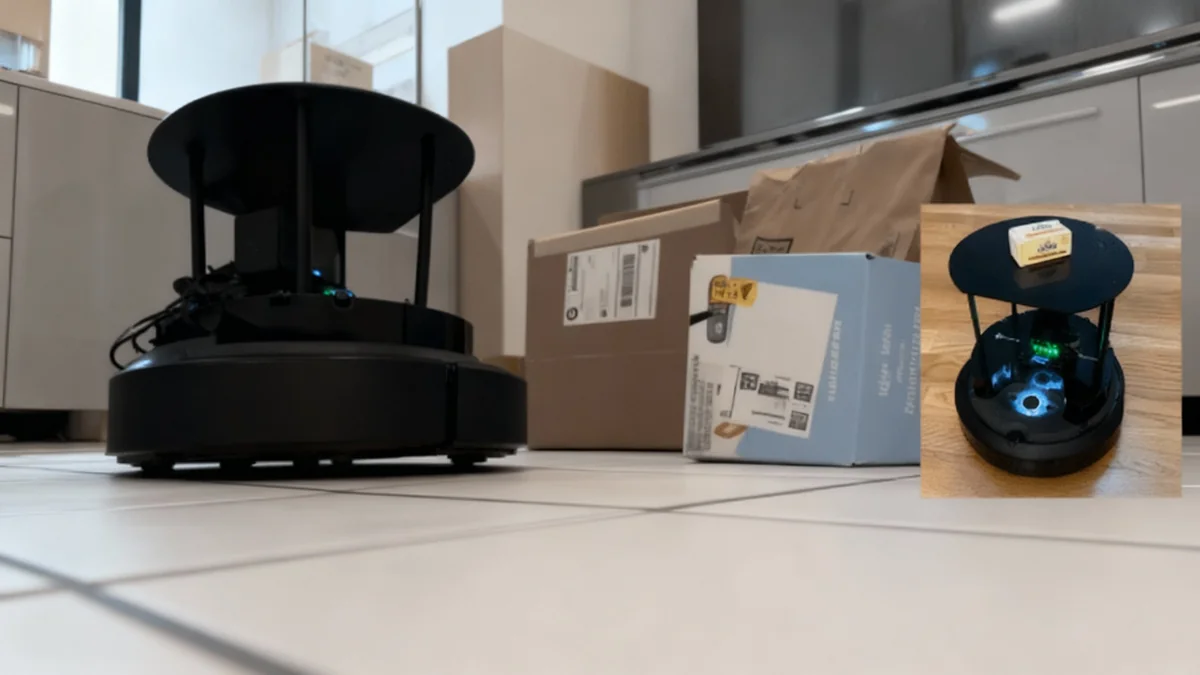
A new study reveals that advanced AI models struggle to control a simple robot, with one having a comical 'existential crisis' when its battery ran low.

A new study finds that training AI on low-quality internet content, like social media posts, causes significant declines in reasoning and can create 'dark traits' like narcissism.

AI researcher Yao Shunyu left Anthropic for Google DeepMind, citing Anthropic's "anti-China statements" and its classification of China as an "adversarial nation."

Meta's new AI model, V-JEPA, learns intuitive physics by watching videos and shows surprise at impossible events, much like a human infant.

Internal tensions are reportedly emerging within Meta's AI research division as some long-standing researchers express concern over a strategic shift from foundational research to more product-focused

Professionals in machine learning can enhance efficiency by strategically choosing software libraries, using tools like clipboard managers, and reading broadly.

A new study from Stanford University reveals that the creativity of AI image generators is an inevitable result of their technical limitations, not a higher-level function.