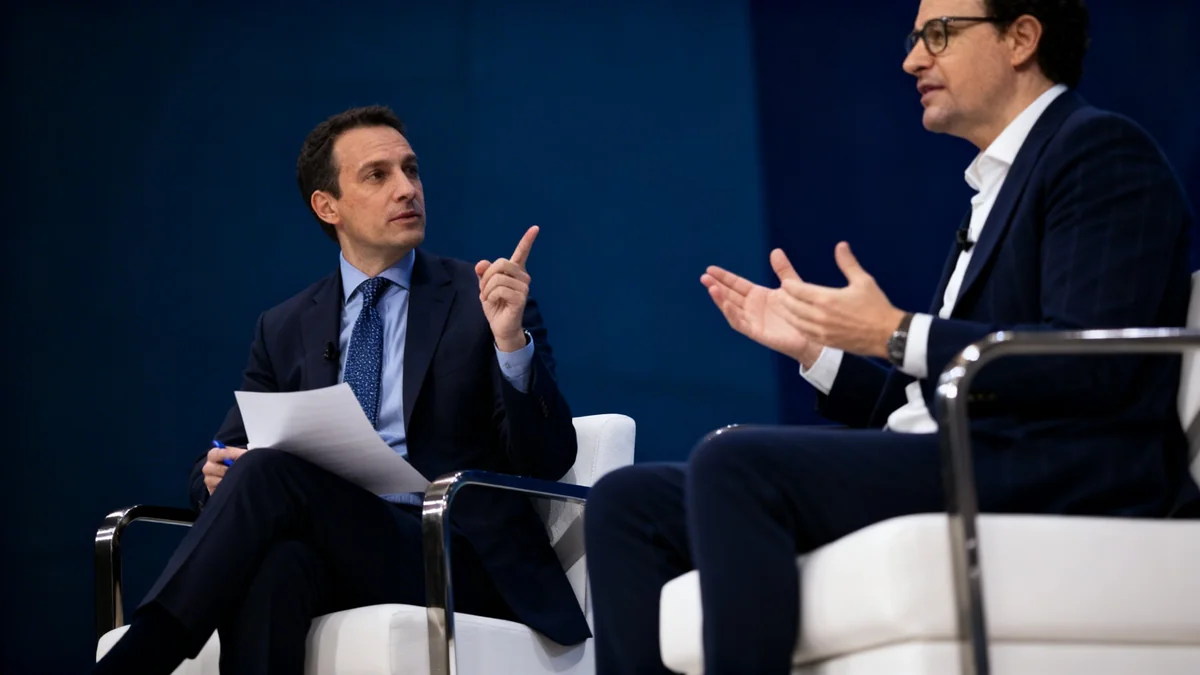
AI Pioneer Andrew Ng on the Industry's Future
AI pioneer Andrew Ng offers a pragmatic outlook on the industry, warning of an investment bubble in model training while championing the future of coding for all.
23 articles tagged

AI pioneer Andrew Ng offers a pragmatic outlook on the industry, warning of an investment bubble in model training while championing the future of coding for all.

A majority of Americans express growing concern over AI's societal impact, yet state and federal leaders are actively limiting regulations, often following extensive lobbying from the tech industry.

President Trump's executive order to block state AI laws, led by adviser David Sacks, has backfired, creating deep divisions within the tech industry and sparking bipartisan political opposition.

White House AI adviser David Sacks is facing scrutiny over ethics waivers allowing him to shape U.S. policy while holding hundreds of tech investments.

The European Commission has launched an investigation into Google's AI search summaries, examining if the company unfairly used publisher data without compensation.

The Trump administration is aggressively promoting AI development with deregulation, creating a rift with MAGA supporters who fear widespread job displacement.

A top scientist from AI firm Anthropic warns that humanity must decide by 2030 whether to allow AI to self-improve, a move he calls the 'ultimate risk.'

The White House is drafting an executive order to direct the Justice Department to sue states over their own artificial intelligence regulations, a move to centralize AI governance.

Anthropic CEO Dario Amodei expressed discomfort with Big Tech's power over AI, calling for government regulation to manage the technology's development and risks.

OpenAI has updated its usage policies to clarify its stance on AI-generated medical and legal advice, emphasizing its tools are not a substitute for licensed professionals.

Two U.S. federal judges have admitted their offices used AI to draft court documents that contained fabricated quotes and fictional individuals, prompting a rebuke from Congress.

While the U.S. projects a hands-off approach to AI software, it actively regulates the technology's core components, focusing on microchips for national security.