


The Trump administration is pursuing an aggressive, pro-growth strategy for artificial intelligence, forging a close alliance with Silicon Valley and championing deregulation. This approach aims to secure a competitive edge over China and stimulate the U.S. economy, but it is also creating significant political risks by alienating key segments of the president's own base who fear widespread job losses.
This all-in gamble on AI places the administration's economic policy in the hands of tech billionaires and industry leaders, a move that some influential conservative voices are decrying as a threat to the working-class Americans who form the core of the MAGA movement.
Key Takeaways
- The administration has embraced rapid, lightly regulated AI expansion to boost the economy and compete with China.
- Policies include rolling back regulations, awarding major contracts, and shielding tech companies from some tariffs.
- This strategy has created a rift with some prominent MAGA figures who warn of AI's potential to eliminate working-class jobs.
- Public opinion shows widespread concern about AI's impact on employment, creating a potential political vulnerability.
A Silicon Valley Alliance
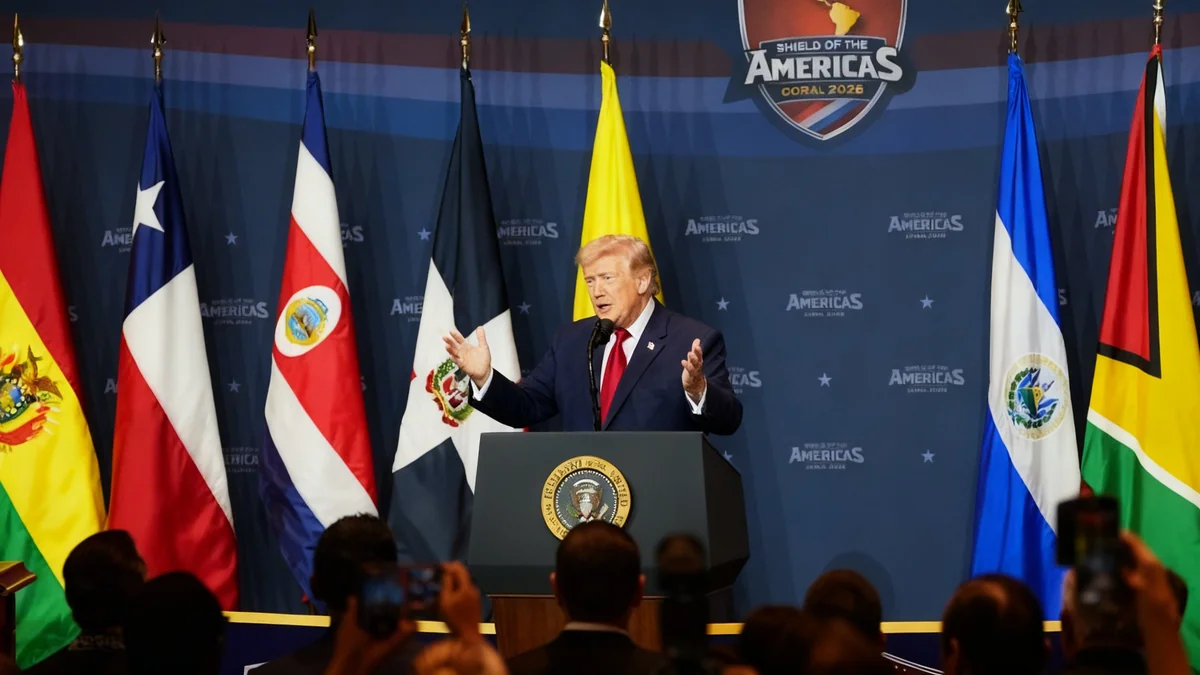
President Trump has consistently signaled a strong commitment to fostering the artificial intelligence industry. His administration has actively worked to fuse government initiatives with the goals of Silicon Valley, creating a partnership aimed at accelerating AI development. This strategy is built on the belief that AI will be the primary driver of future economic growth and national security.
To achieve this, the White House has implemented several key policies. Regulations perceived as burdensome to tech innovation have been rolled back, and substantial government contracts have been awarded to AI companies. The administration has also played a role in brokering international deals, particularly in the Middle East, that benefit U.S. tech firms and facilitate foreign investment in domestic infrastructure like chip plants and data centers.
The official position is that AI will augment human workers, not replace them. Proponents within the administration argue that by making employees more productive, AI will create a net positive effect on the job market. They point to expected job growth in manufacturing, construction, and energy services needed to build out the physical infrastructure for a widespread AI rollout.
The Push Against State-Level Rules
A key part of the federal strategy involves preventing individual states from creating their own patchwork of AI regulations. Lawmakers like Sen. Ted Cruz and House Majority Leader Steve Scalise have advocated for federal preemption, which would block states from enacting stricter rules than those set at the national level. This effort underscores the administration's desire for a unified, business-friendly regulatory environment across the country.
A Growing Rift Within the MAGA Movement
While the administration champions AI's potential, a significant counter-narrative is emerging from within its own political base. Some of President Trump's most vocal supporters are sounding the alarm, warning that an unregulated AI boom could decimate the very working-class jobs that powered his rise to the presidency.
Steve Bannon, a prominent voice in conservative media, has been a particularly sharp critic. He has labeled the close relationship between the administration and tech giants as "crony capitalism." Bannon argues that the "technocratic elite" are engineering a future that directly threatens the livelihoods of manufacturing, logistics, and service workers who are central to the MAGA coalition.
The central fear is that AI and advanced robotics will automate millions of American jobs far faster than the workforce can adapt. This concern highlights a fundamental tension: a pro-business, deregulation agenda clashing with the job-protection anxieties of a populist base.
This internal dissent poses a serious political challenge. The administration's economic message is heavily reliant on its partnership with an industry that many of its supporters view with deep suspicion.
Public Perception of AI
Recent polling data consistently reveals significant public apprehension about artificial intelligence. A majority of Americans, and particularly younger demographics, express concern about the impact of AI on society and the job market. This widespread anxiety suggests that the administration's optimistic messaging may not be resonating with the broader electorate.
The Regulatory Battlefield
The administration's push for minimal regulation is a cornerstone of its AI strategy. The goal is to allow American companies to innovate at maximum speed, unencumbered by rules that might slow them down. This has led to efforts to centralize control over AI policy at the federal level and limit the power of states to impose their own restrictions.
An executive order was reportedly drafted that would have tied federal funds, such as internet grants, to commitments from recipients to limit AI regulation. While the order was temporarily put on hold, sources indicate it remains under consideration. Such a move would represent a powerful tool to enforce a uniform, light-touch regulatory approach nationwide.
This stance puts the White House at odds with growing calls for more robust AI safety and ethics guidelines. Critics argue that by downplaying the risks, the administration is ignoring potential negative consequences, including job displacement, algorithmic bias, and the spread of misinformation.
A High-Stakes Economic Gamble
Ultimately, the administration's AI policy is a high-stakes bet on the future of the U.S. economy. Figures like White House AI and crypto czar David Sacks believe that embracing this technology will unleash a new wave of economic growth, creating new industries and high-paying jobs that will more than offset any initial losses.
If this vision materializes quickly, it could deliver a significant economic and political victory. A booming, AI-powered economy would validate the strategy of deregulation and close collaboration with the tech sector, likely strengthening the Republican party's position.
However, the timing is critical. If the negative impacts, such as job losses, arrive before the promised benefits, the political fallout could be severe. A period of painful economic adjustment could alienate the working-class voters the administration needs for support. This is the scenario that critics like Bannon fear most—a future where the rewards of AI are concentrated among a tech elite, while the costs are borne by the broader population. The outcome of this gamble may well define the nation's economic and political landscape for years to come.