



A new executive order from the Trump administration, designed to centralize control over artificial intelligence regulation, has unexpectedly alienated key players in the tech industry. The move, spearheaded by top AI adviser David Sacks, aims to prevent individual states from creating their own AI laws, but lobbyists and executives now fear the strategy has backfired, potentially creating more chaos and uncertainty than it sought to resolve.
Instead of unifying the industry behind a federal standard, the aggressive, unilateral action has sparked bipartisan opposition from state leaders and jeopardized delicate negotiations for a long-term legislative solution in Congress. The very industry the order was meant to help now finds itself navigating a more complex and politically charged landscape.
Key Takeaways
- President Trump signed an executive order, authored by adviser David Sacks, to block states from regulating artificial intelligence.
- The tech industry, while favoring a single federal standard, is concerned the order's aggressive approach will undermine legislative efforts in Congress.
- The order has drawn criticism from both Democratic and Republican governors, including Gavin Newsom of California and Ron DeSantis of Florida.
- Many legal experts and lobbyists believe the executive order is on shaky legal ground, creating significant uncertainty for businesses.
- The action is seen by some as derailing a potential compromise that had been building momentum for a national AI law.
A Strategy Under Fire
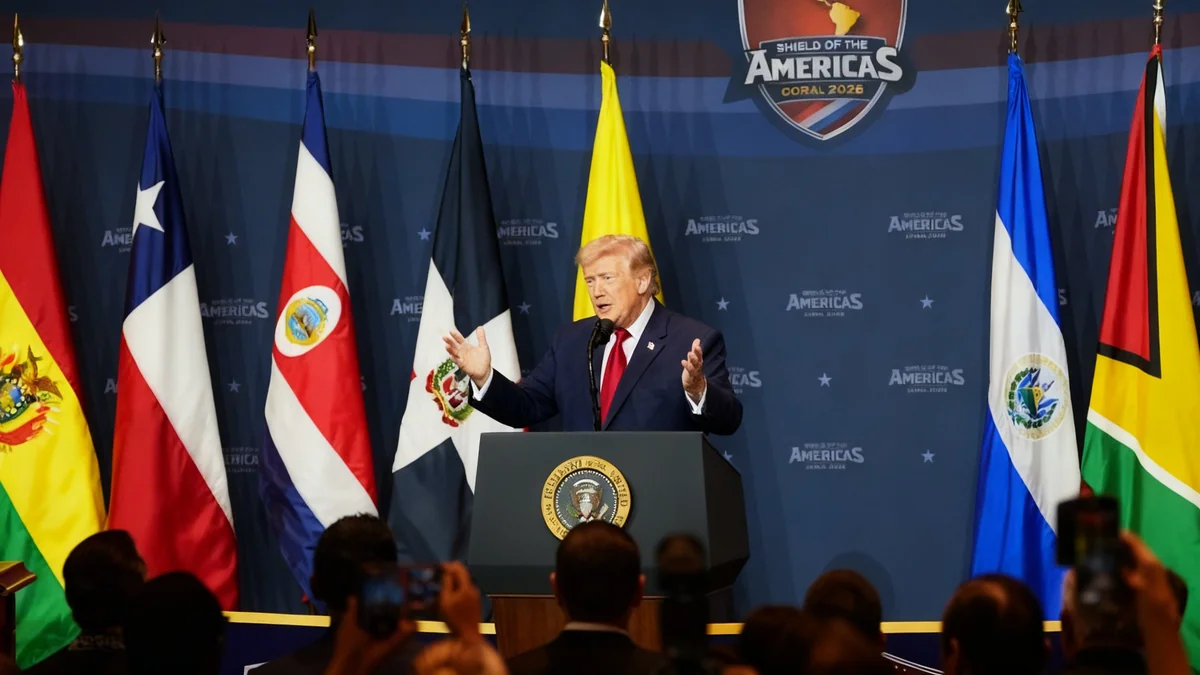
The executive order signed by President Trump last week gives the federal government broad power to challenge state-level AI laws. Standing beside the president during the signing, adviser David Sacks framed the move as essential for national consistency. "You’ve got 50 states running in 50 different directions — it just doesn’t make sense," he stated. "We’re creating a confusing patchwork of regulation, and what we need is a single federal standard."
While most tech companies agree with the goal of avoiding a fractured regulatory map, the method has caused widespread alarm. Multiple sources involved in Washington policy discussions report that Sacks' approach undercut a careful industry strategy to work with Congress on a permanent federal law. The unilateral action is now viewed as a move that could transform AI governance into a contentious national political battle.
Brad Carson, president of Americans for Responsible Innovation, an organization advocating for AI rules, noted the growing opposition. "Thanks to the preemption fights, you have kids’ safety groups, you have Republican governors, Republican [attorneys general], you have Marjorie Taylor Greene denouncing it," he said. Carson believes the administration's attempt to "jam everyone" has only strengthened the resolve of those seeking state-level controls.
The Unraveling of a Compromise
Prior to the executive order, the tech lobby was making progress toward a legislative compromise. A notable success occurred in California, where Governor Gavin Newsom signed an AI safety law that had broad support from industry players, Democrats, and business-focused Republicans. The hope was to use this momentum to craft a federal law that could satisfy both parties in Washington.
That collaborative spirit evaporated with the stroke of the president's pen. The order threatens to use the full weight of the Department of Justice against states like California. Governor Newsom's response was immediate and sharp.
"President Trump and Davis [sic] Sacks aren’t making policy — they’re running a con."
The pushback was not limited to Democrats. Florida Governor Ron DeSantis, a Republican, asserted his state's authority, stating that Florida "has a right" to regulate AI and predicting it "would be well positioned to be able to prevail" in a legal fight.
The Push for Federal Preemption
For months, the tech industry has been lobbying for federal preemption, a legal principle where federal law supersedes state law. The goal is to create a single, predictable set of rules for AI development and deployment across the United States, rather than a complex web of 50 different state regulations. This simplifies compliance and encourages investment, but critics argue it can stifle innovation in state-level consumer protection.
Many insiders involved in legislative talks place the blame for the breakdown on the White House's uncompromising stance, which they attribute directly to Sacks. One individual familiar with the negotiations for a defense bill that could have included AI rules called it a missed opportunity. "This was the best opportunity, possibly in the entire Trump administration, to get [state AI] preemption done," the source said. "David was unwilling to make that compromise, so we are where we are — and for now, preemption is on life support."
An Uncertain Legal Future
Beyond the political fallout, the executive order's most immediate impact is uncertainty. Legal experts and tech lobbyists widely believe the order rests on a weak legal foundation and will inevitably face court challenges. This leaves businesses in a precarious position, unsure if they should follow emerging state laws or bank on a federal directive that may not survive judicial review.
"Businesses don’t like uncertainty, OK?" explained Bilal Zuberi, a managing partner at venture capital firm Red Glass Ventures. "And this is an uncertain future for any EO."
This sentiment is echoed throughout the industry. Dorna Moini, CEO of the legal automation company Gavel, welcomed the idea of consistency but noted the reality is far different. "The uncertainty isn’t reduced," she said. "It’s whiplash, and now there is this chaos as to whether the preemption is going to be valid."
States Taking the Lead
With Congress slow to act on comprehensive AI legislation, states have stepped in to fill the void. According to legislative tracking, lawmakers have introduced AI-related bills in all 50 states. This year alone, dozens of new laws have been adopted in states ranging from California and New York to Texas and Utah, addressing issues like algorithmic bias, transparency, and safety.
A senior White House official defended the executive order as a strategic maneuver intended to pressure Congress into action. "As the President said, if Congress didn’t act, he would," the official stated, calling the order "a big step forward." However, many in Washington see it as a gamble that has backfired, causing lawmakers on both sides to become more entrenched in their positions.
A Divisive Figure in Washington
David Sacks, an investor with close ties to Elon Musk, had limited experience in Washington before taking on a prominent policy role. His aggressive, private-sector approach has reportedly clashed with the established process of building coalitions and finding legislative middle ground.
An administration official acknowledged "frustration" at several agencies over Sacks' push to rush the preemption issue. Another person familiar with the talks was more direct: "He doesn’t understand how government works... he just tries to bulldoze everybody."
While some industry allies defend Sacks, pointing to his success in passing a pro-crypto law, a growing number of voices now question if his strategy has become a liability. The failed attempt to insert preemption into a must-pass defense bill is seen as a prime example of his methods alienating potential allies.
As the year ends, the tech industry is left in a state of flux. The goal of a unified national AI framework seems more distant than before the executive order was signed. The central question now is whether the administration will change its approach or continue a strategy that many believe is poisoning the well for a lasting solution.