



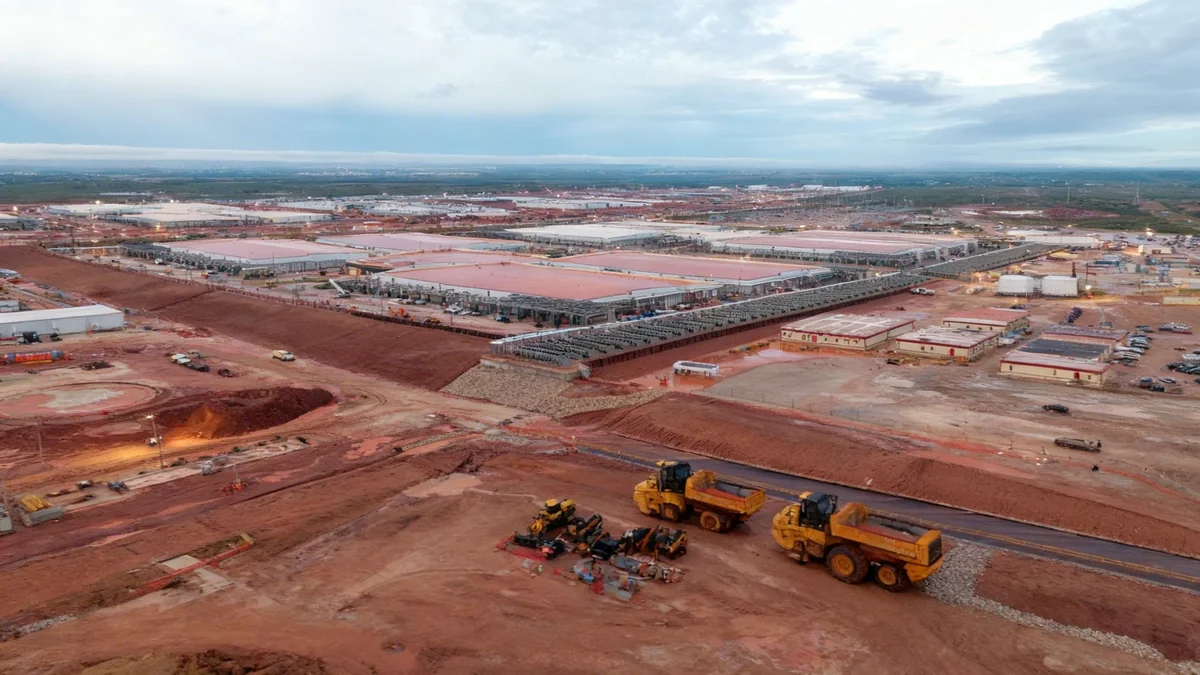

A significant gap in manufacturing productivity has emerged between the United States and China, driven not just by economic policies but by a fundamental difference in adopting large-scale automation. Evidence from major industrial players, such as Tesla, indicates that Chinese factories are leveraging robotics and artificial intelligence more effectively, creating a challenge for American reindustrialization efforts.
While Washington has focused on subsidies and trade policies to rebuild its industrial base, experts argue the central issue lies in the organizational approach to modern manufacturing. China has successfully integrated advanced automation into its production lines, a reality the U.S. has been slower to embrace, impacting its global competitiveness.
Key Takeaways
- China's manufacturing advantage is increasingly tied to its large-scale deployment of automation, robotics, and AI.
- U.S. factories, like Tesla's California plant, show lower per-worker productivity compared to their counterparts in China.
- Bipartisan efforts in the U.S. to reindustrialize often focus on subsidies, potentially overlooking the need for fundamental changes in production organization.
- The modern factory floor requires fewer but more highly skilled workers, a shift that China is managing more rapidly than the United States.
The New Face of Manufacturing
The 21st-century factory floor bears little resemblance to the assembly lines of the past. Today, modern manufacturing is defined by the integration of sophisticated technologies. Robotics, automation, and artificial intelligence are not just supplementary tools; they are the core of the production process in the world's most efficient facilities.
In China, this transformation is well underway. The country has systematically organized its industrial strategy around the large-scale implementation of these technologies. This allows factories to produce more goods with fewer human workers, who are often more skilled and command higher wages for managing complex automated systems.
A striking example is found in the electric vehicle sector. Tesla's factory in Shanghai consistently demonstrates higher output per worker than its facility in Fremont, California. This disparity is not an anomaly but a reflection of a broader trend. The Shanghai plant was built from the ground up with a focus on automation, enabling a level of efficiency that older, retrofitted factories struggle to match.
Beyond Subsidies and Trade Disputes
In Washington, the conversation about the manufacturing gap often centers on external factors. Policymakers from both parties frequently point to unfair subsidies, distorted markets, or other trade practices as the primary reasons for China's industrial dominance. While these factors are part of the equation, they do not tell the whole story.
The more critical challenge for the United States is internal. It is a failure to fully reckon with the technological reality of modern production. According to Jonas Nahm, a former White House economist in the Biden administration, the core issue is not that China is simply bending the rules, but that it has mastered a new way of manufacturing.
"The central challenge for the United States is not that China bends the rules. Around the world, modern manufacturing no longer resembles the mid-20th-century factory floor."
This organizational gap means that even with significant investment, U.S. industry may struggle to compete if it does not fundamentally change how it builds and operates its factories.
Efficiency by the Numbers
The productivity difference is clear. While specific figures fluctuate, reports consistently show Tesla's Shanghai Gigafactory producing vehicles at a significantly higher rate per employee compared to its U.S. counterparts. This highlights the power of a production system designed around automation from day one.
A Bipartisan Goal with a Potential Blind Spot
Rebuilding American manufacturing is one of the few economic goals that currently enjoys broad bipartisan support. Successive administrations have made it a priority, launching initiatives and allocating billions of dollars to bring production back to U.S. shores. These efforts aim to create jobs, secure supply chains, and restore the nation's industrial might.
However, if these policies focus solely on financial incentives without addressing the underlying technological and organizational deficits, their success may be limited. The assumption that simply building new factories in America will automatically close the gap with global competitors is a risky one. The key is not just where you build, but how you build.
The shift to an automated factory model has profound implications for the workforce. The jobs created in these new facilities are different from traditional manufacturing roles.
- Higher Skill Requirements: Workers need training in robotics, data analysis, and system maintenance.
- Fewer Overall Workers: Automation allows for greater output with a smaller, more specialized team.
- Increased Wages: The specialized skills required often lead to better-paying jobs.
America possesses immense technological strength, particularly in software and AI development. The challenge lies in translating this innovation from tech labs into the operational fabric of its manufacturing sector.
The Global Automation Race
The push toward factory automation is a global phenomenon. Countries like Germany, Japan, and South Korea have long been leaders in industrial robotics. China, however, has become the world's largest market for industrial robots, rapidly deploying them across various sectors to boost efficiency and overcome rising labor costs. The U.S. risks falling behind if it doesn't accelerate its own adoption rate.
The Path Forward for American Industry
To truly revitalize its manufacturing sector, the United States must look beyond political rhetoric and focus on the practical realities of modern production. This involves a multi-faceted approach that addresses technology, workforce development, and industrial strategy.
First, there needs to be a greater emphasis on organizing production around automation. This means designing new factories with AI and robotics at their core, rather than adding them as an afterthought. It requires investment in integrated systems that connect the entire production process, from supply chain management to final assembly.
Second, a massive effort in workforce training and education is essential. The country needs to build a pipeline of talent with the skills to operate and maintain the factories of the future. This includes collaboration between companies, community colleges, and technical schools to develop relevant curriculum and apprenticeship programs.
Finally, industrial policy should incentivize not just the construction of factories, but the adoption of advanced manufacturing technologies. This could include tax credits for automation investments or support for research and development in industrial AI. The goal should be to turn America's technological prowess into a tangible competitive advantage on the factory floor.
Without this strategic shift, the U.S. may find itself building factories that are already a generation behind their global competitors, perpetuating the very productivity gap it seeks to close.