


AI company Anthropic has launched a new suite of customizable tools for professional industries, creating a significant stir among technology investors and white-collar workers. The platform, named Claude Cowork, is designed to perform complex tasks across sectors like finance, law, and marketing, raising questions about the future of specialized software that currently dominates these fields.
The announcement has sent ripples through corporate offices, prompting a debate on whether a single, powerful AI platform can replace the numerous bespoke tools many companies rely on for daily operations. While some see a future of streamlined efficiency, others raise concerns about reliability and job displacement.
Key Takeaways
- Anthropic has released Claude Cowork, a general-purpose AI platform with customizable tools for specific industries.
- The launch has caused concern for investors backing specialized AI software companies, with some stock prices affected.
- Experts in fields like law and advertising are debating whether a generalist AI can match the performance of bespoke, industry-specific tools.
- Specialist companies argue their products offer superior safety, reliability, and integration into existing professional workflows.
A New Contender in the AI Workspace
Until recently, the model for AI in the workplace involved foundational platforms, like those from Anthropic and OpenAI, which other developers used to build highly specific tools. Companies like Harvey for legal services and Pigment for financial planning have become integral to their respective industries.
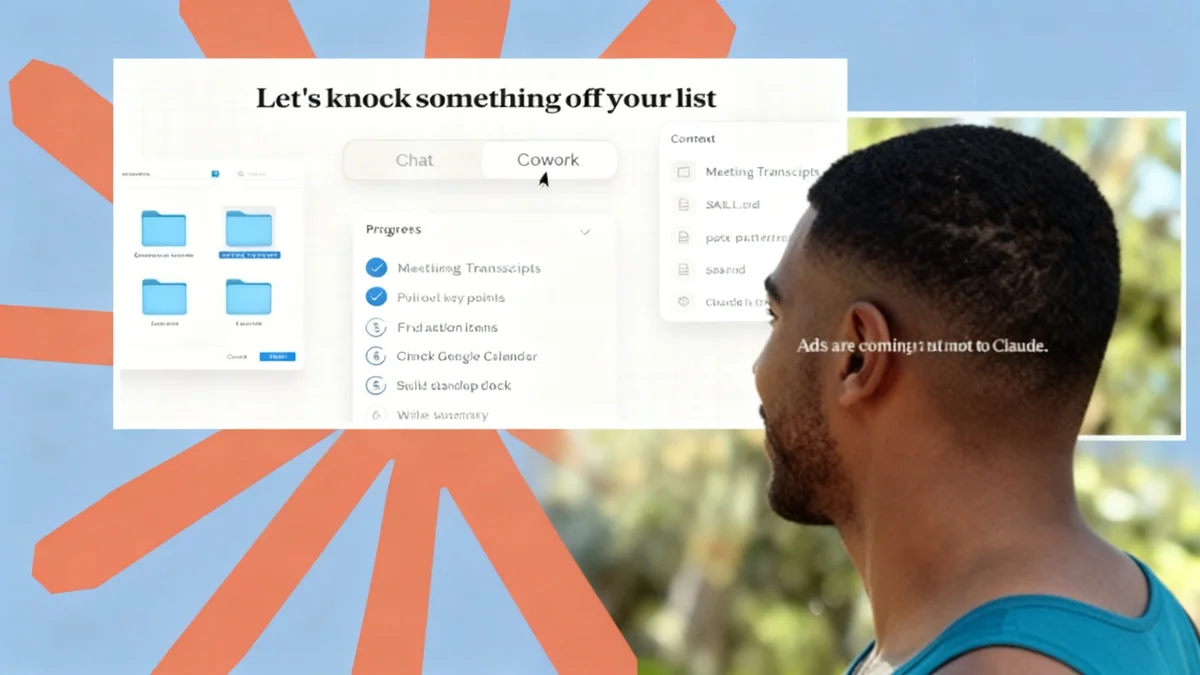
Anthropic's new strategy bypasses this model by offering a single, adaptable platform directly to businesses. Claude Cowork provides customizable "plug-ins" that can be configured for tasks like reviewing legal contracts or visualizing financial data. This move could potentially eliminate the need for multiple software subscriptions.
Guillaume Princen, Anthropic's head of digital native businesses, described the new product as "the same powerful agent, but much more accessible." The goal is to offer a centralized solution that can handle a wide array of professional tasks with minimal human supervision.
Major corporations including Goldman Sachs, Uber, and Netflix already use Anthropic's underlying models, but this new platform marks a direct entry into the specialized tool market.
The Power of AI in Practice
The efficiency gains from current AI tools are already significant. At the Finnish gaming company Supercell, a monthly performance report that once took a financial planning team three hours to complete is now generated by an AI agent in just five minutes. Lauri Sulonen, the company's head of financial planning, noted the AI made no mistakes and provided verifiable data, changing his initial skepticism about the technology's capabilities.
Specialized Firms Defend Their Niche
The announcement from Anthropic was met with a swift response from companies that develop industry-specific AI. Their defense centers on the argument that specialized knowledge and safety protocols cannot be easily replicated by a generalist model.
These companies claim their advantage lies in deep integration with existing workflows, robust audit trails, and enhanced security features tailored to regulated industries. "It’s tempting to assume that increasingly capable general-purpose AI will simply replace sector-specific legal tools," said Harry Borovick, general counsel at the AI document analysis company Luminance.
"This means consistency and trust are key and that . . . domain-specific tools only increase in value."
Borovick explained that legal work involves complex cross-border privacy, governance, and auditing requirements that demand a purpose-built system. This sentiment was echoed across the legal tech sector.
The Legal Field's Cautious Stance
In the legal world, the reaction to Claude Cowork has been lukewarm. Max Junestrand, CEO of legal AI firm Legora, stated on LinkedIn that there is a significant difference between a simple "plug-in" and a "production-grade platform used by hundreds of the world’s leading legal teams."
Some legal professionals who tested the new tool shared criticisms on social media, with one pointing out its reliance on Wikipedia for sourcing information. Analysts at JPMorgan also weighed in, suggesting that Claude Cowork is merely catching up to existing products and lacks the comprehensive legal libraries of established players like Relx and LexisNexis.
Did You Know? The two leading legal AI companies, Harvey and Legora, already build their specialized tools on top of foundational models from Anthropic and OpenAI, adding their own layers of functionality and safety.
Advertising Industry Faces a Different Risk
While the legal sector feels insulated by its complexity, analysts believe the advertising industry may be more vulnerable. AI is already transforming ad creation, with tools capable of generating campaigns from simple text prompts in minutes.
Large advertising agencies like WPP already incorporate models from Anthropic, OpenAI, and Gemini into their in-house platforms. An executive from the industry noted that while agencies possess vast client data that gives them an edge, the primary risk comes from a new direction.
The concern is that clients' own marketing teams could use a platform like Claude Cowork to develop and launch their own campaigns, potentially bypassing agencies altogether. This would disrupt a business model that has long relied on providing specialized creative and strategic services.
Generalist vs. Specialist: The Core Debate
The central question emerging from Anthropic's launch is whether convenience can trump specialization. Proponents of specialized AI argue that deep domain knowledge is essential for high-stakes professional work.
Eléonore Crespo, co-chief executive of the financial planning platform Pigment, framed the debate clearly. She stated that specialist providers succeed because they understand unique data structures, integrate into specific workflows, and provide the governance required by regulated sectors.
While acknowledging that a general model is a compelling entry point for experimentation, she concluded with a powerful distinction:
"The reality is that generalists are for play, but specialists are for work."
As businesses continue to explore AI integration, this divide between accessible, all-in-one platforms and tailored, high-reliability tools will likely define the next phase of the technology's adoption in the professional world.