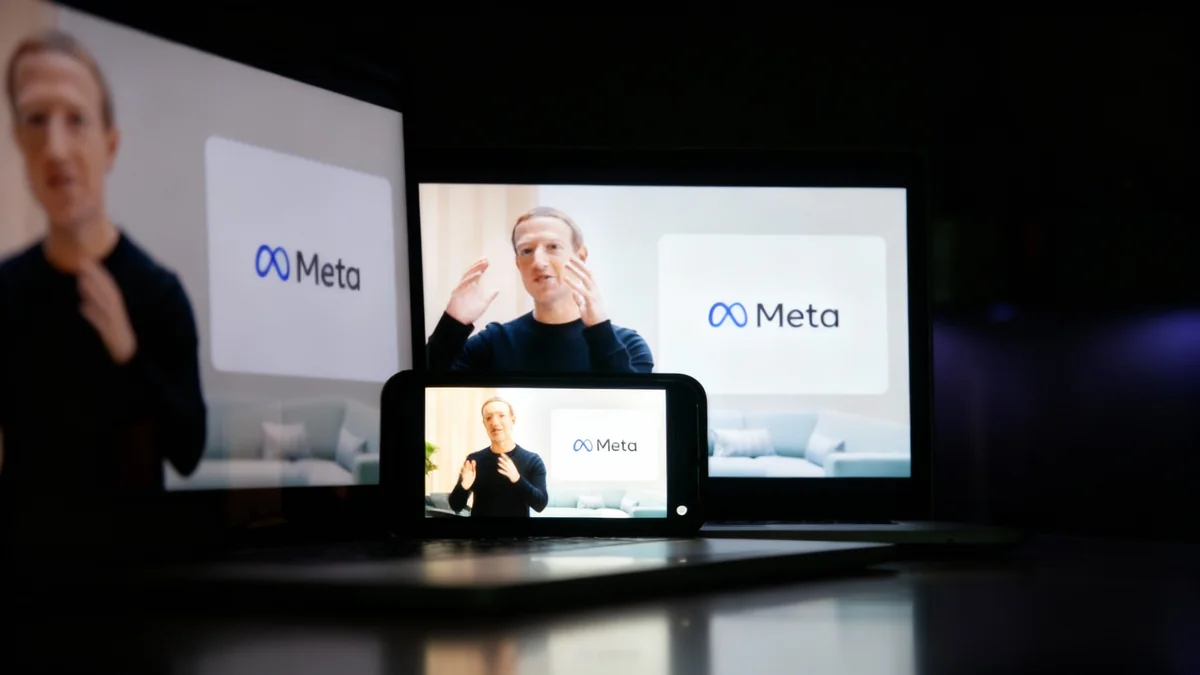





Meta Platforms is significantly reducing its investment in the metaverse, a strategic shift that redirects billions of dollars and top talent toward winning the artificial intelligence race. The company is now prioritizing the development of AI-powered wearable devices, signaling a major change in direction from the virtual world initiative championed by CEO Mark Zuckerberg just a few years ago.
Key Takeaways
- Meta is considering budget cuts of up to 30% for its metaverse division, Reality Labs.
- The company's focus is shifting to artificial intelligence, specifically AI-powered wearables like smart glasses.
- Investors reacted positively to the news, with Meta's market value increasing by approximately $60 billion following the announcement.
- The Reality Labs division has accumulated over $70 billion in losses since 2021.
- The strategic change will likely result in job losses within the metaverse teams, including those working on Horizon Worlds and Quest headsets.
A Change in Corporate Vision
In 2021, Mark Zuckerberg announced a bold vision for an interconnected virtual world, the metaverse, and even rebranded his company from Facebook to Meta to underscore this commitment. The goal was to create immersive digital spaces for socializing, gaming, and commerce. However, the project has been plagued by challenges.
The Reality Labs division, tasked with building the metaverse, has faced significant hurdles. These include technical difficulties in creating a seamless user experience, public safety concerns, and a general lack of consumer enthusiasm for the platform. These factors have contributed to mounting financial pressure on the company to reconsider its strategy.
A Costly Endeavor
Since 2021, Meta's Reality Labs division has reported losses exceeding $70 billion. This massive expenditure with little immediate return prompted calls from investors to curb spending on the long-term metaverse project.
The Strategic Pivot to Artificial Intelligence
With the metaverse failing to deliver on its initial promise, Meta is now channeling its resources into the burgeoning field of artificial intelligence. Zuckerberg has articulated a new ambition: to develop "personal superintelligence" that he believes will one day be smarter than humans.
This AI-first strategy has several key components:
- AI-Powered Wearables: The company sees AI glasses and other wearable devices as the next major computing platform, potentially supplanting the smartphone.
- Top Talent Acquisition: To bolster this effort, Meta recently hired Alan Dye, a top design executive from Apple, to lead a new design studio focused on wearable AI.
- Infrastructure Investment: Billions are being poured into building the costly infrastructure and hiring the research talent needed to develop advanced, open-source AI models and chatbots for its suite of apps.
A Meta spokesperson confirmed the shift in investment priorities. "Within our overall Reality Labs portfolio we are shifting some of our investment from Metaverse towards AI glasses and Wearables given the momentum there," the spokesperson stated. They added, "We aren’t planning any broader changes than that."
Financial Markets and Investor Sentiment
The announcement of metaverse spending cuts was met with immediate approval from Wall Street. Investors, who had long been skeptical of the massive, open-ended spending on a project with no clear path to profitability, responded positively.
On the day of the news, Meta's shares rose as much as 7 percent, ultimately closing 3.4 percent higher. This surge added approximately $60 billion to the company's market capitalization, a clear sign of investor confidence in the new AI-focused direction.
A Cautious Outlook on AI Spending
While investors welcomed the metaverse cuts, they remain watchful of Meta's aggressive spending on AI. In October, Zuckerberg's announcement of even higher AI investment plans for the upcoming year caused a significant market reaction, with shares dropping over 10 percent. This wiped more than $208 billion from the company's valuation in a single day, highlighting the market's sensitivity to large-scale tech investments.
The Human Impact and Future of Reality Labs
The strategic realignment is expected to have a direct impact on employees within the Reality Labs division. Discussions of budget cuts as high as 30 percent suggest that job losses are likely, beginning early next year. Teams working on the flagship metaverse project, Horizon Worlds, and the Quest virtual reality headsets are expected to be affected.
This marks another phase in a series of executive reshuffles and layoffs that have occurred at the company over the past year as it recalibrates its long-term goals.
"The two areas are . . . related . . . Metaverse technologies will also help to deliver AI as well. For example, embodying AI agents will take advantage of the deep investment we’ve made in avatars over the last several years." - Mark Zuckerberg, April 2023 investor call.
Despite the cutbacks, Zuckerberg has suggested that the work done on the metaverse is not entirely lost. He has previously linked the two initiatives, noting that the company's investment in virtual avatars could be repurposed for AI agents in the future. This suggests that while the grand, all-encompassing vision of the metaverse is being scaled back, its technological components may find new life in Meta's AI-driven future.
The focus now is clearly on tangible products with more immediate potential, like the Meta Ray-Ban smart glasses, which have shown early signs of success. The company is betting that these AI-powered wearables, not immersive virtual worlds, will define the next chapter of human-computer interaction.