




Nvidia, the California-based semiconductor company, announced on Wednesday that its profit for the last fiscal year reached $120 billion. This figure highlights the company's central role in the global artificial intelligence boom, which has created unprecedented demand for its specialized chips.
The company's latest quarterly report revealed a profit of $43 billion, further cementing its position as a primary beneficiary of the tech industry's massive investment in AI infrastructure. The results show a dramatic acceleration in growth for the chipmaker.
Key Takeaways
- Nvidia's total profit for the fiscal year was $120 billion.
- The company reported a quarterly profit of $43 billion.
- Revenue from its AI data center division surged 71 percent to $61.7 billion in the last quarter.
- Nvidia currently controls an estimated 90 percent of the market for advanced AI semiconductors.
Unprecedented Financial Growth
Nvidia's financial performance places it in an elite group of global corporations. Only a handful of companies, including tech giants like Apple, Microsoft, and Alphabet, have ever surpassed the $100 billion annual profit mark. However, Nvidia's rate of growth is what sets it apart.
Just three years ago, the company’s annual profit stood at $4.4 billion. The recent figures represent a staggering increase, directly linked to the explosive demand for generative AI technologies that rely on its powerful processors. This rapid expansion underscores the fundamental shift in computing driven by artificial intelligence.
From Billions to Hundreds of Billions
Nvidia's journey from a $4.4 billion annual profit just three years ago to $120 billion today illustrates one of the fastest corporate growth stories in recent history. This equates to an increase of more than 2,600% over the three-year period.
Dominating the AI Hardware Market
The company's success is built on its dominance in the market for graphics processing units (GPUs), which have become the essential hardware for training and running complex AI models. According to market analysis, Nvidia controls approximately 90 percent of the market for these critical components.
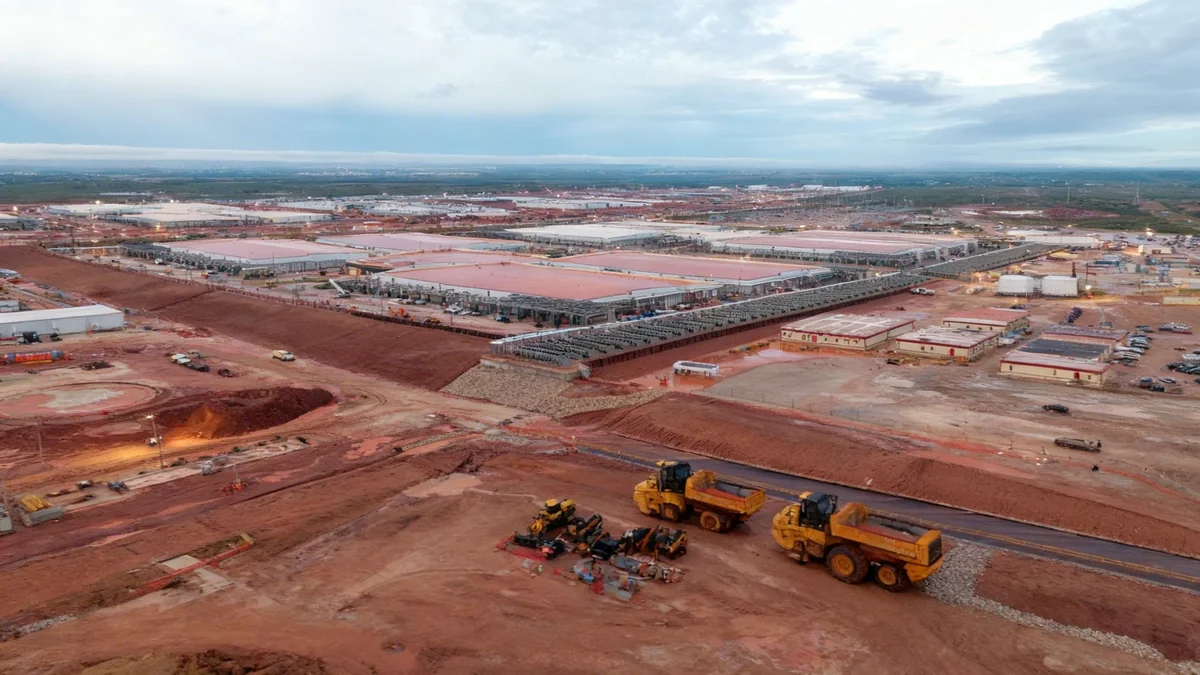
This near-monopoly position means that as other major technology companies invest heavily in AI, a significant portion of that spending flows directly to Nvidia. The company's chips are the foundation of the massive data centers being built by the world's largest tech firms.
The Engine of the AI Revolution
The demand is fueled by plans from companies like Google, Amazon, Microsoft, and Meta to collectively spend more than half a trillion dollars this year on building out their AI capabilities. These investments are focused on creating the vast server farms necessary to power next-generation AI services, from advanced search engines to sophisticated business tools.
Nvidia's data center division, which produces these high-demand chips, reported quarterly revenue of $61.7 billion. This represents a 71 percent increase, signaling that the demand for its hardware is not only strong but also accelerating.
What Are AI Chips?
The semiconductors Nvidia produces, often called GPUs, are designed for parallel processing. This allows them to handle thousands of calculations simultaneously, a capability that is essential for training the large language models that power modern AI. Their design makes them far more efficient for AI tasks than traditional central processing units (CPUs).
A Market Transformed
The insatiable demand for AI processing power has reshaped the semiconductor industry and propelled Nvidia to the forefront of the technology world. Led by CEO Jensen Huang, the company has successfully positioned its products as indispensable for any organization serious about competing in the age of artificial intelligence.
This strategic positioning has translated into financial results that were once unimaginable for a hardware company. The company's performance is now a key indicator of the health and trajectory of the entire AI sector.
"The numbers speak for themselves. The tech industry is undergoing a fundamental platform shift, and Nvidia is providing the foundational tools for that transition," noted a senior market analyst on Wednesday.
As businesses across all sectors, from healthcare to finance, race to integrate AI into their operations, the demand for the specialized hardware that powers these systems is expected to remain high. Nvidia's latest earnings report is not just a reflection of its own success, but a clear signal of the scale and pace of the ongoing AI transformation.