


OpenAI is facing an urgent need for more computing power as its ambitious "Stargate" supercomputer project with partner Microsoft has reportedly stalled. The delay is forcing the artificial intelligence leader to actively seek alternative sources for the specialized chips essential for training its next generation of AI models.
This development introduces significant challenges for OpenAI, potentially affecting the timeline for its future products and its competitive position in the rapidly accelerating AI industry. The scramble for computing resources highlights a critical bottleneck facing the entire sector: an insatiable demand for powerful hardware that currently outstrips supply.
Key Takeaways
- OpenAI's plan to build the "Stargate" AI supercomputer with Microsoft is facing significant delays.
- The company is now actively searching for alternative sources of computing power to avoid development bottlenecks.
- This situation underscores the intense global competition for specialized AI chips, primarily from Nvidia.
- Any prolonged delay could impact OpenAI's ability to maintain its lead over rivals like Google, Anthropic, and Meta.
The Stargate Initiative Hits a Roadblock
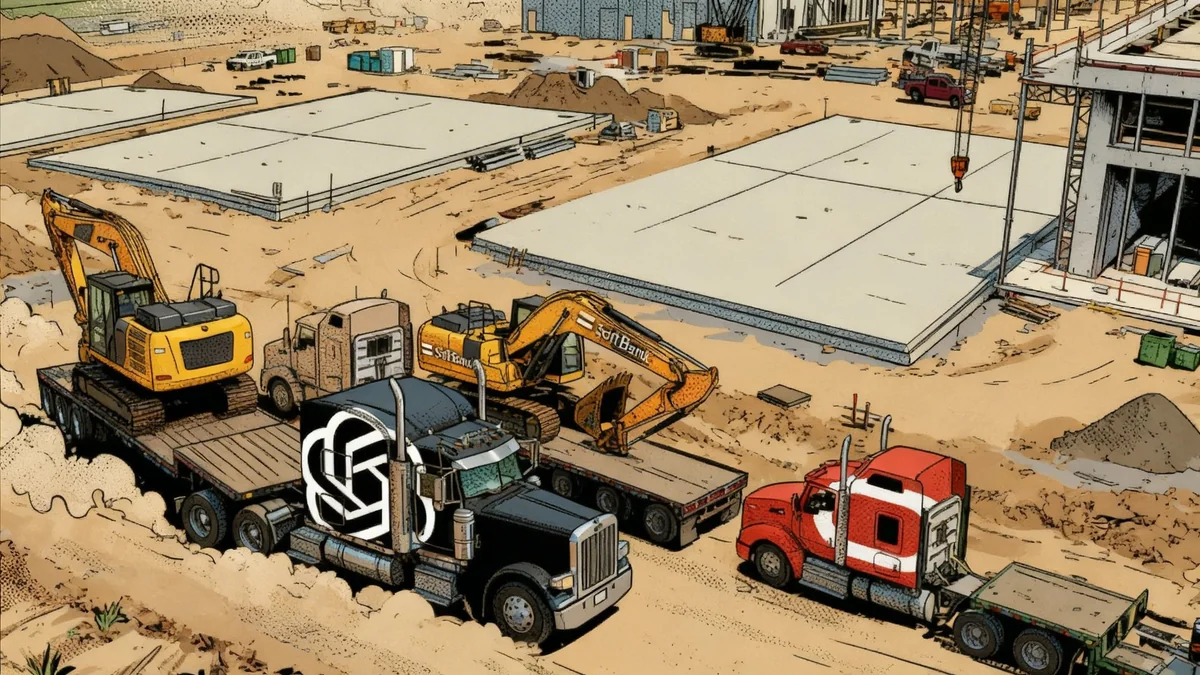
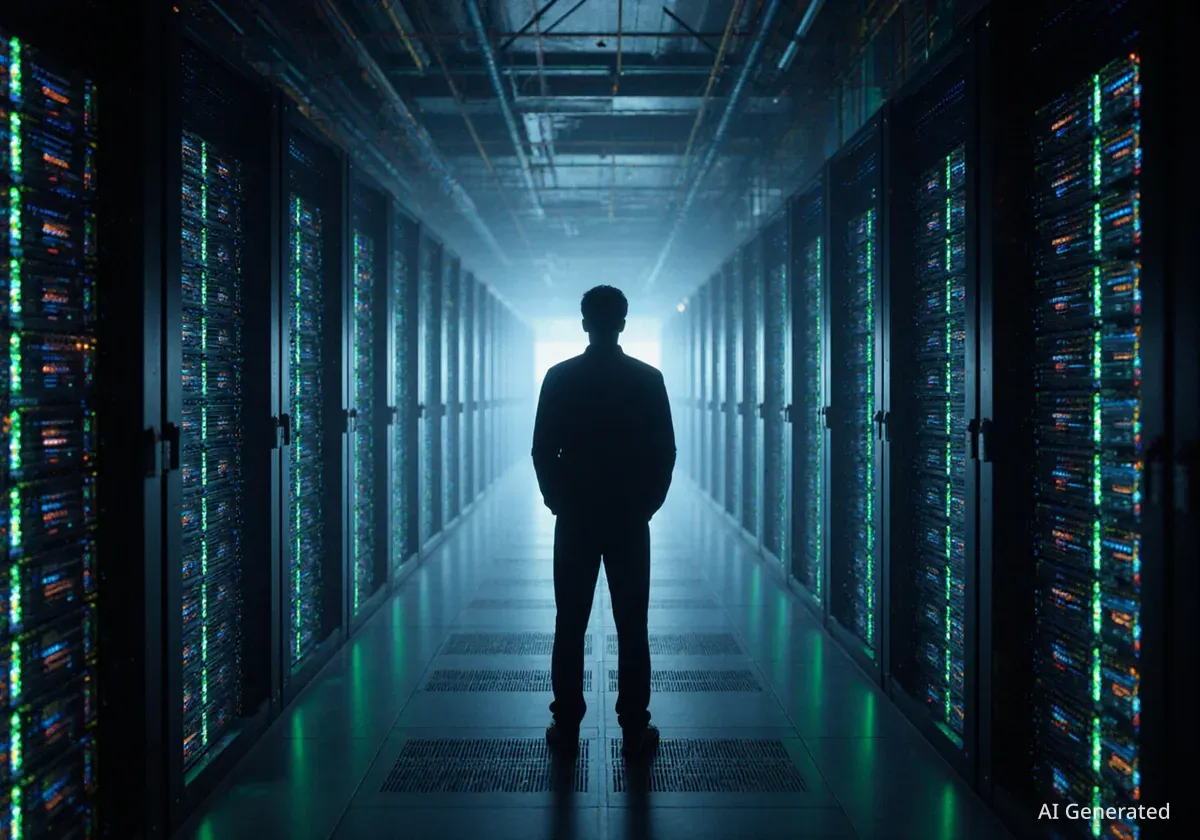
The "Stargate" project, a multi-phase collaboration between OpenAI and Microsoft, was announced as a monumental step in AI infrastructure. The plan involved constructing a data center that would house a supercomputer containing millions of specialized AI processors, with an estimated cost exceeding $100 billion.
This machine is considered crucial for training the sophisticated AI models that OpenAI envisions for the future, including successors to its current flagship, GPT-4. However, progress on this critical infrastructure has reportedly slowed, creating a gap in OpenAI's computational roadmap.
While the specific reasons for the delay remain undisclosed, projects of this magnitude are inherently complex. They involve immense logistical, engineering, and supply chain challenges, from securing a reliable power source to procuring millions of high-demand components in a constrained market.
An Industry-Wide Hunger for Power
The challenge facing OpenAI is not unique. The entire technology industry is grappling with a severe shortage of the high-performance graphics processing units (GPUs) that are the lifeblood of modern AI.
Companies like Google, Meta, and Amazon are all investing billions of dollars to build their own AI infrastructure, leading to fierce competition for a limited supply of chips. This demand has turned GPUs into a strategic asset, with access to computing power becoming a key determinant of success in the AI race.
Navigating the Compute Crunch
In response to the Stargate delay, OpenAI is now pursuing a multi-pronged strategy to secure the necessary computing resources. This involves exploring partnerships with other data center providers and potentially leasing capacity from other cloud computing services.
This pivot is a necessary but costly maneuver. Leasing computing power from third parties is often more expensive and less efficient than using a custom-built, optimized system like Stargate. It also introduces potential complexities around data security and model architecture.
The search for alternative compute also involves looking beyond a single hardware provider. While Nvidia remains the dominant player, OpenAI and others are evaluating custom-built AI chips from companies like Google (TPUs), as well as emerging hardware from startups aiming to break into the lucrative market.
Implications for the AI Race
The delay in building Stargate and the subsequent scramble for GPUs could have significant ripple effects for OpenAI and the broader AI landscape.
Firstly, it could slow the pace of innovation at the company. Without sufficient computing power, training larger and more capable models becomes difficult, potentially allowing competitors to close the gap. Rivals are investing heavily to catch up, and any stumble by the frontrunner will be seen as an opportunity.
- Competitive Pressure: Google continues to advance its Gemini family of models, while Anthropic's Claude models are seen as strong competitors.
- Talent Retention: Top AI researchers are drawn to organizations with access to the best computing resources. A perceived shortage could make it harder for OpenAI to attract and retain elite talent.
- Product Timelines: The development of future products, including a potential GPT-5 and more advanced multimodal systems, is directly tied to the availability of massive-scale training infrastructure.
The situation highlights a fundamental reality of the current AI boom: progress is inextricably linked to hardware. While algorithmic breakthroughs are essential, they cannot be realized without the raw computational force to bring them to life. OpenAI's current challenge is a stark reminder that in the race for artificial general intelligence, access to silicon is as important as brilliant ideas.