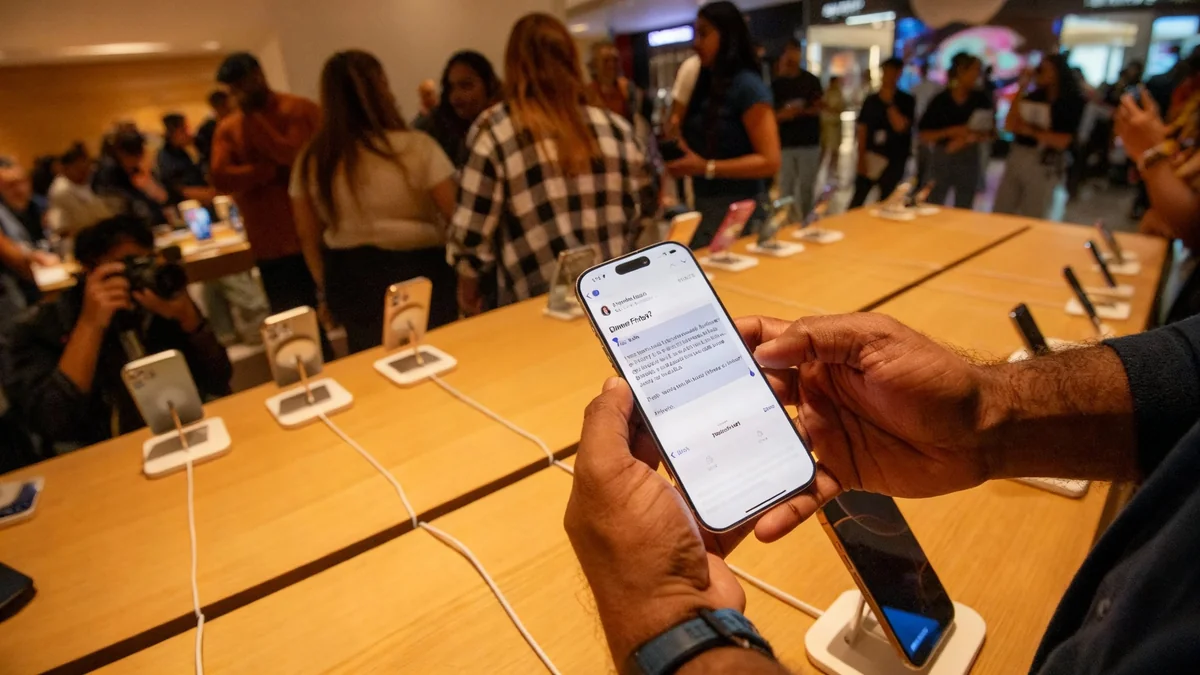




Apple Inc. is reportedly finalizing an agreement to integrate a major artificial intelligence model from Alphabet Inc.'s Google into its Siri voice assistant. This strategic move could see Apple paying Google approximately $1 billion annually for access to a 1.2 trillion parameter AI model, significantly enhancing Siri's capabilities.
The potential partnership follows an extensive evaluation period by Apple. Sources close to the negotiations indicate that both technology giants are now in the final stages of cementing this substantial deal.
Key Takeaways
- Apple is close to a deal to use Google's 1.2 trillion parameter AI model for Siri.
- The agreement could involve Apple paying Google around $1 billion per year.
- This integration aims to significantly overhaul and improve the Siri voice assistant.
- The partnership highlights increasing collaboration between major tech competitors in the AI space.
Siri's Major AI Overhaul
Apple's Siri, a long-standing feature on its devices, is set for a significant transformation. The proposed integration of Google's advanced AI model is expected to be central to this overhaul. This development suggests a strategic pivot for Apple, which has historically relied on its proprietary technology for core features.
The 1.2 trillion parameter model is a large-scale AI system. Such models are known for their ability to process complex requests, understand context, and generate more natural, human-like responses. This could mean a more intuitive and powerful Siri for users.
AI Model Scale
A 1.2 trillion parameter AI model is considered extremely large and advanced. These models can handle vast amounts of data and perform complex tasks, leading to more sophisticated AI interactions.
The Financial Implications
The reported annual payment of $1 billion underscores the value Apple places on enhancing Siri with cutting-edge AI. This figure also reflects the significant investment and research Google has poured into developing its large language models and other AI technologies.
This financial commitment represents a substantial operating expense for Apple. It also signifies a new revenue stream for Google, further solidifying its position as a leading provider of AI infrastructure and services.
"This potential deal highlights a growing trend where even competing tech giants are willing to collaborate on foundational technologies like AI to stay competitive and deliver advanced features to their users," stated a technology analyst familiar with market dynamics.
Competitive Landscape and AI Development
The artificial intelligence landscape is highly competitive. Companies are investing heavily in developing sophisticated AI models to power various applications, from voice assistants to generative content tools. Apple's move to partner with Google for Siri's AI capabilities can be seen as a strategic decision to accelerate its own AI development and keep pace with industry advancements.
Other tech companies are also actively developing or licensing advanced AI. This deal, if finalized, could set a precedent for future collaborations between major players in the AI sector.
Background on Siri
Siri was first introduced with the iPhone 4S in 2011. It was one of the earliest widely adopted voice assistants. Over the years, it has seen various updates and improvements, but has faced increasing competition from other AI assistants in terms of natural language understanding and overall capability.
Future of Voice Assistants
The integration of a more powerful AI model could significantly change how users interact with Siri. Improved understanding of natural language, better contextual awareness, and more accurate responses are all potential benefits. This could make Siri a more indispensable part of the Apple ecosystem.
Such an enhancement could also influence the broader market for voice assistants. As AI capabilities advance, user expectations for these tools will likely grow, pushing all developers to innovate further.
- Enhanced Understanding: Siri may better understand complex commands and nuanced language.
- Contextual Awareness: The assistant could retain context across multiple interactions.
- More Natural Responses: Output might become more human-like and less robotic.
- Broader Capabilities: Siri could handle a wider range of tasks and integrate more deeply with apps.
The Strategic Partnership
This potential partnership between Apple and Google is notable because the two companies are direct competitors in many areas, including smartphones and operating systems. However, in the rapidly evolving field of AI, collaboration on core technologies can be mutually beneficial.
For Apple, it means gaining access to advanced AI without having to build the entire model from the ground up. For Google, it represents a significant commercial opportunity and validates its leadership in AI research and development.
The agreement is still being finalized. Both companies have remained private about the ongoing discussions. The outcome of these talks will shape the future direction of one of the world's most widely used voice assistants.