


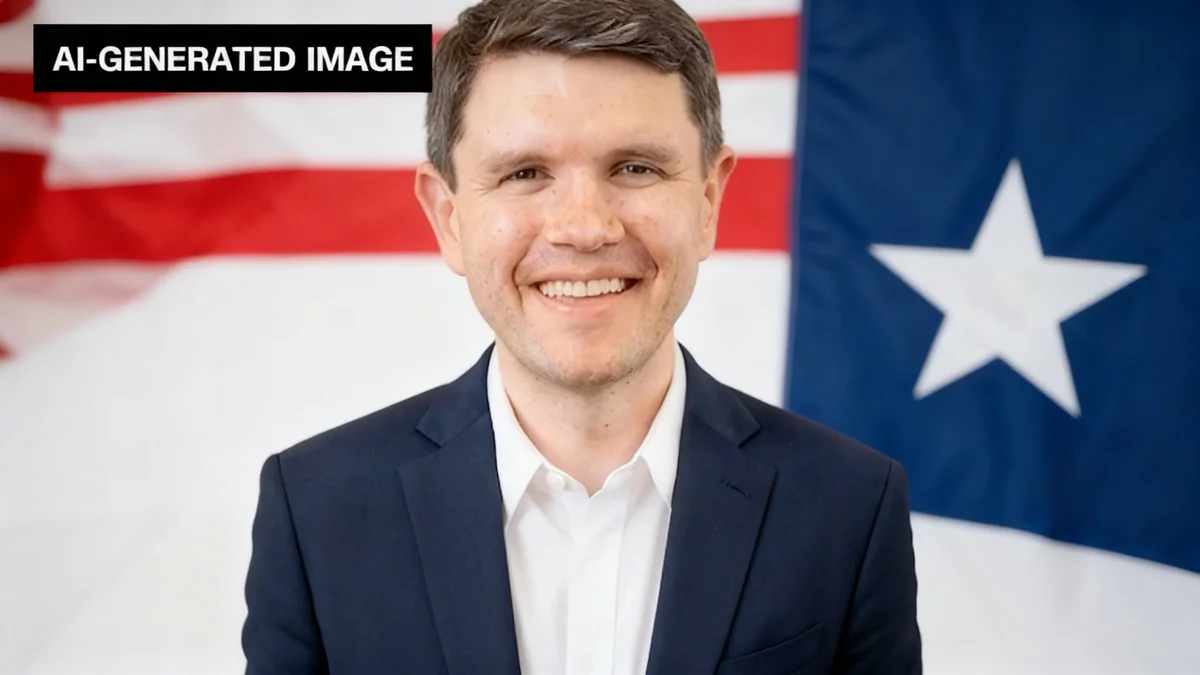

In a trendy Seoul bakery, advertisements feature stunning models posing with pastries. A small sign reveals a surprising fact: the models are not human. They are generated by artificial intelligence. Even more surprising is the reaction from customers, who overwhelmingly express fascination and approval, a stark contrast to the growing anxiety surrounding AI in many Western nations.
This scene captures a broader national sentiment. While countries like the United States and the United Kingdom grapple with the potential dangers of AI, South Korea is largely embracing it as an essential tool for future growth and survival. This divergence in public opinion is rooted in unique economic, demographic, and historical factors that position the nation at the forefront of AI adoption.
Key Takeaways
- Public opinion polls show South Koreans are significantly more optimistic about AI than citizens in the U.S., Canada, and the UK.
- Historical reliance on technology for economic growth has created a culture that views AI adoption as necessary for survival.
- A severe demographic crisis, including a rapidly aging population and the world's lowest fertility rate, is a major driver for adopting AI and robotics to fill labor gaps.
- The South Korean government actively promotes AI through innovation-focused legislation, contrasting with the regulation-heavy approach of the European Union.
- Despite widespread optimism, concerns about job displacement are emerging, particularly from powerful labor unions.
A Global Divide in AI Perception
Recent international surveys highlight a significant gap in how different cultures view the rise of artificial intelligence. A Pew Research Center study found that only 16 percent of South Koreans reported being more concerned than excited about AI. This figure represents the lowest level of concern among the 25 countries surveyed.
In contrast, 50 percent of respondents in the United States expressed more concern than excitement, a sentiment shared by 49 percent in Australia and 39 percent in the United Kingdom. Further data from a Korean research firm indicates that 70 percent of its citizens believe AI will have a positive societal impact.
AI in Daily Life
The embrace of AI in South Korea is not just theoretical. According to market research firm Wiseapp·Retail, 40 percent of the country's smartphone owners are already using the ChatGPT application. Furthermore, the Korea Chamber of Commerce and Industry reports that more than half of Korean workers say they already use AI in their professional lives.
This widespread acceptance is visible on the streets of Seoul. Seo Chang Woo, owner of the Wallstreat Financier bakery, decided to use AI-generated models for his marketing materials. He found it was an affordable way to achieve a high-quality, gallery-like aesthetic for his shop. "Most people were in awe when I told them the models weren’t human," he noted, adding that very few expressed concern.
Technology as a National Identity
To understand South Korea's optimism, one must look at its modern history. The nation's transformation from a war-ravaged country in the 1950s into a global economic powerhouse was fueled by technological advancement. Dominance in semiconductors, shipbuilding, and automotive manufacturing is a source of immense national pride, taught to students from a young age.
For many Koreans, technology is not an abstract threat but a proven engine for prosperity and survival. Sejin Kim, associate director at the Center for Korean Innovation and Competitiveness, explains this mindset. "For decades, adopting new technology was basically linked to survival and growth," Kim stated. This creates a cultural fear of being left behind.
"AI turns into kind of FOMO, so people feel like ‘If I don’t learn how to use this, and then everybody used it already, then I’m going to be left out.’”
Sejin Kim, Center for Korean Innovation and Competitiveness
This perspective frames AI not as a job-killer, but as the next essential tool the nation must master to maintain its competitive edge on the global stage. It is seen as the latest chapter in a long story of technological adaptation.
The Demographic Urgency
Beyond history and economics, a looming demographic crisis is arguably the most powerful catalyst for AI adoption in South Korea. The country is aging more rapidly than any other developed nation and has the world's lowest fertility rate. Projections are stark: some analysts predict the population could shrink to just 15 percent of its current size within a century.
A Shrinking Workforce
In some worst-case scenarios, estimates suggest that by 2098, people over the age of 65 will outnumber the working-age population. This creates an existential challenge for maintaining economic productivity and funding social services. Many see AI and advanced robotics as the only viable solution to this impending labor shortage.
This reality is driving significant investment in what is locally termed "physical AI"—intelligent robots capable of performing tasks in manufacturing, logistics, and service industries. Haeyoon Kim, founder of the newsletter Korea Tech & Trade Watch, highlights the inevitability of this path.
"We don’t have enough of a young workforce to be put to work. Then what are we going to naturally rely on — powered machines or robots, right?" she commented. This demographic pressure is a reality other Western nations are also beginning to face, suggesting that South Korea's current embrace of AI may be a preview of a more global trend.
Government Leads the Charge
The South Korean government has been instrumental in shaping a positive narrative around AI. It has invested heavily in the sector and crafted legislation designed to foster innovation rather than restrict it. The country's Basic Act on Artificial Intelligence prioritizes building an institutional framework for development, with regulations considered primarily to build public trust.
This approach differs sharply from that of the European Union, whose AI Act is regulation-forward, focusing heavily on risk minimization and protecting individual rights. While the U.S. has seen vocal support for AI from some political figures, legislative action has been slow and fragmented, lacking a unified national message.
By actively promoting AI as an essential and inevitable part of the future, the government helps reinforce the public's optimistic outlook. However, this pro-tech stance is not without its challenges.
Whispers of Resistance
Despite the prevailing optimism, anxiety about AI's impact on employment is beginning to surface. A 2023 survey found that nearly half of Korean workers believe their jobs could eventually be replaced by AI. This abstract fear is now manifesting in tangible labor disputes.
The most prominent example involves Hyundai Motor Group, where plans to introduce AI-driven humanoid robots into its factories have met with fierce opposition from its powerful labor union. Negotiations have stalled, and the union has threatened strikes if the company proceeds with deploying robots without an agreement. This conflict underscores the growing tension between the national drive for innovation and individual fears of displacement.
According to Koh Achim, who authors an AI ethics newsletter, building a movement of healthy skepticism in South Korea is an uphill battle. He believes it will take time for people to look past the immediate benefits promoted by the government and corporations.
"It’s going to be more behind-the-scenes and systematic, and that’s why I think it will take a while for people to rally around its issues," he said. For now, South Korea remains a nation charging confidently into an AI-powered future, offering the rest of the world a glimpse of what happens when a society decides to embrace, rather than fear, the technological revolution.