


A wave of economic anxiety driven by artificial intelligence is quietly building into what some political strategists believe will be the defining issue of the 2028 U.S. presidential election. With predictions of significant job displacement in the white-collar sector, analysts are warning that political parties must formulate a clear response or risk alienating a growing coalition of disaffected voters.
The debate centers on how to manage a technology that could reshape the American workforce, creating immense wealth for a few while rendering many professional jobs obsolete. This emerging challenge is forcing a conversation about regulation, wealth distribution, and the fundamental social contract in an AI-driven economy.
Key Takeaways
- Political analysts predict the economic impact of AI will become a central issue in the 2028 U.S. election.
- Predictions suggest AI could displace up to 50% of entry-level white-collar jobs within five years.
- There are growing calls for policies to regulate AI, tax its profits, and invest in social programs to counter job instability.
- Concerns are rising that the Democratic party could lose its urban professional base if it fails to address AI-driven economic anxiety, mirroring past losses of blue-collar voters.
The New Economic Battlefield
The conversation around artificial intelligence is shifting from technological curiosity to economic urgency. A stark forecast from Dario Amodei, the chief executive of AI company Anthropic, projects that the technology could displace half of all entry-level white-collar jobs within the next five years. This prediction is fueling a growing sense of unease among Americans.
Public sentiment reflects this anxiety. Recent polling indicates that a majority of Americans are more concerned than excited about the increasing integration of AI into daily life. This apprehension is not limited to factory floors; it has now reached the offices of software engineers, analysts, and other professionals who form the backbone of the modern economy.
Rob Flaherty, who served as a deputy campaign manager for Kamala Harris in 2024, argues that this issue is steadily becoming the country's biggest political challenge. "The economics of A.I. may not be as politically urgent as... other issues," he noted, "but it is steadily if quietly becoming the country’s biggest political issue."
A Familiar Pattern of Disruption
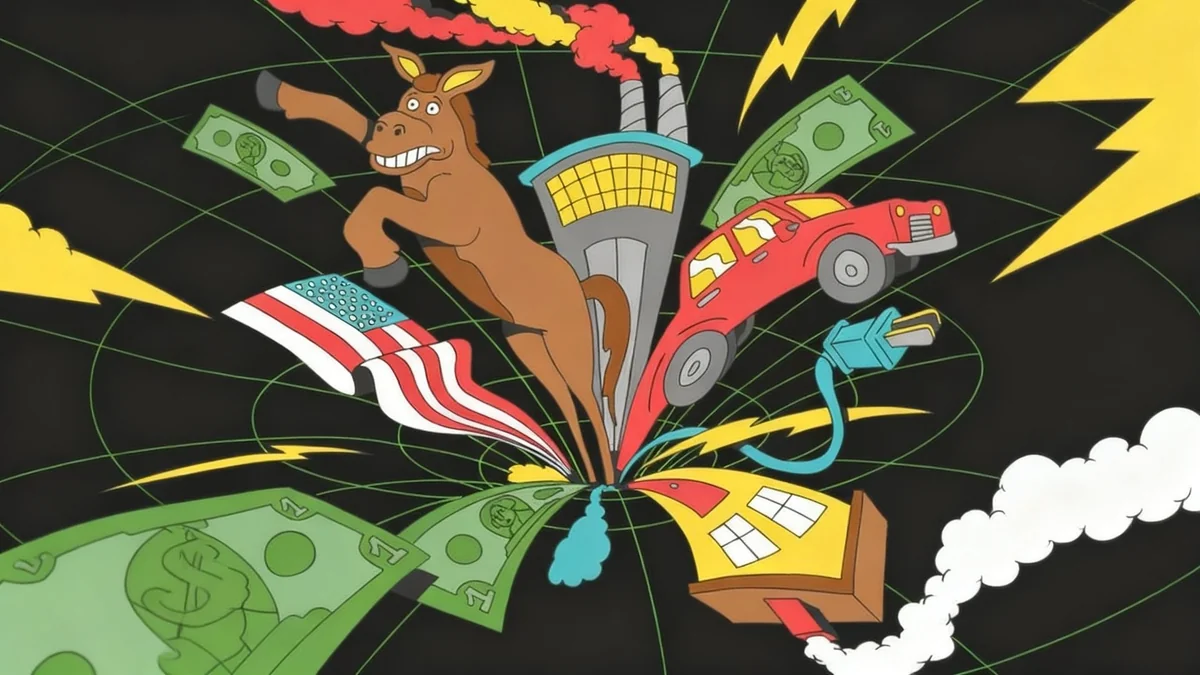
Analysts draw parallels between the current AI revolution and the wave of globalization and automation that began decades ago. Those forces devastated many blue-collar manufacturing communities, leading to a significant political realignment. The concern now is that history may repeat itself, this time impacting the urban professional class that has become a core constituency for the Democratic party.
A Political Opening for Both Parties
The widespread concern over AI's impact creates a significant political opportunity. Strategists suggest that the party that successfully channels public frustration and offers a compelling vision for the future could gain a decisive advantage. This has led to some bipartisan action, though the broader strategic approaches differ.
In a notable move, Senator Josh Hawley (R-MO) and Senator Mark Warner (D-VA) introduced legislation that would require companies to report AI-related layoffs. This type of policy is seen as a way to bring transparency to the issue and resonate with voters worried about their job security.
However, some observers believe Democrats have a unique opening to monopolize the issue. They point to the close relationships between some Republican figures and the tech executives driving the AI boom. By positioning themselves as the party willing to confront Big Tech's excesses, Democrats could build a new coalition.
"Being told you have no agency over a force that will reshape your job prospects, your community and your family’s future is a recipe for backlash," Flaherty stated, emphasizing the need for political leaders to offer solutions rather than accept AI's trajectory as inevitable.
The Policy Questions Shaping the Debate
As the 2028 election cycle approaches, the debate over AI is coalescing around three fundamental questions that will likely shape party platforms and campaign promises. These questions move beyond simple regulation and touch on the core structure of the American economy and society.
1. Who is in charge?
A small group of unelected corporate executives currently controls the development of technology that will have profound societal effects. The central policy question is whether AI should be treated as essential infrastructure, similar to railroads or utilities, and regulated in the public interest. Proponents of this view argue for rules ensuring safety, transparency, and democratic oversight.
2. Who benefits from the gains?
AI is projected to generate trillions of dollars in value, potentially representing one of the largest upward transfers of wealth in history. Since these systems are trained on data created by the public—our writing, photos, and conversations—a debate is emerging over who is entitled to the financial rewards. Policy proposals include:
- Aggressive Taxation: Implementing new taxes on AI companies to fund social programs like healthcare, affordable housing, and child care.
- An 'AI Dividend': Modeled on Alaska's oil dividend, this would distribute a portion of AI-generated wealth directly to citizens.
The underlying principle is that if traditional employment becomes less stable, access to basic necessities should not depend solely on having a job.
The Cost of Inaction
Silicon Valley has already invested heavily in lobbying to prevent strict AI regulation. Reports show hundreds of millions of dollars have been spent to influence lawmakers and elections, signaling a major political fight ahead for those advocating for stronger government oversight.
3. What is the future of community and identity?
Beyond the economic impact, there is a growing concern that AI will deepen social fragmentation and loneliness as jobs become more precarious. This raises questions about the government's role in strengthening the social fabric. Some strategists propose a return to large-scale public investment in civic life, reminiscent of programs like the Works Progress Administration during the Great Depression. This could include funding for civic spaces, national service programs, and other initiatives that bring Americans together.
Building a New Coalition
The challenge and opportunity for political leaders is to unite a diverse and growing group of people affected by technological disruption. The coalition of the disaffected could soon include not just underemployed factory workers but also recently laid-off software engineers and recent college graduates struggling to enter the workforce.
Policy choices made in the next few years will determine whether AI becomes a tool for shared prosperity or a driver of greater inequality. For political parties, the task is to offer voters both accountability for the powerful tech companies shaping the future and a hopeful vision for what that future could look like. The party that successfully crafts this message may well define the political landscape for a generation.