

A contentious debate over the future of artificial intelligence has created a significant rift within President Donald Trump's administration, pitting pro-growth technology advocates against conservative populists wary of AI's societal impact. This internal struggle culminated in a tense White House meeting and a recent executive order that seeks to establish federal control over AI regulation, a move that is already facing sharp opposition.
The conflict highlights a growing divide within the Republican party on how to manage a technology that is rapidly reshaping the economy and daily life. While the president aims to accelerate AI development to compete with China, influential figures in his coalition are demanding stronger safeguards to protect jobs, children, and civil liberties.
Key Takeaways
- A power struggle between White House AI czar David Sacks and Trump legal adviser Mike Davis defines the administration's AI policy debate.
- President Trump signed an executive order to prevent states from creating their own AI rules, pushing for a single national framework.
- There is significant pushback from populist conservatives, including Steve Bannon, and 17 Republican governors who oppose federal overreach.
- Public opinion shows high levels of concern, with a recent poll indicating half of Americans are more worried than excited about AI.
- Tech industry lobbying has intensified, with millions in donations and super PAC funding aimed at shaping upcoming legislation.
A Meeting of Opposing Forces
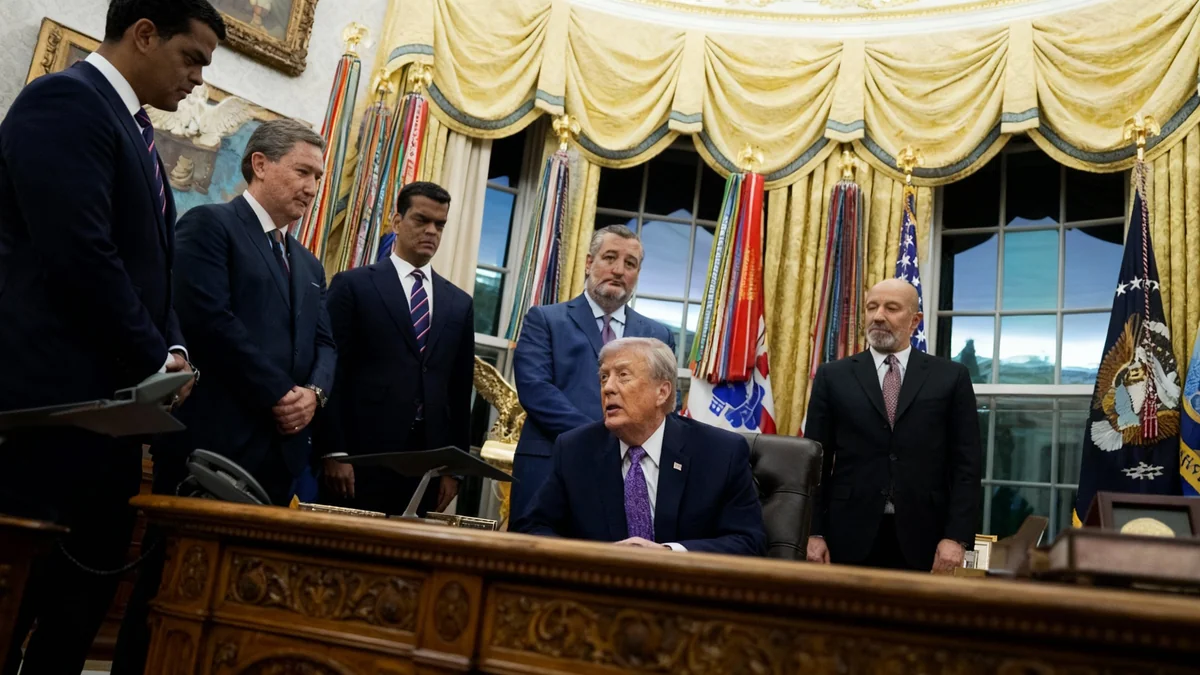
The simmering tensions over AI policy boiled over in November 2025 during a face-to-face meeting in Vice President JD Vance's office. The meeting involved two of President Trump's key advisers with starkly different views: David Sacks, the White House AI czar, and Mike Davis, a long-serving legal adviser to the president.
Throughout 2025, Sacks had worked to insert language into federal funding bills that would have nullified state-level AI regulations. His efforts were twice thwarted by a coalition of conservative activists and lawmakers rallied in part by Davis, who argued for a more cautious approach.
According to individuals familiar with the discussion, Davis accused Sacks of attempting to bypass Congress and impose AI on the nation without adequate safeguards. Sacks countered that he was executing President Trump's directive to foster an American AI boom and that Davis's actions were an impediment. Vice President Vance reportedly encouraged the two to find common ground.
The Executive Order and Its Fallout
Weeks after the meeting, President Trump signed an executive order that reflects the ongoing push-and-pull within his administration. The order aims to block states from enforcing their own AI regulations, directing federal agencies to collaborate with Congress to develop a "single national framework" for the technology.
"We have the big investment coming, but if they had to get 50 different approvals from 50 different states, you can forget it, because it’s not possible to do," Trump stated upon signing the order. The directive is expected to face significant legal challenges from states that have already begun crafting their own AI rules.
A Two-Pronged Economic Strategy
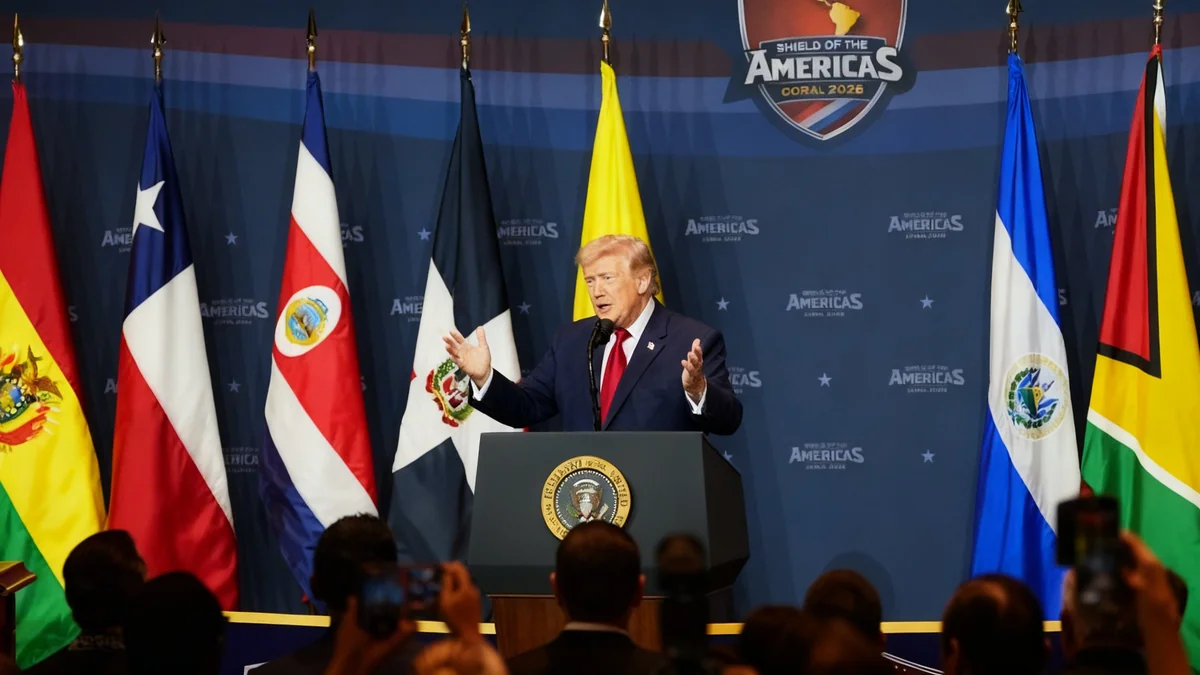
The administration's push for a unified regulatory environment is part of a broader strategy to secure American dominance in AI. Earlier actions included taking a 10% stake in chipmaker Intel Corporation and imposing 25% tariffs on foreign-made chips to bolster domestic production and gain a competitive edge over China.
The executive order did include concessions to the more skeptical faction. Carve-outs were made for state laws concerning protections for minors and the regulation of energy-intensive data centers—two points long advocated by Davis.
A Deepening Republican Divide
The debate over AI has exposed a fundamental fault line in the modern Republican coalition. On one side are influential tech leaders like Sacks who champion innovation and minimal government interference. On the other is a growing populist movement concerned about AI's potential for job displacement, its impact on children, and the concentration of power in Silicon Valley.
Public Skepticism on the Rise
Public sentiment appears to align with the more cautious view. A September poll from the Pew Research Center found that 50% of Americans are more concerned than excited about the increasing role of AI in their lives. In contrast, only 10% reported feeling more excited than concerned.
This skepticism is being amplified by influential conservative voices. Steve Bannon, a former adviser to Trump, has used his popular "War Room" podcast as a platform for AI critics. "We’re going to fight like hell," Bannon declared after the executive order was signed. "So don’t think that anybody is placated."
The resistance is not limited to media figures. Seventeen Republican governors sent a letter to Congress opposing earlier attempts to ban state-level AI regulations. Florida Governor Ron DeSantis has been particularly defiant, vowing to move forward with his state's own safeguards. "We’re not going to give up any rights," he said.
The Legislative Battleground
With the executive order signed, the focus now shifts to Capitol Hill, where momentum is building for comprehensive AI legislation. For much of the past year, Congress remained on the sidelines as the White House debated its internal strategy. Now, lawmakers are under pressure to act.
President Trump has tasked Senator Ted Cruz, a known ally of the tech industry, to lead the legislative effort. However, any bill will face a complex path, requiring bipartisan support in the Senate and navigating a divided House.
The tech industry is not waiting. Companies have deployed hundreds of lobbyists and poured millions into political campaigns. Noteworthy financial moves include:
- A $25 million donation from OpenAI President Greg Brockman to the pro-Trump super PAC MAGA Inc.
- A new super PAC, Leading the Future, backed by industry interests, which has reportedly amassed around $100 million to support pro-AI candidates.
"The path to power in America is through the anti-tech oligarch gate. You have to be hard, consistent and authentic."
- Steve Bannon, speaking on the emerging political divide.
Polling conducted for the pro-Trump super PAC Building America’s Future suggests a potential path forward. Their data indicates that while voters want Congress to set a national policy, they also overwhelmingly support legislation that protects children from AI's potential harms. This signals a possible compromise that could unite the pro-business and pro-family wings of the party.
As the 2026 midterm elections approach, the Republican party faces the challenge of crafting a message that embraces technological progress without alienating a base that is increasingly fearful of its consequences. The outcome of this internal battle will likely shape the future of AI in America for years to come.