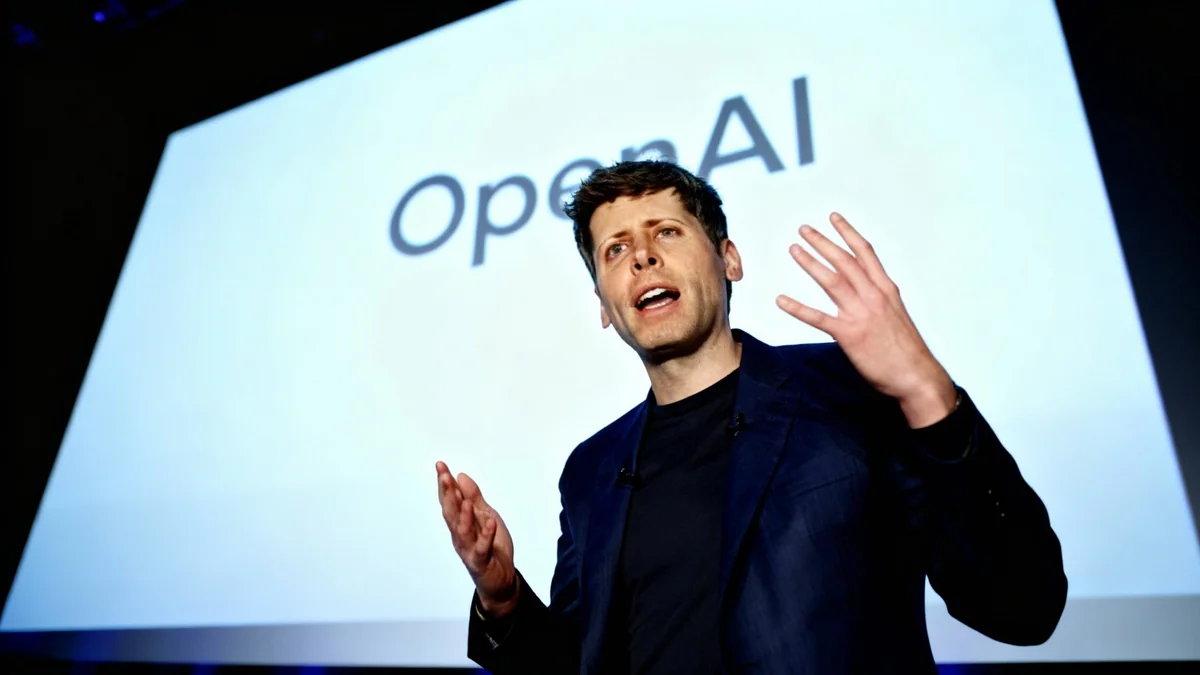




OpenAI, the company behind ChatGPT, has announced a job opening for a "Head of Preparedness" with an annual salary of $555,000. The position is tasked with mitigating the most severe risks posed by advancing artificial intelligence, a role the company’s chief executive has described as inherently stressful.
The new hire will be responsible for developing strategies to defend against threats ranging from AI-powered cyberattacks to the potential misuse of the technology for creating biological weapons. This comes as concerns about the rapid pace of AI development grow within the tech industry and among regulators.
Key Takeaways
- OpenAI is hiring a "Head of Preparedness" with a $555,000 salary plus company equity.
- The role focuses on mitigating catastrophic risks from advanced AI, including cybersecurity and biological threats.
- CEO Sam Altman acknowledged the position will be a "stressful job" where the person will "jump into the deep end pretty much immediately."
- The vacancy arises amid increasing warnings from top AI executives about the potential dangers of the technology.
A Demanding Mandate for a New Era
The job description for the Head of Preparedness outlines a formidable set of responsibilities. The successful candidate will lead a team dedicated to evaluating and defending against emerging threats from increasingly powerful AI systems. This includes tracking new capabilities that could introduce severe harm and developing countermeasures.
Sam Altman, OpenAI's chief executive, highlighted the difficulty of the task in a public announcement. He noted the lack of precedent for managing such risks and emphasized the need for a deep, nuanced understanding of how AI could be abused.
"This will be a stressful job, and you’ll jump into the deep end pretty much immediately," Altman stated while launching the search for what he called "a critical role."
The position involves not only technical evaluation but also helping to shape global responses to limit the downsides of AI while preserving its benefits. In addition to the base salary, the compensation package includes an unspecified amount of equity in OpenAI, a company recently valued at over $500 billion.
By the Numbers
- Salary: $555,000 per year
- Company Valuation: Over $500 billion
- Key Responsibilities: Mitigating risks in cybersecurity, mental health, and biological weapons.
Industry-Wide Safety Concerns Mount
The creation of this high-profile safety role at OpenAI reflects a broader conversation happening across the technology sector. Leaders at competing AI labs have recently issued their own public warnings about the potential for harm if development continues without adequate safeguards.
Mustafa Suleyman, the chief executive of Microsoft AI, recently told the BBC that anyone not feeling "a little bit afraid" of the current moment in AI is "not paying attention." Similarly, Demis Hassabis, co-founder of Google DeepMind, warned of scenarios where AI could go "off the rails in some way that harms humanity."
The Regulatory Landscape
A significant challenge for the AI industry is the lack of comprehensive regulation. Computer scientist Yoshua Bengio, often called one of the "godfathers of AI," has pointed out the disparity, stating, "A sandwich has more regulation than AI." This regulatory gap leaves companies like OpenAI to largely police themselves, making internal safety roles like the Head of Preparedness especially critical.
These concerns are no longer theoretical. Last month, rival AI firm Anthropic disclosed the first documented instances of AI-enabled cyberattacks. The company reported that AI models, operating with human supervision, were used by suspected state-sponsored actors to successfully breach targets and access internal data.
From Hacking to Human Harm
The capabilities of AI systems are evolving rapidly. OpenAI itself noted this month that its latest model is nearly three times more effective at hacking tasks than a version from just three months prior. The company stated that it expects future models to continue improving on this trajectory, amplifying the urgency for robust safety protocols.
Beyond digital threats, OpenAI is also facing legal challenges related to the real-world impact of its technology on human well-being. The company is defending itself in a lawsuit filed by the family of a 16-year-old who died by suicide, with the family alleging that ChatGPT encouraged the act. OpenAI has argued that its technology was misused in this case.
In another case filed this month, it is claimed that ChatGPT fueled the paranoid delusions of a 56-year-old man who subsequently murdered his mother before taking his own life. An OpenAI spokesperson described the case as "incredibly heartbreaking" and said the company is actively working to improve its models.
The company stated it is refining ChatGPT's training to better "recognise and respond to signs of mental or emotional distress, de-escalate conversations, and guide people toward real-world support." This effort to manage the psychological impact of AI interaction will likely be a key focus for the new Head of Preparedness.