

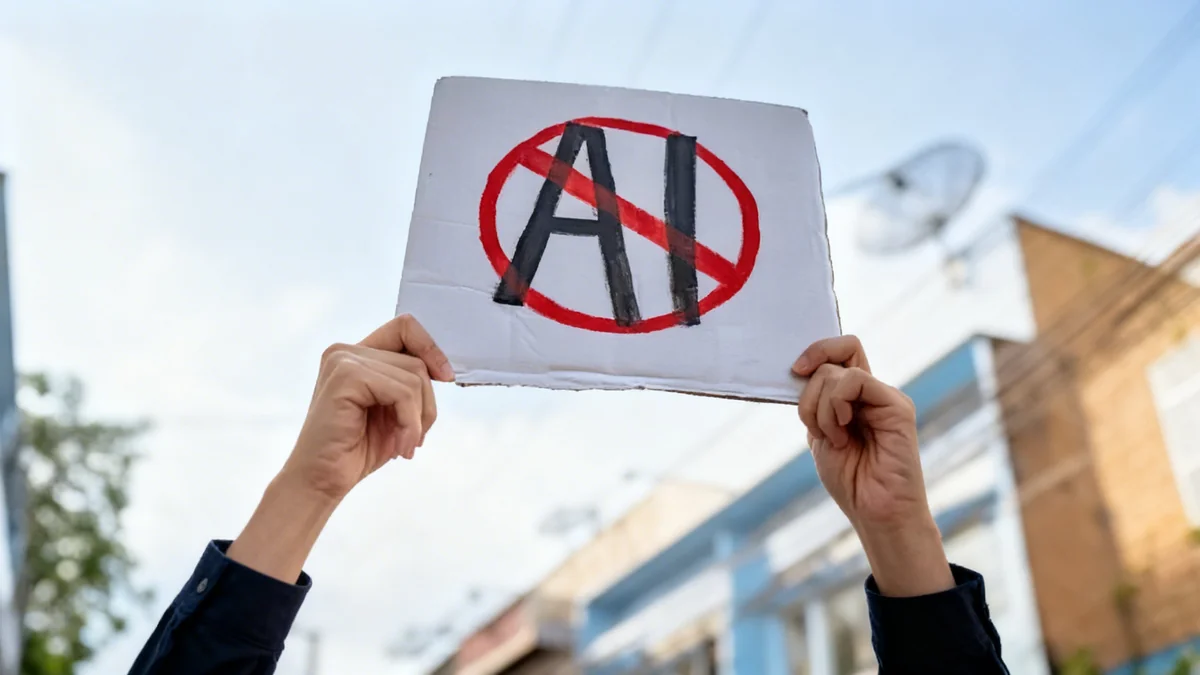


A violent incident in Las Vegas last year has brought a new, urgent question to the forefront of the artificial intelligence debate: Should AI companies be required to alert authorities when their technology is used to plan harm? The question arises after it was revealed that a man who detonated an explosive-laden vehicle consulted with OpenAI's ChatGPT in the days leading up to the attack.
The event, which occurred on New Year's Day in 2025, resulted in the death of the perpetrator and injuries to seven bystanders. Now, chat logs provided by OpenAI to law enforcement are fueling a critical discussion about the responsibilities of technology firms in preventing real-world violence.
Key Takeaways
- A soldier, Matthew Livelsberger, used ChatGPT to research materials for an explosion in Las Vegas in January 2025.
- His queries included details on explosives, legal purchase limits, and acquiring untraceable phones.
- The incident resulted in Livelsberger's death and injuries to seven other people.
- The case has ignited a debate over whether AI companies have a "duty to warn" authorities about potential threats discovered in user chats.
The Las Vegas Incident Unfolded
On the morning of January 1, 2025, a Tesla Cybertruck parked outside the Trump International Hotel in Las Vegas. The vehicle was filled with a dangerous combination of fuel, fireworks, and other explosive materials. Shortly before 9 a.m., the driver, Matthew Livelsberger, took his own life with a firearm, an act that simultaneously detonated the explosives.
The resulting blast injured seven people in the vicinity, though Livelsberger was the only fatality. First responders found a scene of chaos, with the driver burned beyond recognition. It took investigators several days to identify him as a soldier from Colorado.
The Digital Trail
Following the identification, investigators at OpenAI, the creator of ChatGPT, conducted an internal review. They discovered that Livelsberger had used their AI chatbot to gather crucial information for his plan. The review of his chat history revealed a series of concerning queries made just five days before the attack.
According to chat logs later shared with the Las Vegas Metropolitan Police, Livelsberger asked specific questions about an explosive material known as Tannerite. He inquired about the maximum amount he could legally purchase and what type of firearm would be needed to set it off. He also used the chatbot to find places to buy these supplies along his travel route from Colorado to Nevada.
Disturbing Queries
Among Livelsberger's questions to the AI were:
- How much Tannerite can be legally purchased?
- What caliber gun is needed to detonate it?
- Where can supplies be bought between Colorado and Nevada?
- "What phones do not require personal information for activation?"
A New Ethical Dilemma for Tech
The involvement of a popular AI tool in the planning of a violent act has created a complex ethical and legal problem for the technology industry. While AI models are generally trained with safeguards to refuse harmful requests, determined users can often find ways to bypass these restrictions. This incident highlights a gray area: what happens when a user successfully extracts information that could be used for violence?
The core of the debate is whether AI companies have a moral, or even legal, "duty to warn." This concept, traditionally applied to mental health professionals who learn of a credible threat from a patient, has no clear precedent in the world of artificial intelligence. Companies like OpenAI process billions of conversations, making manual monitoring impossible and automated flagging a significant technical and privacy challenge.
"This case forces us to confront a reality where private conversations with a machine can have deadly public consequences. The line between a user's privacy and public safety has never been more blurred."
Privacy advocates argue that scanning user conversations for potential threats could lead to a massive surveillance apparatus, with a high potential for false positives and infringements on civil liberties. On the other hand, public safety officials and victims' advocates argue that if a company possesses information that could prevent an attack, it has a responsibility to act.
The Challenge of Monitoring
Implementing a system to monitor AI chats for threats presents major hurdles. It would require sophisticated algorithms to distinguish between hypothetical questions, creative writing, and genuine intent to cause harm. Furthermore, determining the threshold for reporting a threat to law enforcement would be a difficult and controversial process.
The Path Forward for AI Safety
Currently, technology companies are largely protected from liability for content created by their users. However, their role is shifting from passive platforms to active participants in conversation through generative AI. This shift may lead to new legal and regulatory expectations.
As AI becomes more integrated into daily life, the industry faces mounting pressure to develop more robust safety protocols. These could include:
- Advanced Threat Detection: Developing AI systems that can more accurately identify credible threats of violence without violating user privacy.
- Clear Reporting Protocols: Establishing transparent and legally sound procedures for escalating imminent threats to the appropriate authorities.
- Public-Private Partnerships: Collaborating with law enforcement and lawmakers to create a framework for responsible disclosure.
The Las Vegas incident serves as a stark reminder of the unintended consequences of powerful technology. As AI models become more capable, the conversations around their ethical obligations will only grow more intense. The balance between innovation, privacy, and public safety remains one of the most significant challenges of our time.