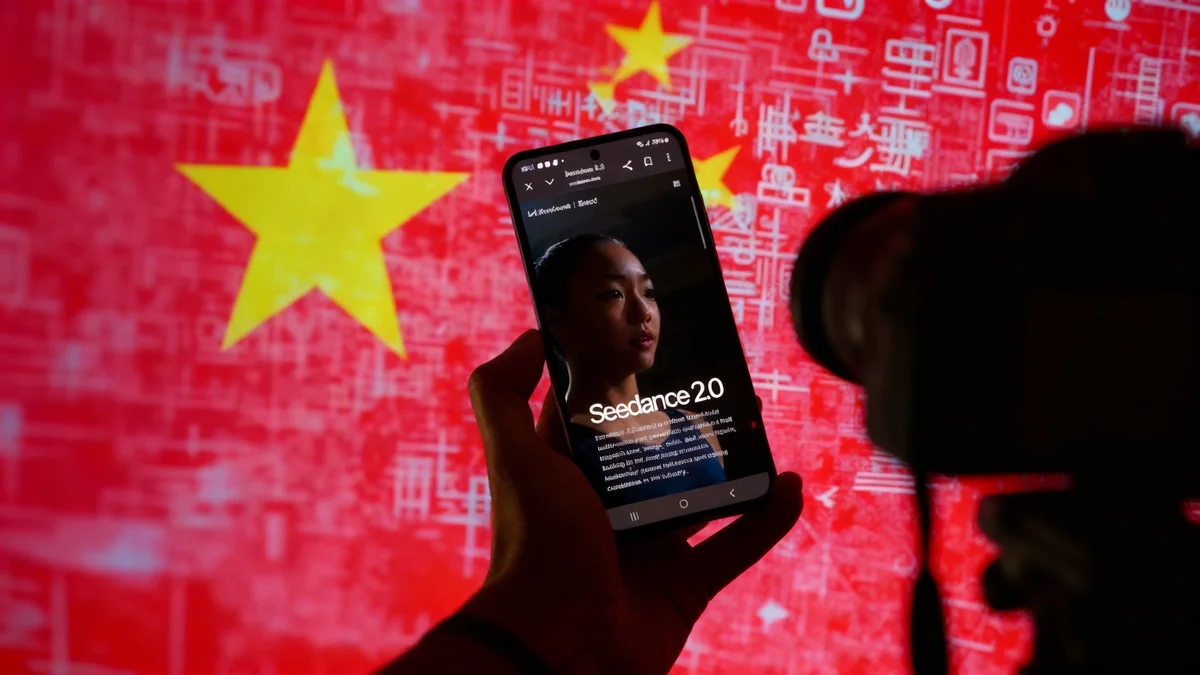

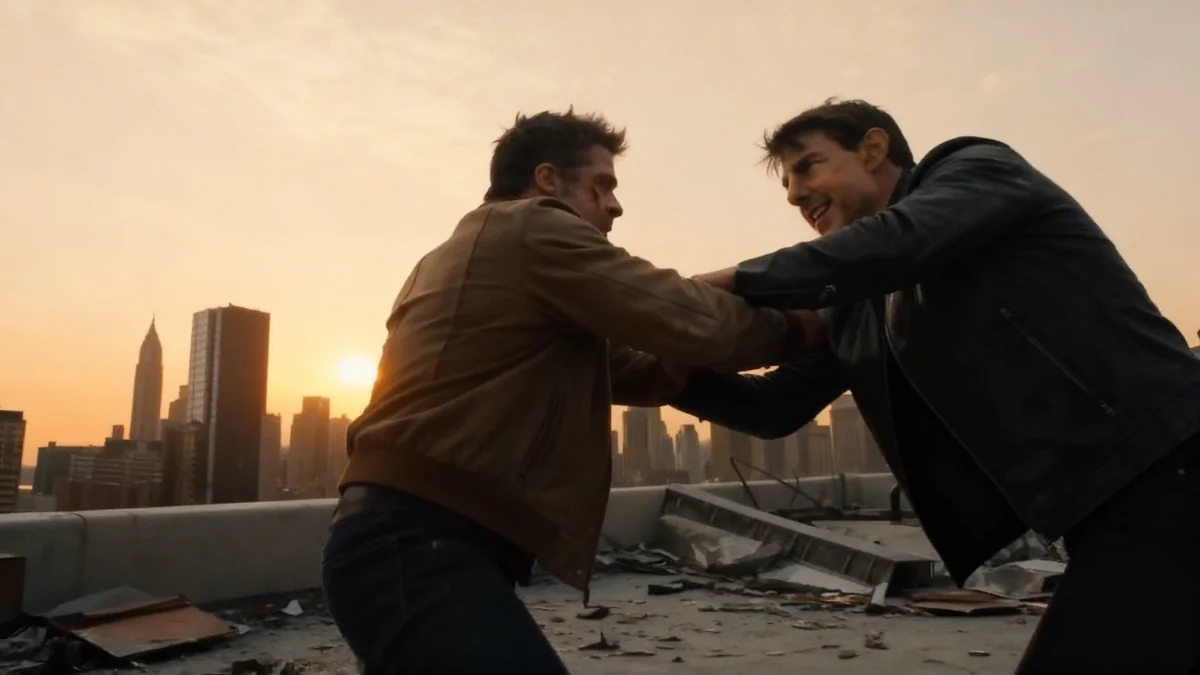
A powerful new artificial intelligence video generator from ByteDance, the company behind TikTok, has ignited a significant dispute with major Hollywood studios. The tool, known as Seedance 2.0, can create cinema-quality video from simple text prompts, but its use of famous characters has prompted legal threats over copyright infringement.
Major entertainment companies, including Disney and Paramount, have formally demanded that ByteDance cease using their intellectual property. The controversy highlights the growing tension between rapid AI development and long-standing copyright laws that protect creative works.
Key Takeaways
- ByteDance's new AI model, Seedance 2.0, generates highly realistic video, audio, and dialogue from text prompts.
- Disney and Paramount have issued cease-and-desist letters, alleging copyright infringement for the AI's use of characters like Spider-Man.
- The technology is seen by some as a tool that could significantly lower production costs for smaller studios.
- The dispute places a spotlight on China's advancing capabilities in the competitive global AI industry.
A Leap in AI Video Generation
Seedance 2.0, which gained widespread attention eight months after its initial quiet launch, represents a notable advancement in generative AI. Unlike many of its predecessors, the model integrates visuals, sound effects, and dialogue into a single, cohesive system.
The quality of the output has impressed many industry observers. Jan-Willem Blom of creative studio Videostate noted the shift in perception the tool has caused. "For the first time, I'm not thinking that this looks good for AI," he said. "Instead, I'm thinking that this looks straight out of a real production pipeline."
A popular, informal benchmark for the technology has become its ability to generate a video of actor Will Smith eating spaghetti. Seedance not only produces a lifelike depiction but has also been used to create complex, movie-like scenes, including the actor fighting a monster made of pasta.
"It almost feels like having a cinematographer or director of photography specialising in action films assisting you," said David Kwok, who runs the Singapore-based animation studio Tiny Island Productions.
Hollywood Responds to Copyright Concerns
The rapid proliferation of AI-generated clips featuring well-known characters quickly drew the attention of intellectual property holders. Videos showing figures like Spider-Man, Deadpool, and Darth Vader, all owned by Disney, went viral online.
In response, both Disney and Paramount issued cease-and-desist letters to ByteDance, demanding an end to the use of their copyrighted content. The Japanese government has also launched an investigation into the company for similar alleged violations involving popular anime characters.
ByteDance has stated that it is taking measures to "strengthen current safeguards" on its platform. However, the incident adds to a growing list of legal challenges facing AI developers over the data used to train their models.
A Pattern of AI Data Disputes
The conflict over Seedance is not an isolated event. In 2023, The New York Times filed a lawsuit against OpenAI and Microsoft, alleging that its articles were used without permission to train models like ChatGPT. Similarly, Reddit has sued the AI firm Perplexity over claims it illegally scraped user content. These cases underscore the unresolved legal and ethical questions surrounding AI training data.
The Broader Implications for Creative Industries
Beyond the immediate legal fight, the emergence of tools like Seedance 2.0 raises fundamental questions about the future of content creation. For smaller production companies, the technology offers a path to creating ambitious projects on a limited budget.
David Kwok pointed to the booming market for short-form micro-dramas in Asia, which are often produced for around $140,000 for up to 80 short episodes. These productions typically stick to genres like romance to minimize costs.
With advanced AI, he explained, these low-budget productions could be elevated "into more ambitious genres such as sci-fi, period drama and, now, action." This could democratize high-quality video production, enabling creators without major studio backing to compete.
Licensing as a Path Forward
Some companies are already exploring official partnerships. Disney recently signed a reported $1 billion deal with OpenAI, allowing its video model, Sora, to utilize characters from its extensive Star Wars, Pixar, and Marvel universes. This suggests a potential future where AI companies license content rather than using it without permission.
However, AI ethics researchers like Margaret Mitchell argue that the focus should be on building trust and transparency. She believes that clearly labeling AI-generated content and establishing systems for licensing, payments, and contesting misuse are more critical than simply creating "cooler-looking" videos.
China's Growing Influence in AI
The launch of Seedance 2.0 also underscores China's increasing competitiveness in the global AI race. The model's capabilities have been seen by some as a surprise, demonstrating that Chinese firms are developing technology on par with their Western counterparts.
"It signals that Chinese models are at the very least matching at the frontier of what is available," commented Shaanan Cohney, a computing researcher at the University of Melbourne. "If ByteDance can produce this seemingly out of nowhere, what other kinds of models do Chinese companies have in store?"
This follows the success of another Chinese model, DeepSeek, which last year briefly overtook ChatGPT as the most downloaded free app on Apple's US store. The Chinese government has made AI and robotics a central part of its economic strategy, investing heavily in the sector to gain a technological advantage.
According to China analyst Bill Bishop, 2026 could be a pivotal year for mass AI adoption in the country. He predicts a future where AI agents handle transactions, coding tools are integrated into daily work, and video creation with AI becomes routine, signaling a profound shift in how technology is used across society.