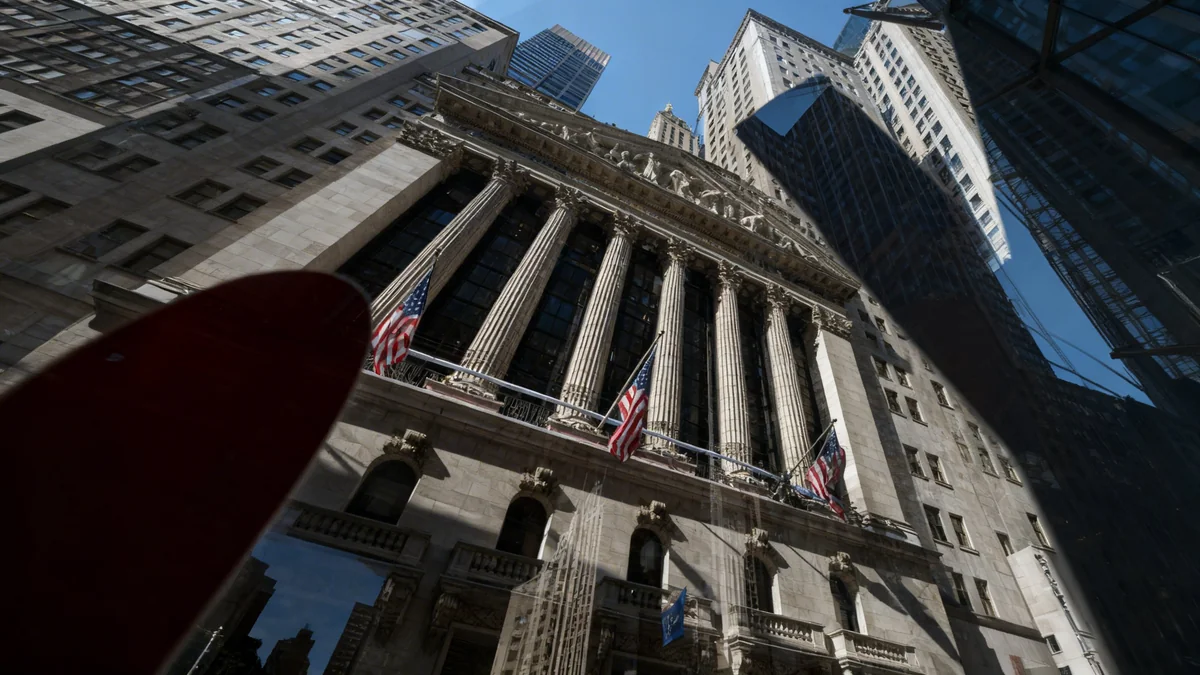





A research note from a small firm has ignited a significant debate on Wall Street, painting a stark picture of mass unemployment and economic turmoil driven by artificial intelligence. The report, from Citrini Research, circulated widely over the weekend and was cited as a contributing factor in a market downturn at the start of the week, reflecting growing investor anxiety about the future impact of AI.
The document's projections of widespread white-collar job displacement have divided analysts and economists, with some viewing it as a critical warning and others questioning its conclusions. The market's reaction, though brief, highlights a deep-seated uncertainty surrounding the economic consequences of rapid technological advancement.
Key Takeaways
- A report by Citrini Research forecasted severe job losses and a stock market decline due to AI's impact on white-collar professions.
- The note was partially blamed for a modest drop in the S&P 500 on Monday, February 25, 2026, though the market later recovered.
- Financial experts are split, with some dismissing the report's dire scenario while others see it as a valid concern for the economy.
- The incident reveals underlying investor skittishness about the disruptive potential of artificial intelligence on the labor market and economy.
An Unsettling Prediction Gains Traction
The debate began after a note from Citrini Research started making the rounds on social media. The report presented a dark outlook on the economic future as artificial intelligence becomes more integrated into the workplace.
It described a scenario where well-paid professionals could see their jobs automated, forcing them into lower-paying gig economy roles, such as driving for ride-sharing services. This, the report suggested, could lead to a cascade of economic problems.
Visualizing the Impact
To illustrate its point, the Citrini report specifically mentioned potential economic distress in major tech hubs like Seattle, Washington, and Austin, Texas. It raised the possibility of displaced technology workers struggling to make mortgage payments, a scenario designed to make the abstract threat of AI feel more concrete to investors.
The narrative quickly captured the attention of the financial community, spreading from online forums to trading desks. Its detailed, though speculative, vision of economic disruption resonated with a market already trying to price in the long-term effects of AI.
Market Reacts to AI Disruption Fears
As trading began on Monday, the Citrini report was identified as one of the factors contributing to a modest decline in the S&P 500. While not a major sell-off, the dip was significant because it was linked directly to concerns about AI's long-term economic impact rather than typical market drivers like inflation or interest rates.
The market did rebound on Tuesday, suggesting that the initial alarm was contained. However, the conversation sparked by the report continued to dominate discussions among investors and policymakers throughout the week.
A Divided Street
The reaction to the Citrini note has been sharply divided. Some bearish investors claimed the report simply amplified warnings they had been making for months about AI's potential to destabilize the economy. On the other hand, many mainstream analysts and even a Federal Reserve governor reportedly brushed off the report's conclusions as overly pessimistic.
This split highlights the core challenge facing Wall Street: how to accurately model the effects of a technology that is evolving at an unprecedented pace. Traditional economic models may not be sufficient to predict the scope and speed of AI-driven changes.
The Broader Debate on AI and the Workforce
The Citrini report, regardless of its accuracy, has successfully pushed a critical debate into the financial mainstream. For months, discussions about AI's impact on jobs were often academic. This incident has attached a potential stock market value to the issue, making it impossible for investors to ignore.
The central question is whether AI will primarily be a tool that enhances productivity or a force that replaces human labor on a massive scale. Proponents argue that, like past technological revolutions, AI will create new jobs and industries even as it makes others obsolete.
However, skeptics worry that the scope of AI's capabilities, particularly in cognitive and creative tasks, makes this transition different. They argue the displacement could happen faster than the workforce can adapt, leading to a period of significant economic pain.
"The market's brief shudder shows how sensitive it has become to narratives about technological disruption. Whether this specific report is right or wrong is almost secondary to the fact that these conversations are now directly influencing trading decisions."
Looking Ahead at an Uncertain Future
The events of this week serve as a clear signal that Wall Street is wrestling with the profound implications of artificial intelligence. While the technology has fueled incredible growth in some stocks, the Citrini report has forced a broader consideration of the potential downsides.
Investors and companies are now under increasing pressure to articulate a clear vision for how they will navigate this transition. Questions are being asked about retraining programs, economic safety nets, and the long-term sustainability of a consumer-driven economy if large segments of the population face job insecurity.
The debate is far from settled. As AI technology continues to advance, reports like Citrini's will likely become more common, forcing markets to constantly re-evaluate the future of work and its impact on the global economy. For now, the only certainty is the uncertainty itself.