




A compelling new argument is emerging in economic policy circles, suggesting that a boom in artificial intelligence could fundamentally alter the Federal Reserve's approach to interest rates. Proponents, including a leading candidate for the next Fed chair, believe AI-driven productivity gains may allow for significant economic growth without triggering inflation, potentially clearing the path for lower borrowing costs.
This theory is gaining traction as a potential solution to a persistent economic challenge: how to lower interest rates when the economy is not showing traditional signs of needing such support. The debate centers on whether the technological revolution promised by AI will materialize quickly enough to influence near-term monetary policy.
Key Takeaways
- A new economic theory suggests an AI-driven productivity boom could enable higher growth without causing inflation.
- This non-inflationary growth could provide the Federal Reserve with the justification to lower interest rates.
- Kevin M. Warsh, a potential nominee for Federal Reserve Chair, is a prominent supporter of this view.
- Warsh has described the AI boom as the most significant productivity event of our lifetimes, a stance that aligns with calls for lower borrowing costs.
A New Economic Justification
For months, the Federal Reserve has faced a dilemma. The desire for lower borrowing costs to stimulate certain sectors of the economy has been met with the reality of a robust economic landscape that does not traditionally call for such measures. Cutting rates in a strong economy typically risks overheating and stoking inflation.
However, a new rationale is being advanced that seeks to bypass this conventional wisdom. The argument is built on the transformative potential of artificial intelligence. According to this view, widespread adoption of AI technologies across industries will lead to a massive surge in productivity—the amount of output per hour of work.
If businesses can produce more goods and services with the same or fewer resources, it allows for higher economic growth and wage increases without forcing companies to raise prices. This scenario of non-inflationary growth would fundamentally change the Fed's calculations, giving policymakers the green light to cut interest rates without fearing an inflationary spiral.
Understanding Productivity and Inflation
Productivity growth is a key variable in monetary policy. When productivity is high, the economy can grow faster without generating inflation. This is because efficiency gains offset the rising costs of labor and materials. A sustained productivity boom would increase the economy's "speed limit," allowing for more aggressive growth-oriented policies.
The Warsh Doctrine on AI and the Economy
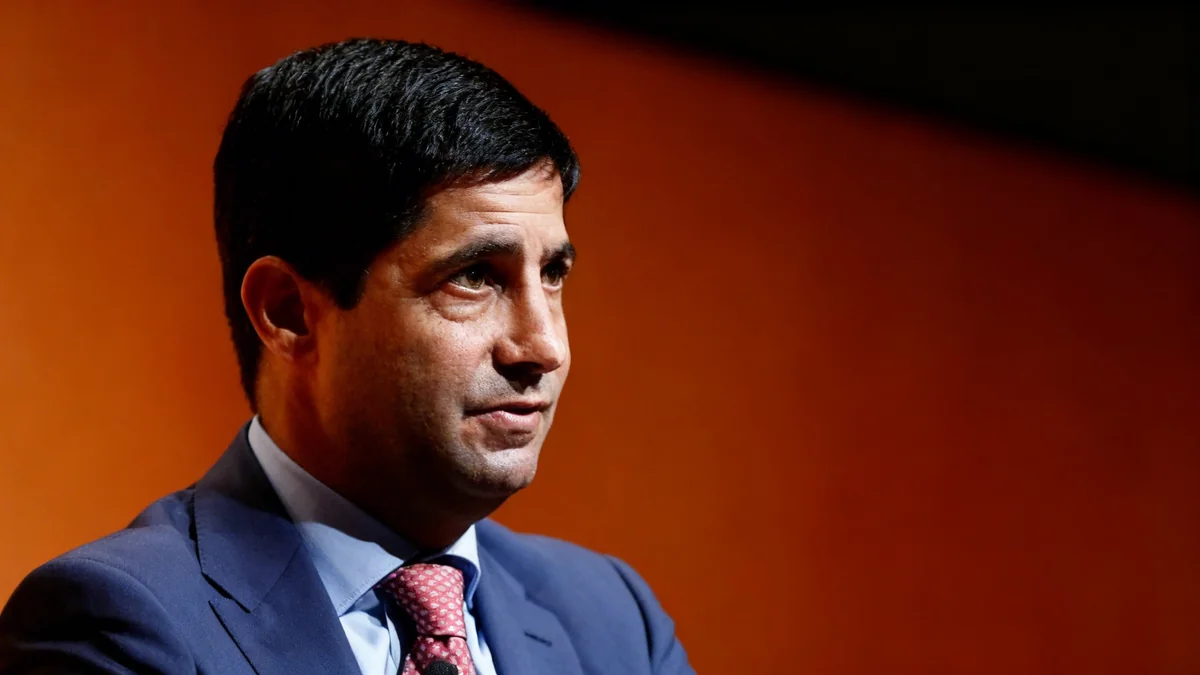
One of the most vocal champions of this AI-centric economic outlook is Kevin M. Warsh, who has been identified as a leading candidate to succeed Jerome H. Powell as the next chair of the Federal Reserve.
Before being considered for the role, Warsh was unequivocal in his assessment of AI's potential. He has publicly characterized the current technological shift as a historic economic event.
"The most productivity-enhancing wave of our lifetimes — past, present and future," Warsh stated in a recent analysis of the AI boom.
This perspective suggests that if he were to lead the central bank, he might be more inclined than his predecessors to act preemptively on the promise of future productivity gains. Such a stance would represent a significant shift in the Fed's traditionally data-dependent and cautious approach, which typically waits for clear evidence of economic changes before adjusting policy.
His potential leadership signals a Fed that could be more willing to "skate to where the puck is going," using the promise of AI to justify a more accommodative monetary policy sooner rather than later.
Challenges and Skepticism
While the theory is compelling, it is not without its skeptics. Many economists urge caution, pointing out that past technological revolutions have often taken years, or even decades, to translate into measurable, economy-wide productivity statistics. The dot-com boom of the late 1990s is a frequently cited example where productivity gains were real but took time to fully materialize.
Historical Precedent: The 1990s Tech Boom
During the late 1990s, then-Fed Chair Alan Greenspan resisted raising interest rates despite a strong economy, partly because he believed new technologies were boosting productivity. This period saw strong growth with moderate inflation, but the subsequent dot-com bust serves as a cautionary tale about betting too heavily on future tech gains.
Critics of the AI-for-rate-cuts argument raise several key points:
- Timing Mismatch: It is unclear how long it will take for AI to be integrated broadly enough to impact national productivity figures. Monetary policy, however, operates on a much shorter timeline.
- Measurement Issues: Accurately measuring productivity in a service-based, digitally-driven economy is notoriously difficult. The impact of AI might be significant but hard to capture in official data.
- Inflation Risks: If the Fed cuts rates based on anticipated productivity gains that fail to appear, it could unleash a wave of inflation that would be difficult to control.
The core of the debate is whether the Federal Reserve should base its policy on the promise of future technology or on the concrete economic data available today. A move toward the former would be a significant departure from its established practices.
Implications for Future Monetary Policy
The outcome of this debate could have profound implications for the U.S. economy. If Warsh or another proponent of this view takes the helm at the Fed, it could signal a new era of monetary policy, one that is more forward-looking and explicitly tied to technological progress.
This approach could unlock further economic growth by keeping borrowing costs low, encouraging investment and innovation. Businesses might be more willing to invest in new AI technologies if they can count on a stable and supportive interest rate environment.
Conversely, a miscalculation could be costly. If the productivity boom is overestimated or delayed, a premature easing of monetary policy could destabilize the economy. For now, the discussion highlights a pivotal moment where the worlds of technology, economics, and public policy are converging, with the future of the nation's economic strategy hanging in the balance.