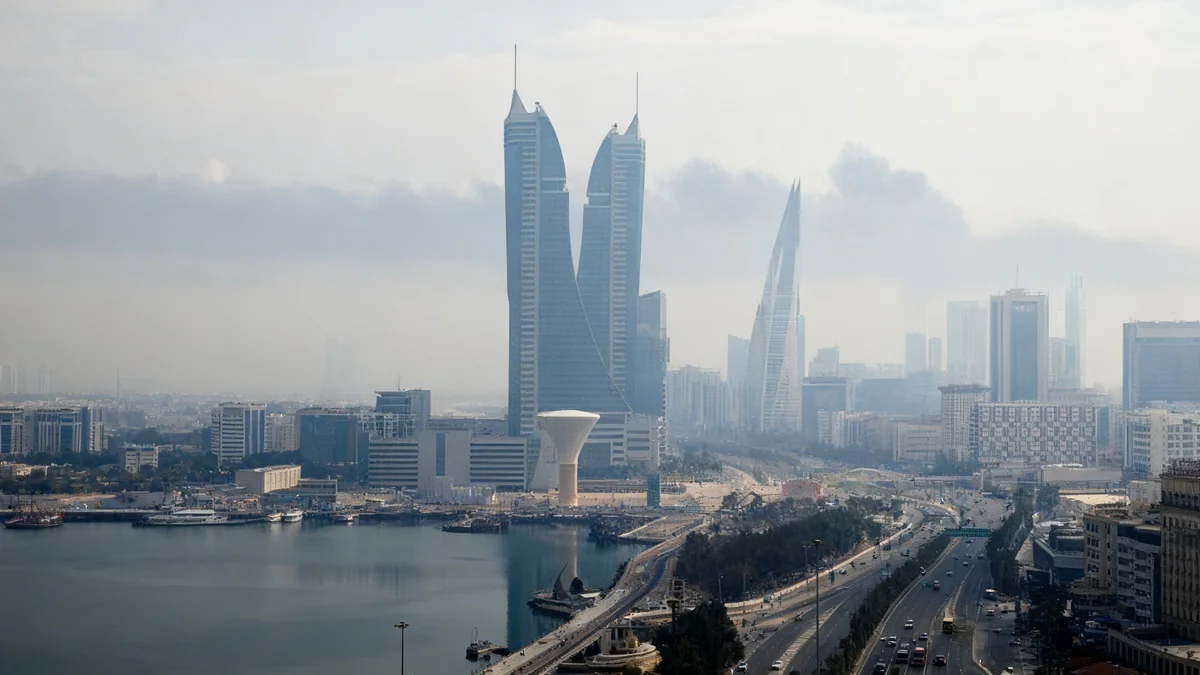





Major U.S. technology companies, including Amazon and Google, are facing significant new risks in the Persian Gulf after their data centers became targets in the escalating conflict with Iran. An Iranian drone strike on March 1 damaged an Amazon facility in Bahrain, highlighting the vulnerability of critical digital infrastructure in a region that has attracted billions in tech investment.
The incident, which also involved strikes on two other data centers in the United Arab Emirates, has disrupted services for numerous businesses and cast a shadow over the region's future as a safe hub for artificial intelligence development.
Key Takeaways
- Iranian drones damaged an Amazon data center in Bahrain and two others in the UAE on March 1.
- Iran has explicitly threatened attacks on tech infrastructure belonging to seven major U.S. firms, including Amazon, Google, and Microsoft.
- U.S. tech companies have invested billions in the Persian Gulf, drawn by economic growth and the race for AI dominance.
- The conflict has exposed how digital infrastructure has become a new frontline in geopolitical clashes.
Digital Infrastructure Under Fire
The drone strike on March 1 marked a turning point for American tech companies operating in the Persian Gulf. The attack on Amazon's Bahrain data center, first established in 2019, caused immediate and significant disruption. Businesses that rely on the company's cloud services for their daily operations were suddenly cut off.
Simon Williams, an executive at the Dubai-based AI firm Atelic AI, described the aftermath. "We lost all our access to our servers," he stated. "It's had a major impact on our business." Williams noted the difficulty in getting information from Amazon, calling the company's response a "black box."
A Growing Tech Hub
The Persian Gulf has rapidly transformed into a major destination for technology investment. Attracted by growing economies, favorable regulations, and strategic online links to Europe and Africa, U.S. firms have poured capital into the area. Amazon alone began over $10 billion in new projects across Saudi Arabia in 2024, following earlier expansions in Bahrain and the UAE.
In response to the attacks, Amazon advised customers in the Middle East to migrate their workloads to data centers in other parts of the world. In a statement, the company confirmed it was "adjusting operations in response to the evolving situation." Google has stated it is monitoring events with a focus on employee safety, while Microsoft has declined to comment.
A Region of Risk and Reward
The recent attacks have thrown the tech industry's risk assessment into question. For years, companies viewed the Persian Gulf as a stable region for investment, a perception encouraged by U.S. government-led initiatives to broker deals between tech giants and Gulf nations.
Surging Investment
Total spending on consumer and business technology across the Middle East reached an estimated $65 billion last year, a significant increase from $36 billion in 2020. Spending specifically on data centers and cloud services jumped by 75 percent in the last year alone, hitting $895 million.
Experts suggest that the technology sector may have underestimated the inherent geopolitical dangers. "The energy sector is much more experienced in dealing with traditional geopolitical risks than the tech sector," said Steffen Hertog, a professor at the London School of Economics and Political Science. He believes that many investors, including U.S. tech firms, "underpriced risk before the current war."
This sentiment is echoed by security specialists who see data centers as a new form of critical infrastructure, making them logical targets in modern conflicts.
"This is a low-frequency, high-impact event. It may not happen again or it may happen 10 more times."
Dave Komendat, former top security officer at Boeing
Escalating Threats and Economic Fallout
The situation has become more precarious following direct threats from Tehran. Iran has now warned of wider attacks against "enemy technology infrastructure," specifically naming seven American companies: Amazon, Microsoft, Google, Palantir, Nvidia, I.B.M., and Oracle.
Further fueling concerns, Iran's new supreme leader, Mojtaba Khamenei, made a vague statement about "opening other fronts where the enemy has little experience," a comment widely interpreted as targeting non-military assets like digital infrastructure.
The broader economic consequences are also beginning to surface. The conflict is expected to disrupt supply chains and drive up prices for natural gas, a crucial resource for powering energy-intensive data centers. The cost of materials like plastic and aluminum, essential for manufacturing electronic components, is also projected to rise.
According to a recent report from the think tank Strategy International, the true impact extends beyond physical damage. "The real weapon is not the drone; it is the insurance cancellation, the rerouted tanker, and the investor who pauses," the report concluded.
A Global Wake-Up Call
The events in the Persian Gulf serve as a stark reminder of the global vulnerabilities in the technology supply chain. The industry's reliance on specific geographic locations for critical components is a well-known risk.
- Hardware Manufacturing: Mainland China dominates much of the world's hardware production.
- Advanced Microchips: Taiwan's TSMC produces the majority of the world's most advanced semiconductors.
- Memory Chips: Key manufacturing plants in South Korea operate within artillery range of North Korea.
Xiaomeng Lu, a director at the risk-management consultancy Eurasia Group, believes the conflict will damage the efforts of Gulf nations to attract major tech companies. "Their ambitions are built on the assumption of geopolitical stability," she said.
The long-term impact on the region's tech ambitions may depend on how the conflict unfolds. A swift resolution could allow investment to rebound. However, a prolonged war could permanently alter the risk calculation for tech companies, forcing them to reconsider their global infrastructure strategy. "If it goes on for months and months," Lu warned, "we’ll be in very different territory."