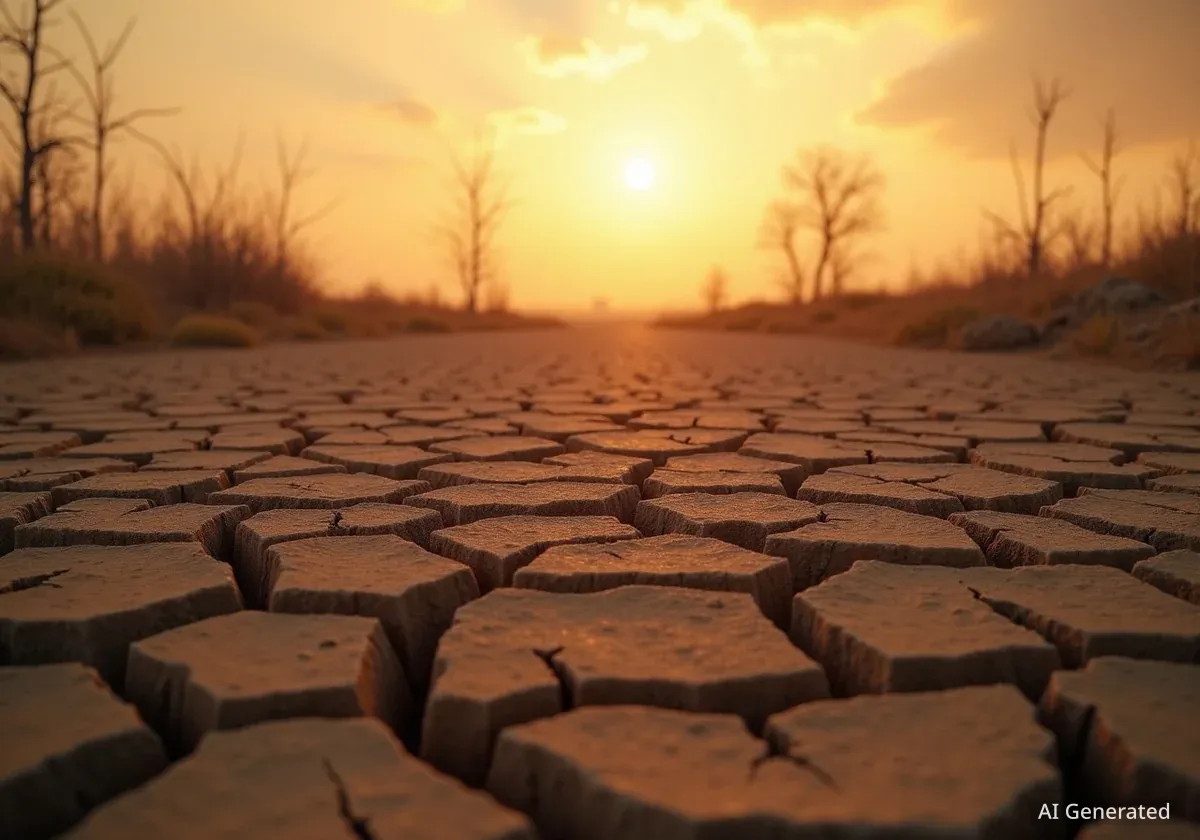



A comprehensive new analysis reveals a stark reality: global efforts to curb climate change have fallen short, leaving specific nations dangerously exposed to a trio of escalating threats. The research identifies the countries most vulnerable to extreme heat, devastating wildfires, and the spread of infectious diseases, painting a sobering picture of the immediate future on a warming planet.
The report underscores that the consequences of rising temperatures are not distributed equally. Instead, a distinct group of countries, primarily in the Global South and specific climate-sensitive zones, are set to bear the brunt of the impact. This uneven distribution poses significant challenges for global stability, public health, and economic development.
Key Takeaways
- New research indicates a failure of international policies to adequately limit global warming.
- Specific countries have been identified as hotspots for extreme heat, wildfires, and disease outbreaks.
- The impacts of climate change are disproportionately affecting developing nations and regions with vulnerable ecosystems.
- Experts warn of cascading effects on economies, food security, and public health systems in the most affected areas.
A Global Failure with Local Consequences
For years, international agreements have set targets to limit the rise in global average temperatures. However, the latest data suggests these goals are increasingly out of reach. The new study highlights a critical disconnect between policy ambitions and real-world outcomes, showing that current trajectories are leading toward more frequent and intense climate-related disasters.
The failure to meet these targets has tangible consequences. The research points to a direct correlation between rising global temperatures and the increased frequency of life-threatening climate events. This is no longer a distant forecast but a present-day reality for millions of people.
The Paris Agreement Goal
The Paris Agreement, adopted by 196 Parties in 2015, aims to hold the increase in the global average temperature to well below 2°C above pre-industrial levels and pursue efforts to limit the temperature increase to 1.5°C. The new findings suggest the world is struggling to stay on track to meet even the less ambitious 2°C target.
Mapping the Epicenters of Climate Risk
The core of the new research is a detailed map identifying the regions most susceptible to specific climate threats. While the effects are global, the intensity is concentrated in predictable hotspots.
The Heat Belt: A Zone of Extreme Temperatures
Nations across the Middle East, North Africa, and South Asia are identified as being in a rapidly expanding 'heat belt.' In these regions, summer temperatures are projected to regularly reach levels that are dangerous for human health and agriculture.
Countries like India, Pakistan, and parts of the Sahel are facing a future where prolonged, extreme heatwaves could become an annual occurrence. This poses a severe threat to public health, particularly for outdoor laborers and vulnerable populations without access to cooling. It also places immense strain on power grids and water resources.
The Wildfire Frontlines
The study also pinpoints areas where wildfire risk is escalating dramatically. These are not limited to traditionally fire-prone regions. The analysis shows that parts of Southern Europe, western North America, and Australia are facing longer and more intense fire seasons.
Drought conditions, exacerbated by rising temperatures, are creating vast landscapes of dry fuel. The research notes a significant increase in the number of 'fire weather' days—conditions perfect for a spark to ignite a major blaze.
"We are seeing fire seasons start earlier and end later. What were once considered rare, catastrophic fire events are becoming the new normal in these vulnerable zones," the report's lead author stated.
The Path of Disease
Perhaps one of the most insidious threats detailed is the expansion of vector-borne diseases. Warmer temperatures and changing rainfall patterns are allowing disease-carrying insects like mosquitoes and ticks to thrive in new areas.
The research highlights several key concerns:
- Dengue Fever: Mosquitoes carrying the virus are moving into higher altitudes and more temperate latitudes in Latin America and Southeast Asia.
- Malaria: Changing climate conditions in parts of Africa are creating new breeding grounds for the Anopheles mosquito.
- Lyme Disease: Ticks are expanding their range northward in North America and Europe, increasing the risk for millions.
This geographic expansion of disease vectors puts populations with no prior exposure or immunity at significant risk and threatens to overwhelm local healthcare systems.
The Ripple Effect on Society and Economy
The impacts of heat, fire, and disease are not isolated events. The research emphasizes their cascading effects on society. Extreme heat reduces labor productivity and crop yields, threatening food security and economic stability. Devastating wildfires destroy homes, infrastructure, and entire ecosystems, costing billions in recovery efforts.
Furthermore, the spread of disease places a heavy burden on public health infrastructure, diverting resources from other critical needs. Together, these pressures can fuel social unrest and trigger migration as people are forced to leave uninhabitable areas. This creates a complex web of challenges that governments, both local and national, are struggling to address.
As the world grapples with these findings, the focus shifts from prevention to adaptation. While reducing emissions remains critical, the immediate priority for the most affected nations is building resilience to a future that has, in many ways, already arrived.