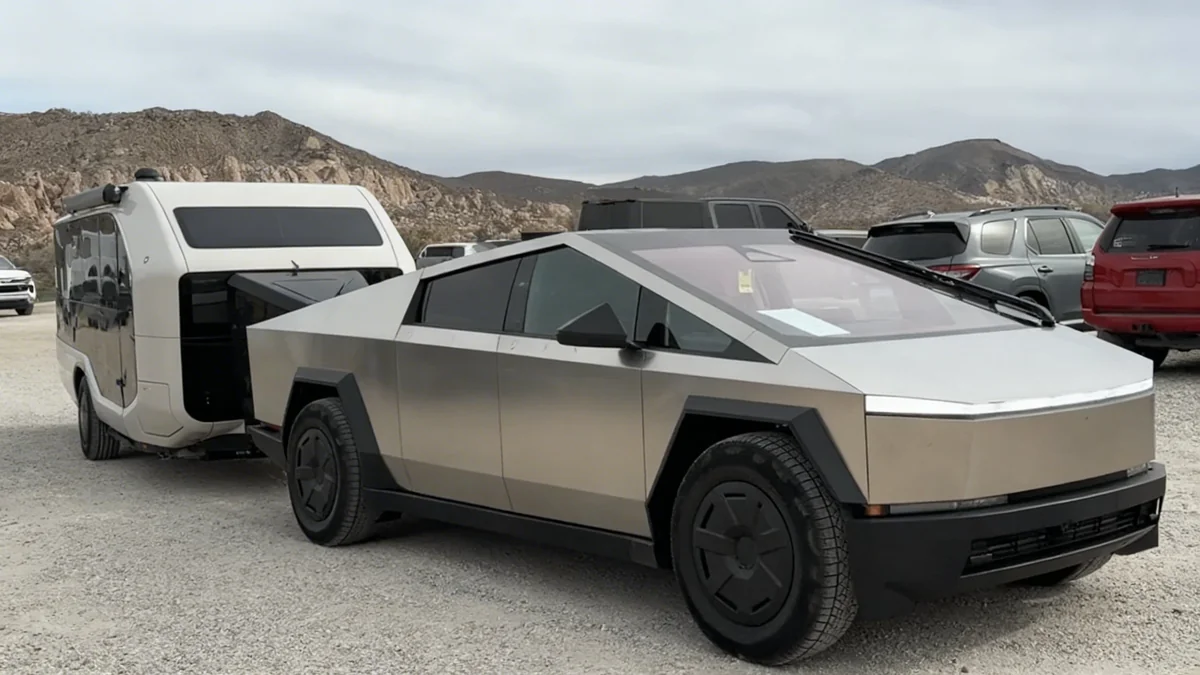




A new smart recreational vehicle is addressing one of the biggest challenges for electric vehicle owners: range loss from towing. The Pebble Flow, a self-propelled electric travel trailer, uses its own dual-motor system to assist the tow vehicle, significantly reducing energy consumption and making road trips more practical for EV drivers.
Developed by a team with experience from Apple and Tesla, the trailer integrates advanced technology, including autonomous hitching and remote-control maneuvering. During a recent test, the trailer not only minimized the range reduction of a Cybertruck but also contributed to its battery life through regenerative braking, demonstrating a new approach to electric-powered travel and camping.
Key Takeaways
- The Pebble Flow is a self-propelled electric RV designed to eliminate the range loss typically associated with towing by an EV.
- Its dual-motor system actively pushes the trailer, reducing the load on the tow vehicle. In a test, it cut expected range loss by more than half.
- The trailer features autonomous technology, including a 'Magic Hitch' function that automatically connects to the vehicle.
- Designed by former Apple and Tesla engineers, it includes luxury features like smart glass, integrated Starlink internet, and a tablet-based control system.
The Challenge of Towing with Electric Vehicles
For many electric vehicle owners, towing a trailer has been a significant hurdle. The added weight and aerodynamic drag can drastically reduce an EV's driving range, sometimes by 50% or more. This "range anxiety" has limited the appeal of EVs for those who enjoy camping, boating, or other activities that require hauling heavy loads.
Traditional travel trailers act as dead weight, forcing the tow vehicle to expend a massive amount of extra energy to pull them. This problem is particularly pronounced for electric trucks and SUVs, which are otherwise well-suited for outdoor adventures. The industry has been searching for a solution that allows for long-distance travel without constant, lengthy charging stops.
The Pebble Flow trailer was conceived to directly confront this issue. Instead of being a passive burden, it is an active participant in the journey, equipped with its own power and intelligence to make towing seamless and efficient.
A Self-Propelled Solution Emerges
The core innovation of the Pebble Flow is its active propulsion system. The trailer is equipped with a dual-motor setup that powers its own wheels. This allows the 6,000-pound trailer to essentially push itself, thereby negating the immense strain it would otherwise place on the tow vehicle.
From Tech Giants to the Open Road
The design philosophy behind the Pebble Flow is heavily influenced by its creators' backgrounds. Key members of the development team came from leadership and engineering roles at Apple and Tesla. This experience is evident in the trailer's minimalist aesthetic, intuitive user interface controlled by a tablet, and integration of cutting-edge hardware and software.
In a real-world test conducted by EV enthusiast Kim Java, the system's effectiveness was clear. While towing the Pebble Flow with a Cybertruck, the expected range loss was dramatically lower than anticipated. The truck's system initially calculated a range reduction of over 50% upon detecting the load. However, the actual loss during the trip was closer to just 20%.
"With multiple motors pulling, but then this also has its own motors propelling you, you really don’t feel like you’re pulling anything," the testers noted. "You’re literally cutting your consumption down to a third of what it would be otherwise."
The experience was described as feeling so 'passive' that the drivers almost forgot the trailer was attached. This shift from a burdensome tow to an assisted journey represents a significant advancement for the recreational vehicle industry.
More Than Just Propulsion: Smart Features Redefine Camping
Beyond its innovative powertrain, the Pebble Flow is packed with technology designed to simplify and enhance the camping experience. Many of its most complex functions are automated, removing common points of frustration for RV users.
The 'Magic Hitch' and Remote Control
One of the standout features is the automated hitching process. The trailer uses sensors and its propulsion system to align and connect to the tow vehicle's hitch with the press of a button on its control tablet. This eliminates the often difficult and time-consuming process of manually backing up a vehicle to align with a trailer.
Furthermore, the trailer can be detached and maneuvered remotely using the same tablet. This allows users to easily position it in tight campsites or parking spots without needing the tow vehicle, a feature known as 'Remote Control' mode.
Regenerative Braking Boost
During the test journey, the Pebble Flow's regenerative braking system not only helped slow the entire setup but also recaptured energy. The Cybertruck was expected to arrive at the campsite with 11% battery remaining. Thanks to the assistance from the trailer, it arrived with 33%, a substantial gain that extends practical travel distances.
A Glimpse Inside the Future of RVs
The interior of the Pebble Flow reflects its high-tech exterior. The design is modern and spacious, intended to feel like a premium hotel room. It can comfortably accommodate a family of five with convertible Murphy-style beds and a fully equipped kitchen and dining area.
Advanced features are integrated throughout the cabin:
- Smart Glass: Windows can transition from transparent to opaque for instant privacy.
- Connectivity: Integrated Starlink internet provides high-speed connectivity even in remote locations.
- Centralized Control: A single tablet controls lighting, solar power input, energy consumption, water tank levels, and all other smart features.
The trailer is powered by the sun, with solar panels contributing to its battery system, further enhancing its off-grid capabilities. This combination of self-propulsion, automation, and luxury amenities positions the Pebble Flow as a new benchmark in the RV market. With pricing ranging from approximately $113,000 for a basic model to $180,000 for the premium package, it targets the high-end segment of a rapidly evolving industry.