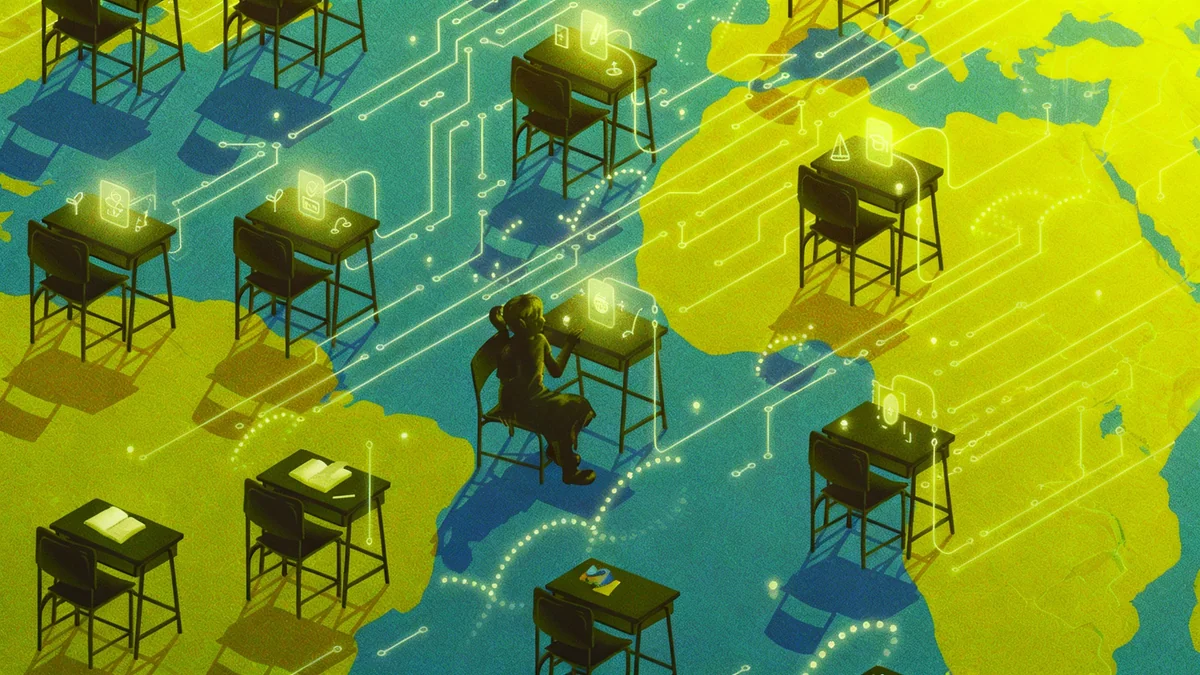


As technology companies accelerate the integration of artificial intelligence into classrooms around the world, a growing number of educators and child development experts are raising concerns. They argue that while AI offers powerful tools for learning, its proliferation creates an urgent need to prioritize social and emotional skills—abilities that machines cannot replicate.
This debate centers on a fundamental question: In an age increasingly shaped by algorithms and automation, what skills are most critical for the next generation to thrive not just academically, but as well-rounded human beings?
Key Takeaways
- Major technology firms are rapidly introducing AI-powered tools into global education systems.
- Educators are calling for a renewed focus on Social and Emotional Learning (SEL) to counterbalance the technological push.
- SEL teaches 'soft skills' like self-awareness, empathy, communication, and collaboration, which are considered vital for navigating a complex, AI-driven world.
- Experts argue these human-centric skills are becoming more valuable as AI handles routine analytical tasks.
The Unprecedented Push for AI in Classrooms
The race to equip schools with artificial intelligence is moving at a rapid pace. Tech giants are developing and deploying a range of AI tools designed to personalize learning, automate administrative tasks for teachers, and provide students with instant feedback. These systems promise to create more efficient and tailored educational experiences.
Proponents point to the potential benefits, such as AI tutors that can adapt to a student's individual learning pace or platforms that can analyze performance data to identify areas where a student is struggling. The goal is to free up teachers from repetitive tasks, allowing them to focus on more complex instructional roles.
However, this technological wave is not without its critics. The focus on data-driven, automated education has sparked a conversation about what might be lost in the process. The concern is that an over-reliance on AI could sideline the development of skills that are inherently human.
What is Social and Emotional Learning?
Social and Emotional Learning (SEL) is an educational framework that focuses on developing key personal and interpersonal skills. The Collaborative for Academic, Social, and Emotional Learning (CASEL) identifies five core competencies:
- Self-awareness: Recognizing one's own emotions and values.
- Self-management: Managing emotions and behaviors to achieve goals.
- Social awareness: Showing understanding and empathy for others.
- Relationship skills: Forming positive relationships and communicating effectively.
- Responsible decision-making: Making ethical and constructive choices.
Championing 'Soft Skills' in a Hard-Tech World
The skills at the heart of the debate are often called 'soft skills', but advocates argue they are some of the most difficult and essential to teach. These include the ability to collaborate on a team, communicate across different viewpoints, and understand human emotions through empathy and self-reflection.
Educators emphasizing SEL believe these competencies are the most critical tools we can give students to navigate a future where AI is commonplace. While an AI can process vast amounts of information, it cannot replicate genuine human connection, creativity, or ethical judgment.
"Helping children understand how to be in a community, communicate across differences and discern human emotions through self-awareness and social awareness are the most critical skills we can equip students with to navigate and lead in the age of A.I."
This perspective suggests that as AI takes over more technical and analytical tasks, the value of uniquely human abilities will only increase. Future workplaces will likely demand individuals who can work effectively with others, solve problems creatively, and adapt to unforeseen challenges—all skills nurtured through SEL.
Redefining the Purpose of Modern Education
The integration of AI forces a re-evaluation of the core purpose of schooling. Is the primary goal to impart information and test for knowledge retention, or is it to prepare students for the complexities of life and work in a global community?
Many argue for a balanced approach. Technology should be embraced as a powerful assistant, but not as a replacement for the essential human interactions that occur in a classroom. The role of the teacher may evolve from a dispenser of information to a facilitator of discussion, collaboration, and emotional development.
Skills for the Future
Recent studies on the future of work consistently highlight the growing importance of human-centric skills. Abilities like critical thinking, emotional intelligence, and creativity are often cited as being among the most sought-after by employers, as they are difficult to automate.
This approach involves teaching students not only how to use AI tools effectively but also how to think critically about their output. It means fostering an environment where students learn to work together, resolve conflicts, and build meaningful relationships—experiences that are fundamental to personal growth and professional success.
The Path Forward for Schools and Parents
As this debate continues, schools face the challenge of modernizing their curriculum without losing sight of foundational human development. This involves investing in teacher training for both technology integration and SEL instruction.
For parents, it means engaging with schools about how they are balancing these priorities. It also highlights the importance of reinforcing social and emotional skills at home by encouraging open communication, empathy, and collaborative problem-solving.
Ultimately, the consensus among many child development experts is clear: the rise of artificial intelligence does not diminish the need for human intelligence. Instead, it underscores its importance, urging us to cultivate the very skills that make us most human.