



Taiwan Semiconductor Manufacturing Company (TSMC), the world's largest contract chipmaker, has announced record fourth-quarter earnings, driven by what its CEO describes as seemingly “endless” demand for artificial intelligence chips. The results provide a strong signal of sustained growth in the AI sector, pushing back against recent speculation of an industry bubble.
The company's performance and optimistic forecast are seen as a key barometer for the global technology industry, as TSMC produces the advanced semiconductors that power devices for major companies like Apple, Nvidia, and AMD. In response to the surging demand, TSMC is planning a significant increase in capital spending for the upcoming year.
Key Takeaways
- TSMC posted a record net income of approximately $16 billion (NT$505.7 billion) for the fourth quarter, a 35% increase year-over-year.
- CEO C.C. Wei expressed strong confidence in the long-term growth of AI, calling it a multi-year "megatrend."
- The company plans to increase its capital expenditures to between $52 billion and $56 billion in 2026, a substantial rise from $40.9 billion in 2025.
- Wei's optimism is based on direct conversations with cloud service providers who confirmed the reality and business impact of AI-driven demand.
Record-Breaking Financial Performance
TSMC's latest financial report has exceeded analyst expectations, painting a robust picture of the semiconductor market's health. The company disclosed a net income of NT$505.7 billion, which translates to roughly $16 billion. This figure represents a remarkable 35 percent jump compared to the same period in the previous year.
Revenue also saw significant growth, reaching $33.7 billion for the quarter. This marks a 25.5 percent increase year-over-year, underscoring the intense global appetite for the high-performance chips essential for AI applications and other advanced electronics.
Q4 Financial Highlights
- Net Income: ~$16 billion (NT$505.7 billion)
- Year-Over-Year Income Growth: 35%
- Revenue: $33.7 billion
- Year-Over-Year Revenue Growth: 25.5%
Looking ahead, the company projects continued momentum, forecasting nearly 30 percent revenue growth for the full year of 2026. This positive outlook is directly tied to the sustained demand from its major clients who are at the forefront of the AI revolution.
An "AI Megatrend" Defying Bubble Talk
In recent months, some prominent figures in the tech world have voiced concerns about potential irrationality in the AI market. In November, Google CEO Sundar Pichai cautioned about an over-enthusiastic market, while OpenAI CEO Sam Altman admitted in August that investors were “overexcited.”
However, TSMC's leadership presents a starkly different view. During an earnings call with investors, CEO C.C. Wei dismissed fears of a short-term bubble, framing the current demand as part of a long-term structural shift.
“All in all, I believe in my point of view, the AI is real—not only real, it’s starting to grow into our daily life. And we believe that is kind of—we call it AI megatrend, we certainly would believe that,” Wei stated.
When asked about the sustainability of this growth over several years, Wei acknowledged the difficulty of long-term predictions but remained firm on the outlook for artificial intelligence.
“I look at the AI, it looks like it’s going to be like an endless—I mean, that for many years to come,” he added.
Verifying Demand at the Source
To back up his confident stance and the company's massive spending plans, Wei revealed he took the unusual step of personally verifying the demand with TSMC's customers' customers—the major cloud service providers who are the end-users of many of these AI chips.
“I want to make sure that my customers’ demand are real. So I talked to those cloud service providers, all of them,” Wei explained to analysts. “The answer is that I’m quite satisfied with the answer. Actually, they show me the evidence that the AI really helps their business.”
This due diligence provides a concrete foundation for TSMC's strategy. By confirming that the demand is not just speculative but is tied to real business value for cloud companies, TSMC can more confidently invest in expanding its production capacity.
Why TSMC's Outlook Matters
As the manufacturer of the vast majority of the world's most advanced semiconductors, TSMC holds a unique position in the global supply chain. When it invests heavily in new fabrication plants (fabs), it signals a strong belief that its clients, such as Nvidia and Apple, anticipate years of high demand for their products. This makes TSMC's financial reports and forecasts a crucial indicator of the entire tech industry's health.
Massive Investments in Future Capacity
To meet this “endless” demand, TSMC is preparing one of its most aggressive capital expenditure plans to date. The company announced it will spend between $52 billion and $56 billion on capital projects in 2026.
This represents a significant increase from the $40.9 billion allocated in 2025. These funds are primarily directed towards building and equipping new, state-of-the-art fabrication facilities capable of producing the next generation of smaller, more powerful, and more efficient chips.
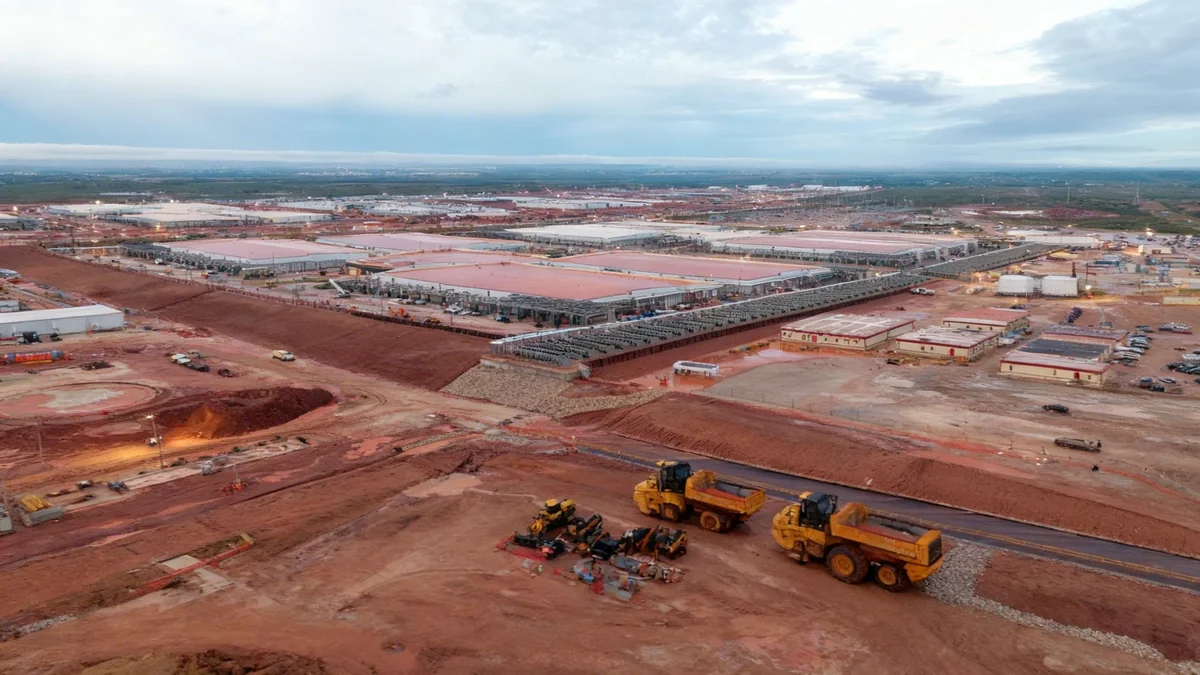
A portion of this investment is flowing into the United States, where TSMC is accelerating the expansion of its chip fabrication facilities in Arizona. This move aligns with a recently finalized trade agreement between the U.S. and Taiwan, which includes commitments for $250 billion in direct U.S. investment from Taiwanese companies. The agreement also reduces tariffs on Taiwanese goods from 20 percent down to 15 percent, further incentivizing transatlantic cooperation.
The company's willingness to commit such vast sums of money is the strongest possible endorsement of its belief that the AI boom is not a fleeting trend but a foundational technology shift that will drive the semiconductor industry for the foreseeable future.