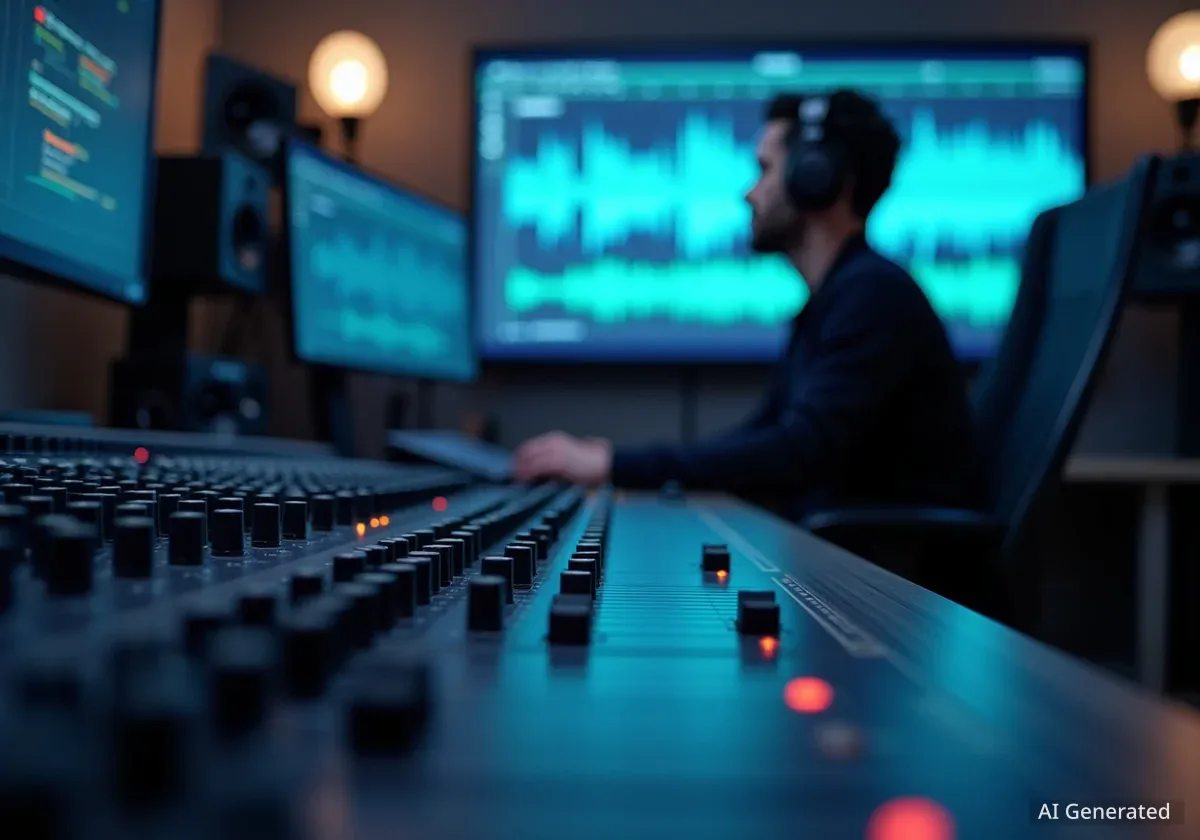




Major music companies, including Universal Music and Warner Music, are reportedly close to finalizing significant licensing agreements with artificial intelligence (AI) firms. These deals aim to establish clear terms for how technology companies will compensate music rights holders for the use of their content in AI-generated music and for training AI models. This proactive approach seeks to avoid past industry challenges seen during the early internet era.
Key Takeaways
- Universal Music and Warner Music are nearing AI licensing deals.
- Agreements will cover AI-generated music and AI model training.
- Labels seek a micropayment system similar to music streaming.
- Attribution technology is crucial for identifying music usage.
- Talks involve startups like ElevenLabs, Suno, Udio, and major tech companies like Google and Spotify.
Setting New Standards for AI and Music
Universal Music and Warner Music are leading the charge in these negotiations. Both companies manage extensive catalogs, including works from global artists such as Taylor Swift, Kendrick Lamar, Charli XCX, and Coldplay. Sources familiar with the discussions indicate that agreements could be reached within weeks.
These talks represent a critical moment for the music industry. Labels are focused on defining how AI companies pay for using copyrighted music. This includes licensing songs for creating new AI-generated tracks and for training large language models (LLMs) that learn from existing musical content.
Fast Fact
In September, French streaming service Deezer reported that almost one-third of new tracks uploaded to its platform were AI-generated. This highlights the rapid growth of AI in music creation.
Preventing Past Mistakes
The music industry vividly remembers the challenges of the early internet. Services like Napster and LimeWire in the early 2000s caused significant revenue losses. Record labels are now working to prevent a similar disruption from AI technology.
Elliot Grainge, CEO of Atlantic Records, drew parallels between the current situation and the "Napster and LimeWire phase of 2002." He noted that the industry lost a substantial portion of its value during that period. Grainge expressed optimism about the current opportunity, stating that labels have learned from past mistakes and now understand the importance of survival.
"We saw an industry lose 50, 60, 70 percent of its value... Labels have a responsibility to negotiate the best deals for their artists — and they’re really good at that. They learned from their mistakes in the past. They understand survival now because of that tumultuous period," Grainge told the Financial Times last month.
Payment Models and Attribution Technology
A central point of discussion in these licensing talks is the payment structure. Music labels are pushing for a system similar to streaming services. In this model, each use of a song by an AI system would trigger a small payment, known as a micropayment.
To implement such a system, AI companies need to develop advanced attribution technology. This technology would function similarly to YouTube's Content ID system, which identifies copyrighted material within uploaded videos. The goal is to accurately track and identify when and how labels' music is used by AI. This ensures fair compensation for artists and rights holders.
Context: The Streaming Model
Music streaming services operate on a model where artists and rights holders receive royalties based on how often their music is played. This typically involves complex calculations and agreements between labels, artists, and platforms. The industry aims to adapt this framework for AI usage.
Key Companies in Discussions
Talks have involved several AI startups that specialize in audio and generative content. These include ElevenLabs, known for voice synthesis, and Stability AI, a prominent generative AI company. Other startups in discussions are Suno and Udio, both of which focus on AI-generated music, and Klay Vision.
Major technology companies are also part of these conversations. Google and Spotify are engaged in discussions with music labels. Spotify, a leading music streaming platform, is reportedly in the early stages of exploring how to integrate generative AI tools onto its platform. Sources indicate that a deal with Spotify is not imminent but discussions are ongoing.
- AI Startups: ElevenLabs, Stability AI, Suno, Udio, Klay Vision
- Major Tech Companies: Google, Spotify
Challenges and Artist Concerns
Executives involved in the negotiations acknowledge that these AI deals are more complex than traditional streaming agreements. AI can utilize music in various ways that are not always straightforward, going beyond simple playback or track creation. This complexity raises questions about how artists will be compensated and whether they will fully support these new agreements.
One senior label executive highlighted the unique challenge: "What’s different is when you take the entire history of music and feed it into a model that produces something unrecognisable. The question is: are artists going to get on board?"
AI-Generated Spam
Spotify recently announced that it removed 75 million "spammy" AI-generated tracks from its platform over the past year. This illustrates the scale of AI-generated content entering the music ecosystem.
Legal Actions and Future Settlements
In 2024, major record companies, including Sony Music, took legal action against AI startups Suno and Udio for copyright infringement. However, these companies are now engaging in licensing discussions with both startups. The hope is to reach agreements that include settlements for past unauthorized use of their music.
Sony Music, home to artists like Adele and Beyoncé, confirmed its involvement in these discussions. A representative stated, "We are in discussions with companies that have ethically trained models and that benefit our artists and songwriters."
The ultimate goal for music labels is to establish a precedent for how AI companies compensate for music usage. While specific models may vary across platforms, these landmark deals are expected to shape the future relationship between the music industry and artificial intelligence.
Elliot Grainge expressed confidence: "I have great faith in the soon-to-be marriage between rights-holders, artists and these AI platforms."
The music industry is navigating a new era where technology can both create and disrupt. By actively pursuing licensing deals, labels aim to ensure fair compensation for artists and sustainable growth in a rapidly evolving digital landscape.