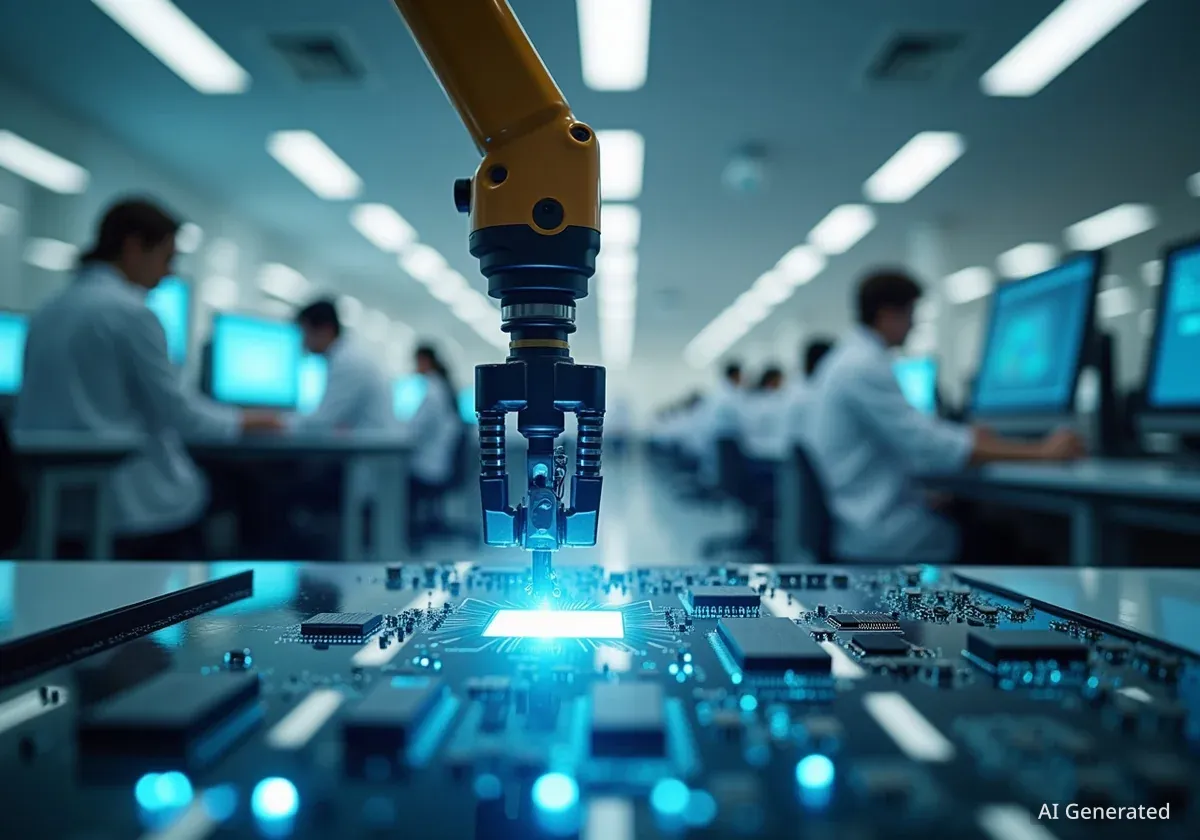



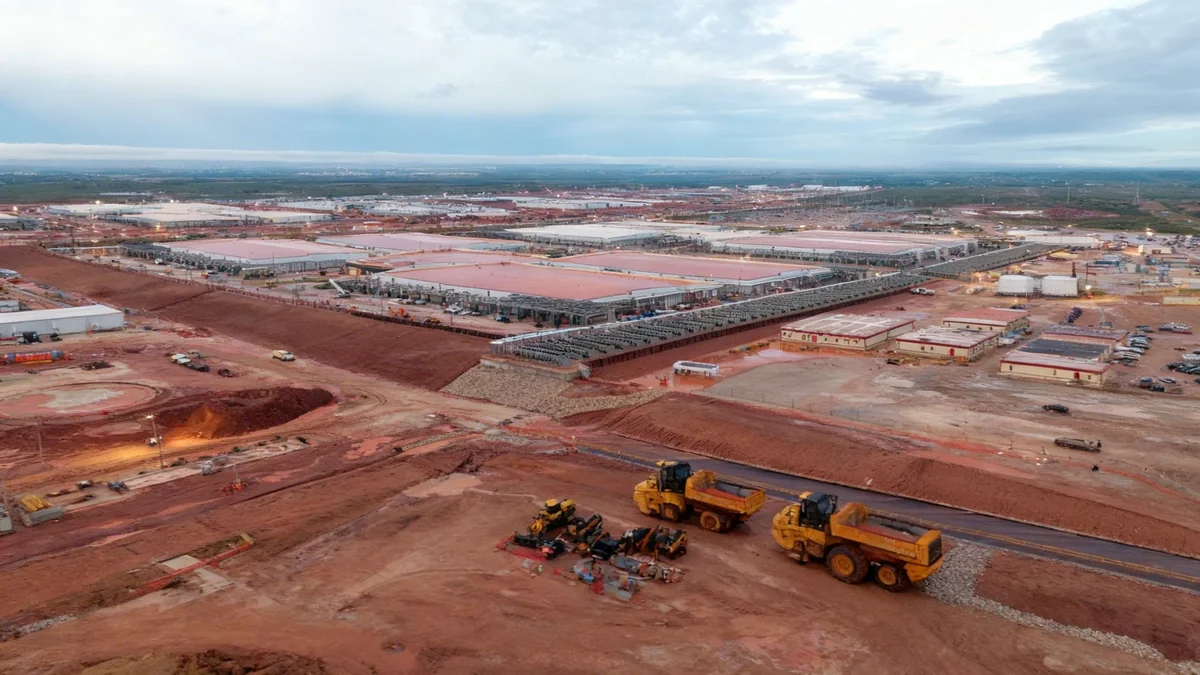

Technologies once confined to speculative fiction and research labs are now emerging as viable, mainstream businesses. After decades of development, concepts like advanced artificial intelligence, quantum computing, and personalized medicine are transitioning from theoretical possibilities to practical applications, signaling a significant shift in the global economic and technological landscape.
This transition, however, is not without its challenges. Growing geopolitical tensions, coupled with rising protectionism and national security concerns, are creating a complex environment for these nascent industries. The path from breakthrough to widespread adoption is increasingly shaped by international policy as much as by technological innovation.
Key Takeaways
- Several long-anticipated technologies, including advanced AI and quantum computing, are finally becoming commercially viable.
- The shift from research to real-world business is creating new markets and investment opportunities.
- Geopolitical factors, such as protectionism and security concerns, pose significant risks to the growth of these new industries.
- The integration of these technologies is expected to reshape sectors from healthcare to defense and logistics.
The End of the Waiting Game
For years, certain technologies have been perpetually described as being 'just around the corner.' This category included everything from truly autonomous vehicles to generative AI capable of complex creative tasks. That corner, it appears, has finally been turned. A convergence of increased computing power, vast data availability, and sophisticated algorithms has accelerated the development cycle.
What was once a slow trickle of progress has become a flood of practical applications. Companies are no longer just demonstrating proofs-of-concept; they are building and selling real products and services. This marks a critical inflection point where theoretical science translates into tangible economic value.
This shift is not confined to a single sector. It spans across software, hardware, biotechnology, and energy, creating a wave of innovation that promises to redefine how industries operate. The era of perpetual promise is giving way to an era of practical implementation.
From Lab Bench to Balance Sheet
The journey from a laboratory discovery to a profitable business is notoriously difficult. Many promising ideas fail to cross this so-called 'valley of death' due to a lack of funding, scalable manufacturing, or market demand. However, a new generation of technologies is proving to be the exception.
Venture capital and corporate R&D spending have poured billions into these fields, driven by the potential for massive returns. The result is an ecosystem where startups can rapidly scale and established corporations can integrate groundbreaking innovations into their existing operations. The focus has moved from asking "what is possible?" to "what is profitable and practical?"
New Technologies, Old Tensions
As these powerful technologies become reality, they are emerging into a world marked by increasing geopolitical friction. Unlike previous waves of innovation that unfolded in a more globalized environment, today's breakthroughs are immediately caught in the crosscurrents of international competition and national security interests.
"We are seeing a fundamental change. Technology is no longer a neutral domain for global collaboration. It has become a central arena for strategic competition between nations. Every major advance is now viewed through a security lens."
This new reality has profound implications. Governments are implementing stricter controls on technology exports, scrutinizing foreign investments in key sectors, and promoting domestic supply chains to reduce reliance on geopolitical rivals. The open exchange of ideas that once fueled scientific progress is being replaced by a more guarded and competitive approach.
The Rise of Techno-Nationalism
Techno-nationalism is the belief that a nation's technological capabilities are a critical component of its national security, economic prosperity, and global influence. This perspective drives policies aimed at protecting and promoting a domestic tech industry, often through subsidies, tariffs, and restrictions on foreign competition. This trend can accelerate innovation within a country but may slow global progress by fragmenting research efforts and supply chains.
The result is a potential slowdown in the global advance of these technologies. While national champions may emerge, the overall pace of innovation could be hampered by duplicated efforts, fractured markets, and barriers to collaboration. For businesses operating in these new fields, navigating this complex web of regulations and political risks has become a primary concern.
Sectors on the Brink of Transformation
Despite the geopolitical headwinds, the impact of these emerging technologies will be widespread and transformative. Several key sectors are poised for fundamental disruption as these long-promised innovations become integrated into daily operations.
Healthcare and Biotechnology
Personalized medicine, driven by advances in genomics and AI, is moving from a distant dream to a clinical reality. AI algorithms can now analyze medical imaging with remarkable accuracy, predict disease risk from genetic data, and accelerate the drug discovery process. This could lead to more effective treatments tailored to an individual's unique biological makeup.
- AI-Powered Diagnostics: Systems that can detect diseases like cancer from scans earlier and more accurately than human radiologists.
- Rapid Drug Development: Using computational models to simulate molecular interactions, drastically cutting the time and cost of bringing new drugs to market.
- Gene Editing Therapies: Technologies like CRISPR are opening the door to treatments that can correct genetic defects at their source.
Logistics and Manufacturing
Automation and AI are set to overhaul supply chains and factory floors. Fully autonomous logistics networks, from self-driving trucks to automated warehouses, promise to increase efficiency and reduce costs. In manufacturing, 'digital twin' technology allows companies to create virtual replicas of their production lines to optimize processes and predict maintenance needs before they arise.
This industrial revolution is not just about replacing human labor with machines. It is about creating smarter, more resilient, and more efficient systems that can adapt to changing market demands in real time.
Navigating the Uncertain Future
The arrival of these once-futuristic technologies presents a dual reality. On one hand, it unlocks unprecedented opportunities for human progress and economic growth. On the other, it introduces new and complex risks tied to global security and economic fragmentation.
The industries that have been waiting decades for these breakthroughs are finally seeing their patience rewarded. However, their success may ultimately depend less on the brilliance of their innovations and more on their ability to navigate a world where technology and geopolitics are inseparable.
For businesses, investors, and policymakers, the challenge is clear: how to foster innovation and capture its benefits while managing the inherent risks of a more competitive and divided world. The technologies of tomorrow are here today, but the landscape they have arrived in is more complex than anyone could have predicted.