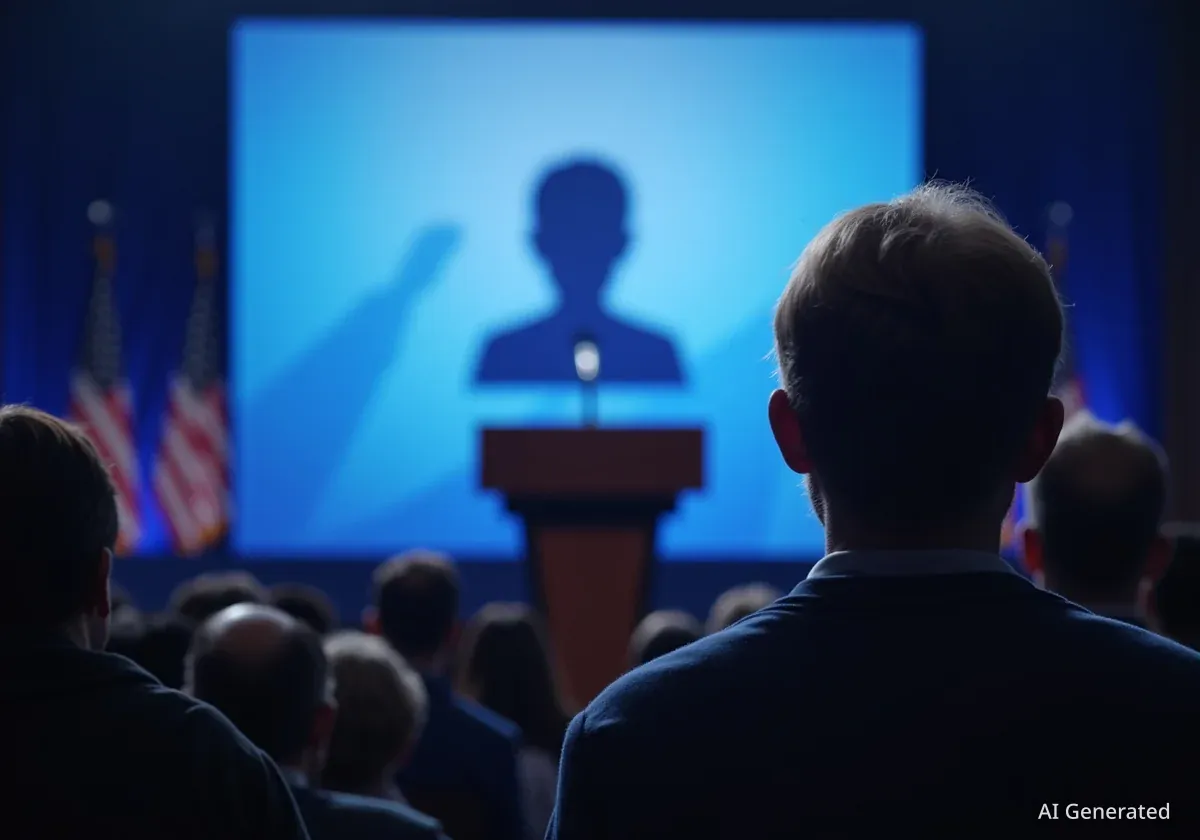


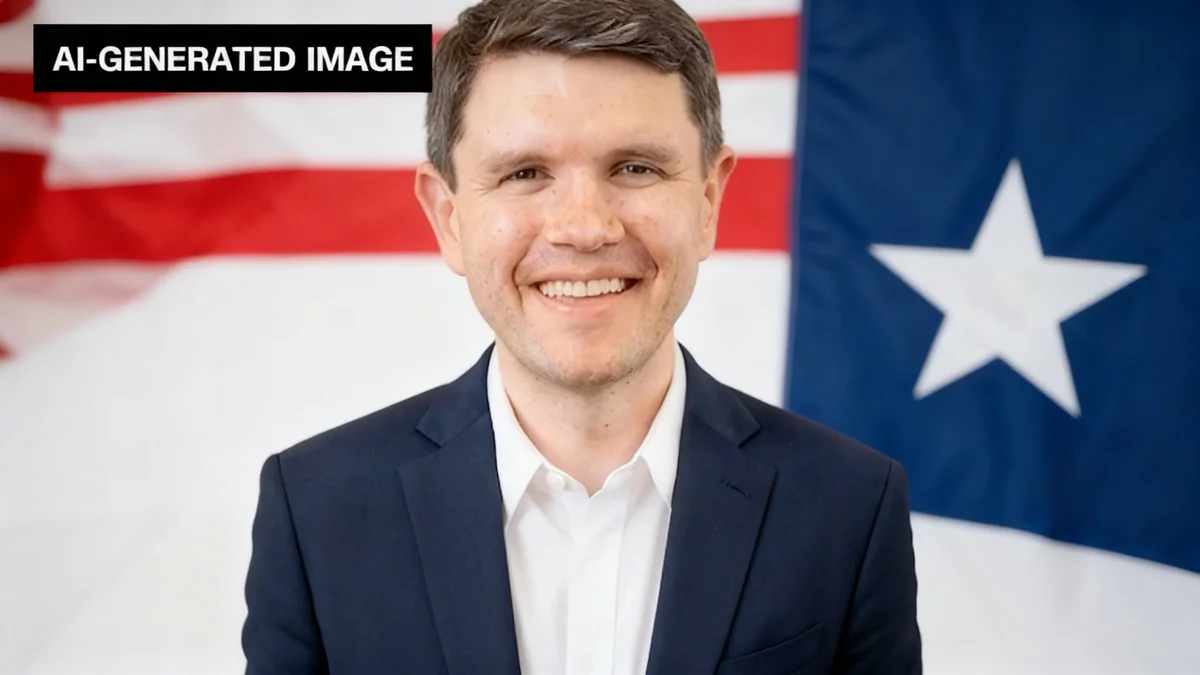
In an unprecedented move in Virginia politics, Republican lieutenant governor candidate John Reid held a 40-minute debate against an artificial intelligence version of his Democratic opponent. The event took place after his opponent declined multiple invitations to a traditional debate.
This use of generative AI in a live political setting introduces a new and complex dimension to campaign strategies. It raises significant questions about the future of political discourse, the ethics of using AI to represent opponents, and how voters will respond to such tactics.
Key Takeaways
- Republican John Reid debated an AI chatbot designed to represent his Democratic opponent.
- The move came after the Democratic candidate declined all of Reid's debate requests.
- The 40-minute event was a solo affair, with Reid posing questions to the AI and responding to its generated answers.
- This event marks a novel application of AI in political campaigns, blurring the lines between traditional debate and technological demonstration.
An Unconventional Political Stage
The political landscape in Virginia witnessed a highly unusual event as John Reid, the Republican candidate for lieutenant governor, took the stage for a debate. However, his opponent was not a person, but a computer program. Reid engaged in a 40-minute discussion with an AI chatbot crafted to simulate his Democratic rival.
The decision to proceed with an AI opponent was made after repeated attempts to schedule a conventional debate failed. According to Reid's campaign, all formal requests for a face-to-face debate were declined by the opposition, leaving them to seek an alternative way to present their platform and contrast their views with their opponent's publicly stated positions.
During the event, Reid addressed the AI directly, asking questions on key policy issues and responding to the answers it generated. The dynamic was that of a one-man show, with technology serving as a proxy for the absent candidate. This format allowed Reid to control the narrative and framing of the discussion without direct rebuttal from his human adversary.
The Rise of AI in Campaigns
Artificial intelligence is no longer a futuristic concept in politics. Campaigns are increasingly using AI for various tasks, including voter data analysis, targeted advertising, and even generating draft communications. However, using an AI to stand in for an opponent in a public debate is a significant escalation of its role.
A New Frontier for Campaign Tactics
The use of an AI stand-in is a novel tactic that could signal a shift in how political campaigns operate, especially when direct engagement is not possible. Proponents might see it as an innovative way to maintain public discourse and hold opponents accountable for their positions, even in their absence. It forces a discussion on the issues that might otherwise be avoided.
However, the strategy is not without its critics. Concerns have been raised about the ethics and fairness of such a move. An AI's responses are based on data it has been trained on, which can be curated to present a specific, potentially skewed, version of a candidate's views. The AI cannot replicate the nuance, spontaneity, or personal conviction of a human candidate.
Fact: The AI used in the debate was likely a large language model (LLM) trained on publicly available information, such as the opponent's speeches, voting records, and public statements.
Potential Implications for Voters
For voters, this development presents a new challenge. They must now discern whether an AI-powered representation is a fair and accurate portrayal of a candidate or a distorted caricature designed for political advantage. The effectiveness of this tactic will largely depend on voter perception: is it a clever move to force a discussion or a disingenuous stunt?
The public reaction to the event has been mixed, with online commentary reflecting a spectrum of opinions. Some observers have called it a desperate maneuver, while others have praised it as a creative way to overcome a political stalemate. This division highlights the uncharted territory that AI is opening up in the political sphere.
The Broader Role of Technology in Politics
This Virginia debate is a clear example of how rapidly advancing technology is intersecting with long-standing political traditions. As AI becomes more sophisticated and accessible, its role in campaigns is likely to expand beyond this single event. We may see more instances of AI being used in both constructive and potentially manipulative ways.
Several areas where AI could further impact politics include:
- Automated Fact-Checking: AI tools could be developed to provide real-time fact-checking during live debates and speeches.
- Personalized Voter Outreach: Campaigns could use AI to craft highly individualized messages for millions of voters, increasing engagement.
- Policy Simulation: AI models could be used to predict the potential outcomes of proposed legislation, offering data-driven insights for policymakers.
- Deepfake Technology: On the darker side, AI can be used to create convincing but fake audio and video of candidates, posing a major threat of misinformation.
"When a candidate refuses to debate, it denies voters the opportunity to see a direct comparison of ideas. This event, whether you agree with the method or not, forced a conversation about that refusal."
Looking Ahead: Regulation and Responsibility
The debate against an AI opponent pushes the boundaries of acceptable campaign practices. It will likely spark a broader conversation among lawmakers and election officials about the need for new rules governing the use of artificial intelligence in political campaigns. The central question is how to balance technological innovation with the need to ensure fair and transparent elections.
As campaigns continue to experiment with new technologies, the responsibility will fall on candidates to use these tools ethically and on voters to remain critical consumers of political information. The Virginia lieutenant governor's race may be remembered not just for its outcome, but for being a test case for the future of AI-influenced democracy.
The long-term impact of this event remains to be seen. It could be a one-off curiosity or the beginning of a trend where technology plays an increasingly active, and even adversarial, role in how political battles are fought. For now, it serves as a stark reminder that the digital revolution is fundamentally reshaping every aspect of society, including the very process of how we choose our leaders.