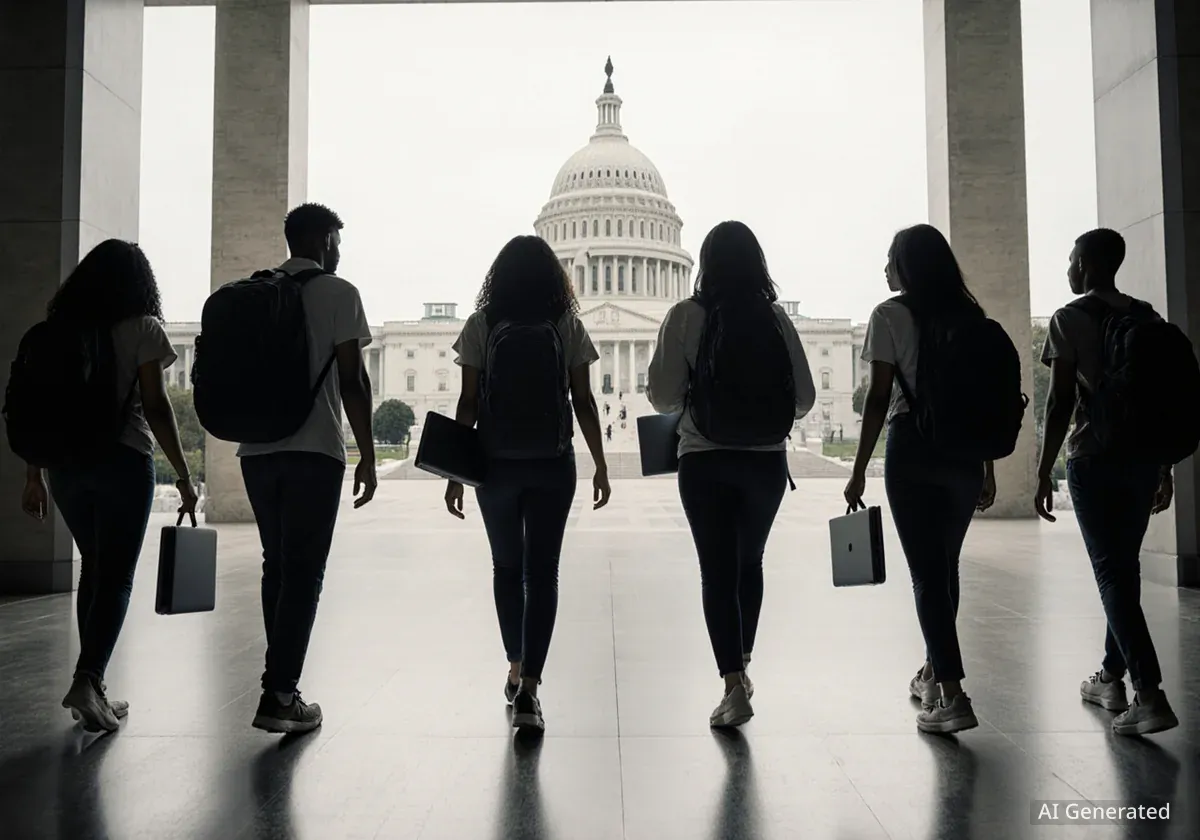



The White House has announced a new initiative that merges a classic American institution with 21st-century technology. A program dubbed the “Tech Corps” will operate within the Peace Corps to deploy American technology experts globally, aiming to assist partner nations in adopting U.S.-developed artificial intelligence systems.
The initiative is part of a broader strategy to expand American influence in the rapidly evolving field of AI and provide an alternative to technology offered by global competitors like China. Volunteers will focus on implementing AI solutions for practical, grassroots challenges in sectors such as agriculture, health, and education.
Key Takeaways
- The White House has established a “Tech Corps” within the long-standing Peace Corps.
- The program will recruit and send American tech professionals abroad to help implement U.S. AI solutions.
- This initiative is framed as a tool of soft power and diplomacy, intended to counter the global influence of Chinese technology.
- Initial deployments are expected to begin in fall 2026, with applications already being accepted.
A New Era for the Peace Corps
The Peace Corps, an independent U.S. government agency known for sending American volunteers to assist with development projects, is being updated for the digital age. The newly formed Tech Corps will recruit individuals with specific technical skills, including engineers and graduates from science, technology, engineering, and mathematics (STEM) fields.
These volunteers will provide what officials call “last-mile” support. Their mission is to help local communities and organizations integrate American AI applications to address tangible problems. This marks a significant shift for the Peace Corps, aligning its traditional mission of grassroots development with the strategic goals of U.S. technology policy.
Acting Peace Corps Director Richard E. Swarttz highlighted the program's forward-looking approach.
“AI is the future, and as the undisputed world leader in AI technology, the United States, through the Tech Corps, will be at the forefront of delivering these benefits,” he stated.
Volunteers will commit to service terms ranging from 12 to 27 months. Like traditional Peace Corps members, they will receive housing, a living stipend, healthcare, and service awards upon completion of their term. Virtual service placements are also an option.
Geopolitical Strategy and AI Sovereignty
The creation of the Tech Corps is not solely about development aid; it is a direct component of Washington's strategy to compete with China's growing technological footprint. Chinese technology firms have made significant inroads in developing nations, often by providing inexpensive and customizable open-source AI models.
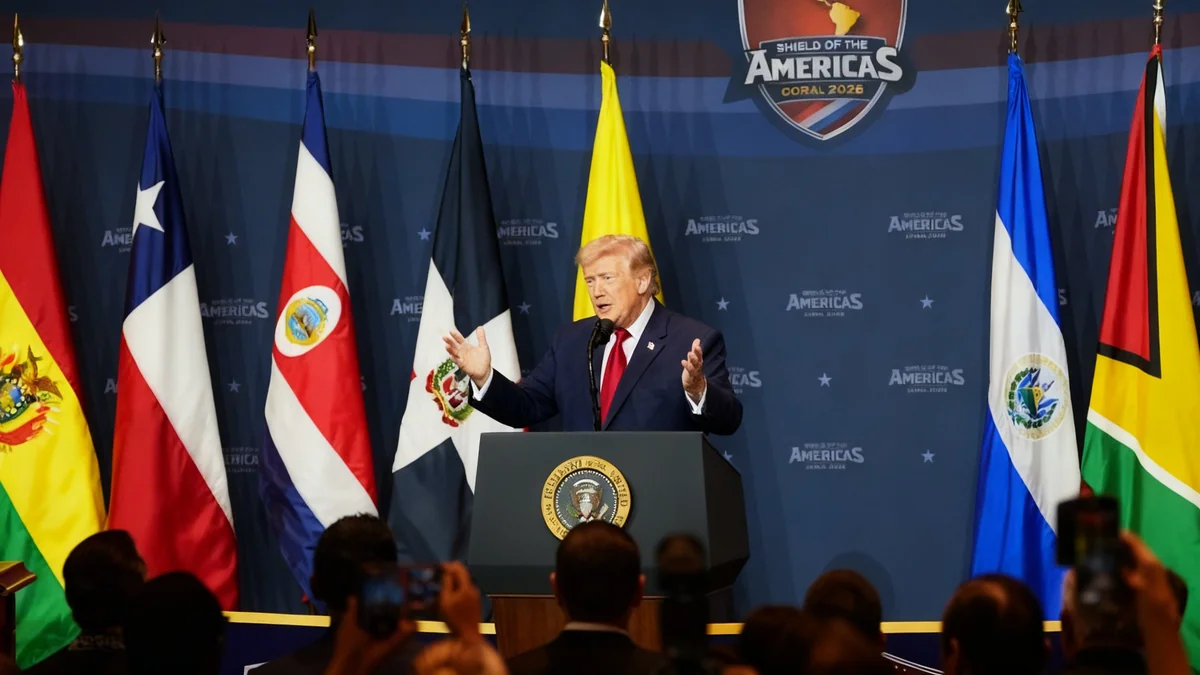
The Tech Corps aims to present a U.S.-led alternative. The program will send volunteers to countries participating in the American AI Exports Program, an initiative designed to maintain U.S. leadership in advanced technologies. The announcement was made at the India AI Impact Summit 2026 in New Delhi, signaling India's key role in the strategy.
What is AI Sovereignty?
A central theme at the India AI Impact Summit was “AI sovereignty.” This concept refers to a nation's ability to develop, control, and govern artificial intelligence systems according to its own laws and strategic interests, without being dependent on foreign powers. The U.S. initiative presents itself as a way for nations to achieve this by using American technology as a foundation.
During the summit, Michael Kratsios, director of the White House Office of Science and Technology Policy, framed the initiative as a way to bridge the global AI divide. He argued that access to top-tier technology is essential for national autonomy.
“Real AI sovereignty means owning and using best-in-class technology for the benefit of your people,” Kratsios said in his announcement.
This move aligns with other U.S.-led international partnerships. India recently announced it would join the Pax Silica initiative, a U.S. effort to secure the global supply chain for silicon-based technologies. Core members of this group include Japan, South Korea, the United Kingdom, and Australia, among others.
Implementation and Broader Initiatives
The Tech Corps is now actively recruiting. A dedicated website has been launched to accept applications on a rolling basis, with the first wave of volunteers scheduled for deployment in the fall of 2026.
Tech Corps Volunteer Details
- Service Length: 12 to 27 months, with virtual options available.
- Target Recruits: Engineers, STEM graduates, and other tech-skilled professionals.
- Mission: Apply U.S. AI solutions to problems in agriculture, education, health, and economic development.
- Benefits: Volunteers receive a living stipend, housing, and healthcare.
The initiative is one piece of a larger puzzle. The White House also unveiled several other programs aimed at bolstering the American AI ecosystem abroad. One such program is the National Champions Initiative, which will work to integrate leading foreign AI companies into customized American AI export packages.
“We recognize that partners need the chance to build their native technology industries, and believe facilitating this will be a critical part of the exports program,” the White House said in a statement. This suggests a strategy that combines direct assistance with fostering local innovation built upon an American tech foundation.
Furthermore, the U.S. plans to leverage other institutions of soft power to help partner countries overcome financial hurdles. Organizations like the World Bank and the U.S. International Development Finance Corporation will be involved in creating financing solutions for nations looking to import the “American AI stack.” This comprehensive approach, combining human capital, technology transfer, and financial support, demonstrates a concerted effort to establish American AI as the global standard.