



Recent satellite imagery has confirmed damage to United States military installations in Bahrain and Kuwait following a series of attacks across the Middle East. These physical strikes are occurring alongside a sophisticated wave of digital disinformation, including AI-generated images and recycled video footage, creating a complex and volatile information environment.
Key Takeaways
- Satellite photos show damage to a US naval base in Bahrain and an air base in Kuwait.
- Separately, three US F-15 fighter jets were downed over Kuwait in a suspected friendly fire incident.
- A surge in disinformation includes AI-manipulated images of fake attacks and old videos being presented as new events.
- Other verified attacks include drone strikes on a French naval base in Abu Dhabi and a Saudi Arabian oil refinery.
Verified Attacks on Military and Energy Infrastructure
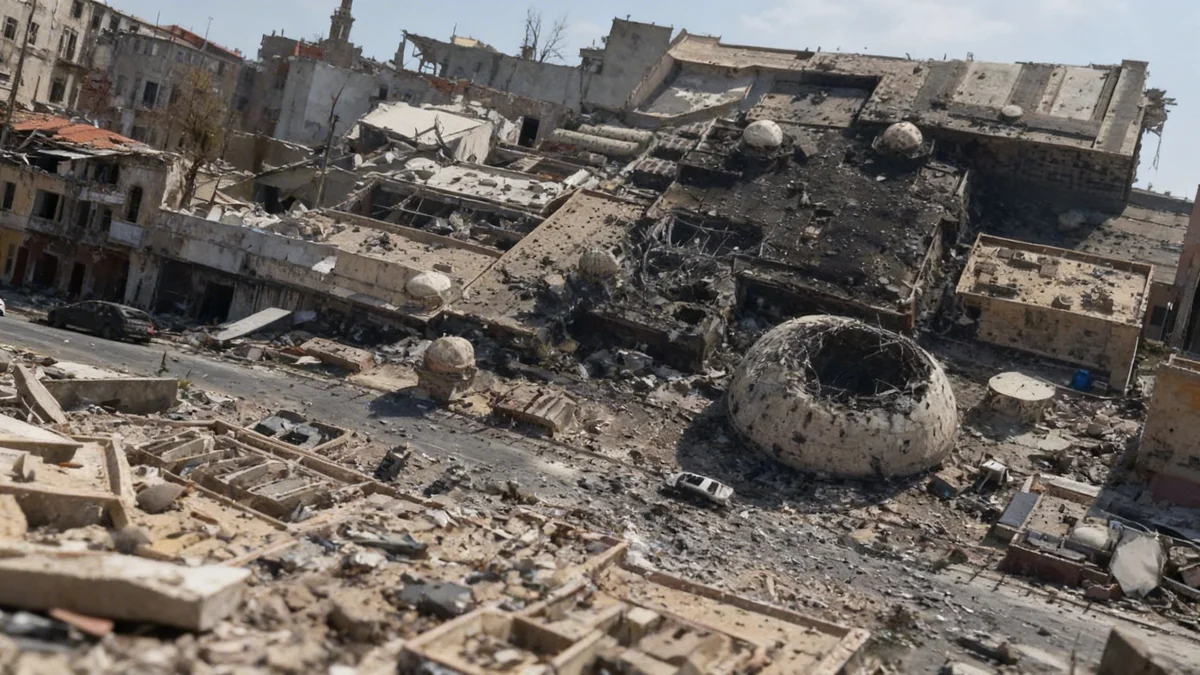
Analysis of new satellite photos reveals significant damage at key military sites used by the United States. At the Ali al-Salem air base in Kuwait, images show that two aircraft shelters have been destroyed, with two others sustaining damage. An additional damaged area is visible near the base's southern runway.
In Bahrain, a US naval base was also hit. The imagery confirms the destruction of two large radomes, which are protective structures for radar and communications equipment. A large warehouse on the base also shows signs of severe damage. A senior Bahraini official confirmed a drone strike caused a major fire at the facility.
Wider Regional Impact
The attacks extend beyond bases directly used by the US. Verified footage showed the aftermath of a drone attack on a French naval base in Abu Dhabi, United Arab Emirates, on Sunday. French Defence Minister Catherine Vautrin confirmed a hangar was hit, though no injuries were reported. Additionally, a drone attack caused a fire at the Ras Tanura oil refinery in eastern Saudi Arabia, operated by the state oil company Aramco. Saudi officials stated that operational units were temporarily shut down as a precaution.
US Fighter Jets Downed Over Kuwait
The US military has confirmed a separate, serious incident involving its own aircraft. Three F-15 fighter jets came down over Kuwait on March 1 in what military officials have described as an "apparent friendly fire" incident.
Verified video footage shows one of the F-15s spinning toward the ground with fire visible from its fuselage. Geolocation analysis confirmed the crash site to be just west of Kuwait City. Another video shows local people filming one of the crew members who had ejected, with a used parachute on the ground nearby.
Crew Members Recovered
According to a statement from the US military’s Central Command, all six crew members from the three jets were recovered and are in stable condition. An official investigation into the cause of the incident is now underway.
Disinformation Floods Social Media
The physical conflict is being mirrored by an intense information war online. Malicious actors are deploying a range of deceptive tactics to spread confusion and false narratives about the ongoing events.
AI-Generated Images Spread False Attack Claims
Artificially generated images have been a prominent tool for disinformation. One widely shared image, promoted by Iran’s state-aligned Tehran Times, claimed to show satellite views of a destroyed US radar facility in Qatar. However, analysis revealed it was an AI-manipulated fake based on an old, publicly available satellite image of a base in Bahrain from February 2025.
Tools like Google's SynthID watermark detector identified the image as AI-generated. Visual inconsistencies, such as vehicles parked in the exact same spots in photos allegedly taken a year apart, also exposed the forgery. A similar AI-manipulated image falsely depicted a massive explosion at a US base near Irbil, Iraq.
Old Footage and False Narratives
Beyond AI, old videos are being repurposed to create new falsehoods. A video clip claiming to show an attack on an air base in Turkey used by US forces gained traction online. Investigation revealed the video was originally posted by a Turkish news correspondent in January and showed him reporting from Syria, not Turkey. Turkey’s Centre for Combating Disinformation has officially refuted the claims.
Disinformation has also targeted political figures. False claims circulated on the social media platform X, using old photos to allege that UK Home Secretary Shabana Mahmood and newly elected Green Party MP Hannah Spencer held a moment of silence for Iran's late Supreme Leader, Ayatollah Ali Khamenei. Reverse image searches proved the photos were taken weeks or months before Khamenei's death at unrelated events.
Political Instability Fuels Information War
These events follow the death of Iran’s Supreme Leader Ayatollah Ali Khamenei in an air strike. A temporary three-member council, including President Massoud Pezeshkian, has been established to manage state affairs. In the wake of this transition, fake social media accounts impersonating council member Ayatollah Alireza Arafi have appeared, spreading unverified and false material to exploit the uncertainty.
Navigating a New Era of Conflict
The combination of verified military strikes and a coordinated disinformation campaign highlights the changing nature of modern conflict. The rapid spread of AI-generated content and repurposed media makes it increasingly difficult for the public to distinguish fact from fiction.
Experts are urging caution and critical evaluation of information shared online, as both state-aligned and independent actors seek to manipulate public perception amidst escalating regional tensions. The ability to verify information through satellite imagery, geolocation, and digital forensics has become a critical tool in countering the digital fog of war.