

A new political strategy is emerging across the United States, where congressional candidates are subtly tailoring their online messaging to attract millions of dollars from the artificial intelligence and cryptocurrency industries. With nearly $250 million in combined political funds, these tech sectors are actively shaping the political landscape by backing candidates who echo their pro-innovation talking points.
This influx of capital is influencing primary races and raising significant questions about the role of special interest money in American democracy, as candidates increasingly use websites and social media posts as signals to powerful super PACs.
Key Takeaways
- Congressional candidates are using specific keywords like "blockchain" and "AI dominance" to signal support for the crypto and AI industries.
- Super PACs funded by tech executives, such as Leading the Future and Fairshake, have nearly $250 million to spend on the 2026 election cycle.
- Millions have already been spent in primary races in states like Illinois and Texas to support aligned candidates and oppose skeptics.
- Critics argue this practice allows wealthy special interests to disproportionately influence elections and expect regulatory favors in return.
The New Political Playbook
In today's political arena, a few carefully chosen words on a campaign website can unlock a flood of financial support. Candidates are increasingly adopting niche language favored by the AI and crypto sectors to signal their allegiance.
Phrases like “pro-innovation,” “blockchain-based assets,” and the need for “clear” regulations are becoming common. These terms act as a modern-day handshake, signaling to industry insiders that a candidate is friendly to their cause.
In Illinois, former Democratic congressman Jesse Jackson Jr. authored an opinion piece on AI's potential to help caregivers. Shortly after, an AI-focused super PAC committed $1.1 million to support his political comeback attempt.
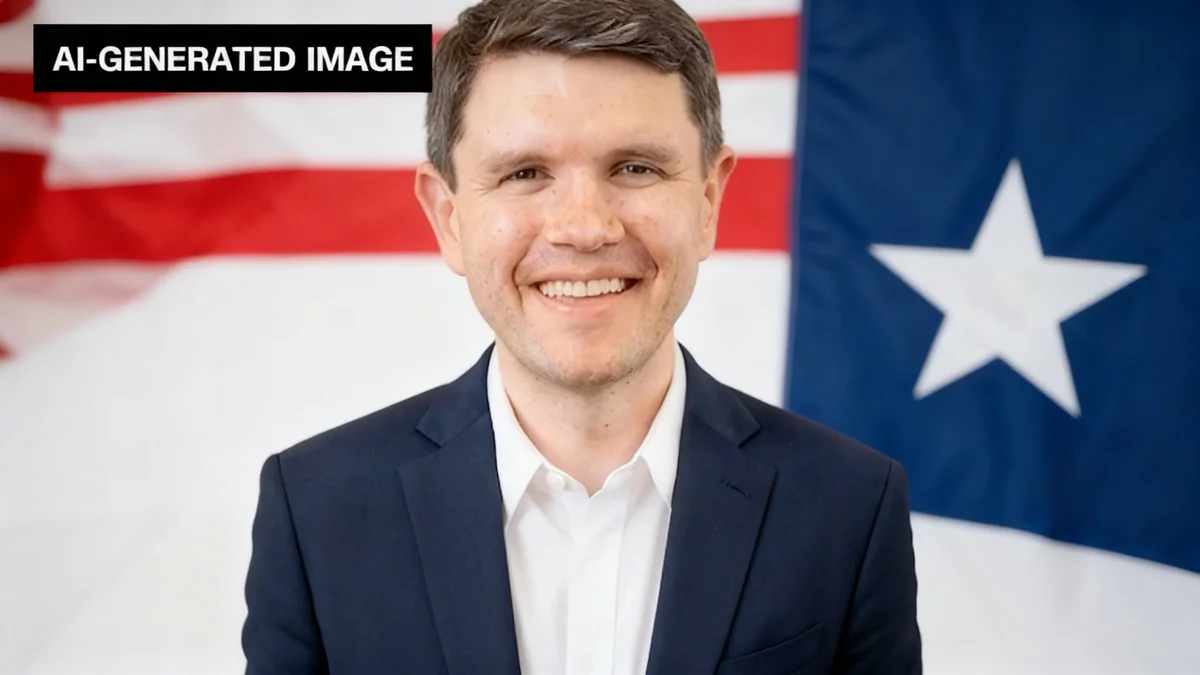
Similarly, Texas Republican candidate Jessica Steinmann featured sections on her website praising both AI and crypto. Her primary campaign received over $1.2 million in support from these industries.
A Digital Audition for Funding
This strategy turns campaign platforms into public auditions for funding. Instead of focusing solely on traditional voter issues, sections dedicated to emerging technologies are appearing alongside core topics like the economy and healthcare.
By the Numbers
The main pro-crypto super PAC, Fairshake, began the year with a reported $193 million. The leading pro-AI super PAC, Leading the Future, is funded by major contributions including $25 million from venture capital firm Andreessen Horowitz.
Good-government advocates express alarm at this trend. Tiffany Muller, president of End Citizens United, a group focused on limiting money in politics, sees it as a perversion of the democratic process.
"It used to be that campaign websites would tell voters what candidates believe. Now they are a signaling apparatus to the wealthy special interests," Muller stated. She warns that these super PACs expect a "return on investment" once their chosen candidates are in office.
The Power of Tech Super PACs
The AI and crypto industries have built formidable political machines to advance their interests in Washington, where debates over regulation could determine their futures.
Leading the Future is the primary super PAC for the AI industry, funded by tech leaders like OpenAI co-founder Greg Brockman and venture capitalist Marc Andreessen. It operates through affiliated groups to support both Republican and Democratic candidates who champion what it calls a "balanced, pro-innovation approach."
The crypto industry's efforts are largely channeled through Fairshake, which has demonstrated its willingness to spend heavily to both elect allies and unseat opponents. The strategy mirrors tactics used in previous election cycles, where targeted spending in key primary races proved highly effective.
Targeting Key Races
In Texas, a Fairshake-affiliated super PAC spent $1.5 million against incumbent Democrat Al Green, who sits on the influential House Financial Services Committee and has opposed crypto priorities. His opponent, Christian Menefee, who received an "A" rating from the industry, has a section on his website praising blockchain technology.
Candidates who receive this support defend their focus on technology as forward-thinking. A spokesperson for Jessica Steinmann called AI and crypto "two of the most consequential industries for the future," arguing that any campaign not discussing them is out of touch with the modern economy.
A Question of Influence and Ethics
The practice of signaling to super PACs is not entirely new. Four years ago, candidates began promoting pandemic preparedness, an issue championed by then-crypto financier Sam Bankman-Fried, who subsequently spent millions supporting them. Jonathan Jackson, Jesse Jackson Jr.'s brother, posted extensively on the topic before a super PAC funded by Bankman-Fried spent over $500,000 on his behalf. He is now a member of Congress.
The current wave of spending from AI and crypto groups is more direct and organized. In some cases, different factions within the same industry are even competing.
For instance, a second AI-funded super PAC network, Public First, backed by the AI startup Anthropic, has taken opposing positions. Anthropic has called for stricter regulation than many of its peers. This division was visible in Jesse Jackson Jr.'s race, where Public First spent nearly $1 million opposing him, effectively canceling out the support he received from the rival AI group.
The Voter's Dilemma
This dynamic leaves voters to decipher whether a candidate's stance on technology is a genuine policy position or a calculated bid for funding. Robert Peters, an Illinois state senator running against Jackson Jr., criticized the approach.
"The reason you do that is because you’re desperate enough to be bought by A.I. and crypto," Peters said in an interview. He highlighted that some of the donors funding attacks against him are also major contributors to former President Trump, a fact he hopes will resonate with Democratic primary voters.
As these industries pour unprecedented sums into elections, the line between policy discourse and financial solicitation continues to blur, creating a new and challenging landscape for American voters and the political system itself.