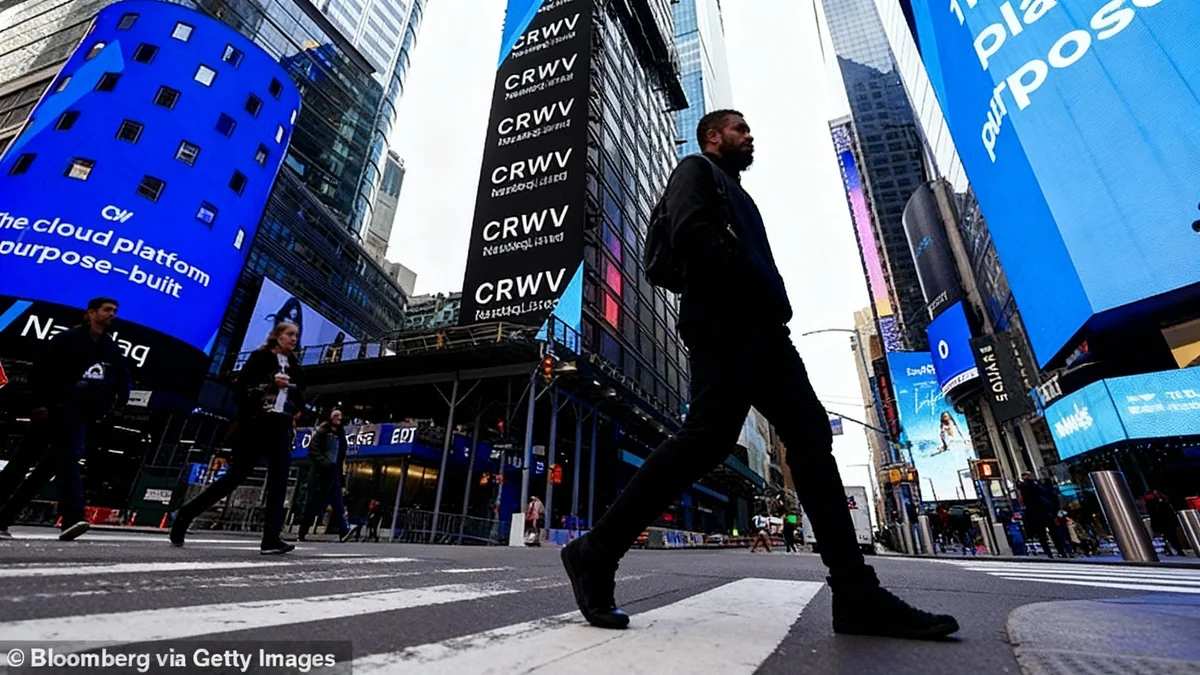




A key player in the artificial intelligence infrastructure market, CoreWeave, has experienced a dramatic downturn in its stock value, erasing approximately $33 billion in market capitalization in just six weeks. The sharp 60% decline from its peak is sending a wave of concern through Wall Street, amplifying fears of a potential investment bubble in the rapidly expanding AI sector.
Key Takeaways
- CoreWeave's stock has fallen over 61% from its mid-June high, wiping out about $33 billion in value.
- The company, which provides computing power for AI models, is facing scrutiny over its $18.8 billion debt load.
- Concerns are growing about the company's financial relationship with chipmaker Nvidia, which is both an investor and a key supplier.
- The stock's volatility is contributing to a broader debate on whether the AI market is in a speculative bubble.
A Volatile Journey on Wall Street
CoreWeave, a company that rents out high-powered computing infrastructure, launched its initial public offering (IPO) in March with shares priced at $40. The market's initial enthusiasm for AI-related stocks propelled the company's value to a peak of over $183 per share by the middle of June.
However, that momentum has reversed sharply. In the past six weeks, the stock has plummeted by 61.2%, closing at around $66. Despite the significant drop, the company's stock is still trading 67% above its initial IPO price, a testament to the powerful rally it experienced in its first three months on the market.
By the Numbers: CoreWeave's Stock
- IPO Price (March): $40 per share
- Peak Price (Mid-June): Over $183 per share
- Current Price: Approximately $66 per share
- Decline from Peak: 61.2%
- Value Lost: ~$33 Billion
Scrutiny Over Nvidia Ties and Debt
At the heart of investor unease is CoreWeave's business model and its deep relationship with chip giant Nvidia. CoreWeave operates by purchasing massive amounts of Nvidia's advanced AI chips and installing them in its 32 data centers. This computing power is then rented to major tech firms like Microsoft, Meta, and OpenAI.
Financial analysts have raised concerns about a financial loop, sometimes called 'circularity,' between the two companies. Nvidia is a known investor in CoreWeave. This relationship creates a cycle where Nvidia's investment funds are used by CoreWeave to purchase more Nvidia chips, which in turn boosts Nvidia's sales figures.
This cycle is financed by significant borrowing. To acquire the latest technology, CoreWeave has accumulated an estimated $18.8 billion in debt. This substantial figure has led many on Wall Street to question the company's long-term financial stability and its ability to service its obligations.
What is 'Circularity' Concern?
In finance, 'circularity' refers to a situation where transactions create an appearance of revenue or growth without genuine external business activity. In this case, capital flows from an investor (Nvidia) to a company (CoreWeave), which then uses that same capital to buy products from the investor, inflating the investor's revenue. This can mask underlying financial health and create unsustainable growth patterns.
Leadership Confidence Amidst Market Skepticism
Despite the stock's plunge and mounting debt, CoreWeave's leadership remains publicly confident. CEO Michael Intrator has expressed little concern about the company's financial position, suggesting that the value of its services will attract necessary funding.
"If you're building something that accelerates the economy and has fundamental value to the world, the world will find ways to finance an enormous amount of business," Intrator stated in a recent interview.
However, not everyone shares this optimism. The company's wild stock performance has attracted high-profile skeptics. Jim Chanos, an investor known for predicting the collapse of Enron, has revealed he holds a short position in CoreWeave, a financial bet that the company's stock will fall even further.
Broader Implications for the AI Market
CoreWeave's troubles are not happening in a vacuum. They reflect a growing anxiety about the entire AI investment landscape. This year, the S&P 500's growth has been heavily dependent on a small number of tech giants—Alphabet, Nvidia, Microsoft, Apple, and Amazon—which together make up nearly 30% of the index.
Many of these companies are making massive investments in firms with high debt and limited revenue, like CoreWeave, to build out the essential infrastructure for artificial intelligence. This has led to comparisons with previous market bubbles, such as the dot-com bust of the early 2000s and the 2008 housing crisis.
Still, some influential voices caution against panic. Steve Eisman, a manager famous for his role in 'The Big Short,' does not foresee a crash on the scale of 2008. He points to the unprecedented speed of AI adoption as a key differentiator.
"Look at the speed of adoption of ChatGPT, which reached 800 million users in only three years," Eisman noted previously. "The internet took 13. AI is already delivering."
As of Wednesday morning, CoreWeave's stock continued its slide, dropping another six percent in early trading, ensuring that the debate over the AI market's stability will continue.