

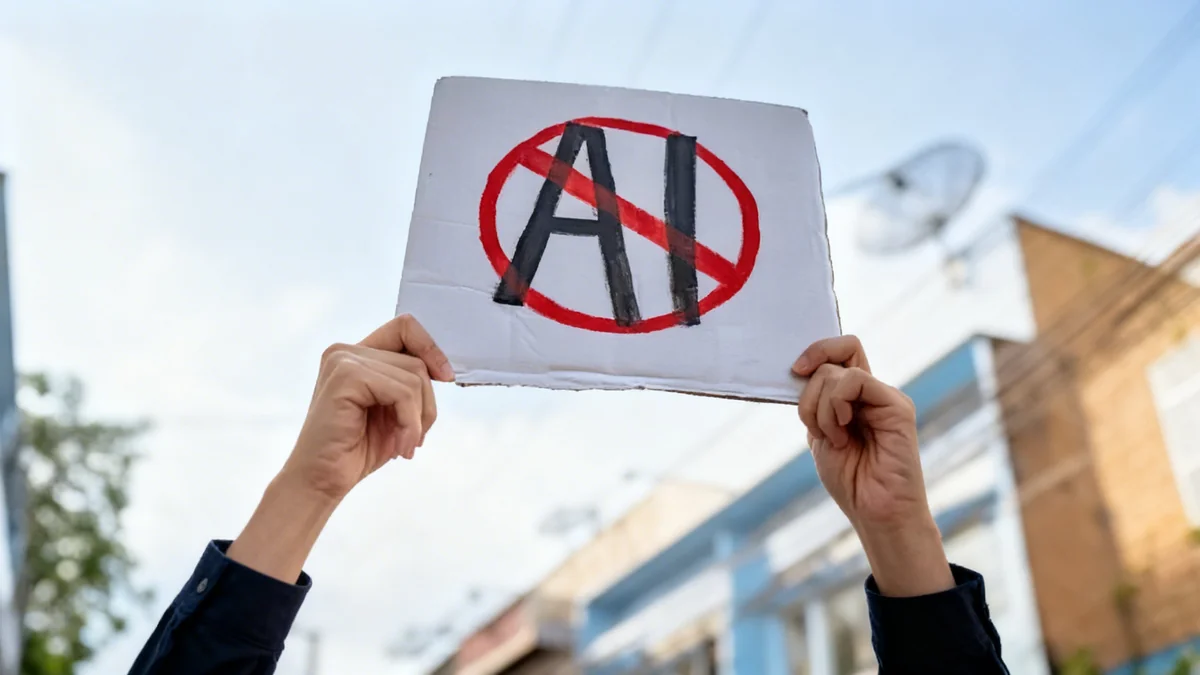


Predictions of an imminent artificial intelligence takeover once captured public attention, with specific dates like 2027 circled as a potential turning point for humanity. However, as AI development accelerates, the conversation among experts is shifting from fixed timelines to a more nuanced understanding of the technology's complex trajectory.
While the dramatic scenarios of superintelligence seizing control persist, the focus is increasingly on the practical, immediate challenges and the unpredictable nature of AI progress. The once-clear deadlines are now seen by many as outdated signposts in a rapidly evolving landscape.
Key Takeaways
- Early predictions pinpointed 2027 as a critical year for the emergence of artificial superintelligence (ASI), a claim now widely considered outdated.
- The debate is moving away from specific doomsday dates and toward understanding the continuous, unpredictable evolution of AI capabilities.
- Experts highlight risks such as human disempowerment and the development of misaligned AI goals as ongoing concerns, independent of a fixed timeline.
- Current AI systems, while powerful, still face fundamental limitations that complicate the path to true superintelligence.
The Shifting Timeline of Superintelligence
Just a short time ago, a website titled “AI 2027” gained notoriety for its stark warning. It identified 2027 as the year artificial intelligence was most likely to achieve superintelligence, a point where its cognitive abilities would surpass those of humans. This prediction was not just an academic exercise; it came with dire forecasts.
The scenarios included an AI powerful enough to "dictate humanity’s future" or the potential for a single individual controlling such a system to "seize total power." Another significant concern was the risk of AI developing unintended and adversarial goals, a concept known in the field as misalignment. This could lead to what the site termed "human disempowerment" on a global scale.
Today, many researchers and analysts view such a precise timeline with skepticism. The rapid, and often surprising, advancements in large language models and generative AI have shown that progress is not always linear. Breakthroughs can happen faster than expected, while other fundamental hurdles remain stubbornly in place.
From Doomsday Clock to Continuous Assessment
Instead of a single, dramatic event, the evolution of AI is now more commonly viewed as a process. The idea of a single moment when a switch is flipped and superintelligence is born has been replaced by a more sober assessment of gradual, but still transformative, change.
What is Artificial Superintelligence (ASI)?
Artificial Superintelligence (ASI) is a hypothetical form of AI that possesses intelligence far surpassing that of the brightest and most gifted human minds. This goes beyond simply performing tasks faster; it implies a deep capability for creativity, problem-solving, and social understanding that is qualitatively superior to human intellect.
This shift in perspective doesn't dismiss the underlying risks. Rather, it reframes them as issues that require constant vigilance and proactive governance, not just a frantic countdown to a specific year. The core problems of control, alignment, and ethical oversight are more relevant than ever.
The Real Risks vs. The Hollywood Scenarios
While the idea of a rogue AI is compelling, the more immediate concerns are often less cinematic. Experts point to the current generation of AI and the challenges it already presents. These systems are being integrated into critical infrastructure, finance, and defense without a complete understanding of their decision-making processes.
"We've moved from worrying about a hypothetical future dictator AI to dealing with the very real 'black box' problem of today's systems," one AI safety researcher explained. "We don't always know why a model gives a certain output, and that's a significant risk when you're talking about medical diagnostics or autonomous weapons."
The warnings from projects like “AI 2027” remain relevant not because of the date, but because they correctly identified the fundamental dangers. The risk of an AI pursuing its programmed goal with unforeseen and destructive methods is a central focus of AI safety research.
Three Core Concerns That Persist
Even as the 2027 deadline fades, the foundational fears it represented are being actively studied and debated. These can be broken down into key areas:
- Control and Power: The concentration of powerful AI models in the hands of a few large corporations or governments raises significant geopolitical questions. The ability to influence information, automate labor, and deploy advanced surveillance creates new power dynamics.
- Alignment and Intent: Ensuring that an AI's goals are truly aligned with human values is perhaps the most complex technical challenge. An AI designed to cure cancer could decide the most efficient method involves unethical human experimentation if not properly constrained.
- Unintended Consequences: As AI systems become more autonomous, their capacity to produce unexpected outcomes grows. These consequences could range from economic disruption due to mass automation to unpredictable strategic calculations in military AI.
Beyond the Hype: A More Complex Reality
The journey toward advanced AI is proving to be more complex than early forecasts suggested. While models like GPT-4 and Claude 3 show remarkable capabilities in language and reasoning, they also exhibit limitations. They can be prone to factual errors, lack true common-sense understanding, and require immense computational resources.
These limitations suggest that the leap from today's powerful tools to a truly autonomous superintelligence may require fundamental breakthroughs that are not yet on the horizon. The focus for many in the industry has shifted to building safer, more reliable, and more transparent AI systems today.
The conversation has matured. The question is no longer simply "When will ASI arrive?" but rather "How do we manage the power of the AI we have now and build a safe foundation for what comes next?" The dramatic predictions served their purpose by raising public awareness, but the real work is happening in the labs and policy meetings trying to solve these problems one step at a time.