

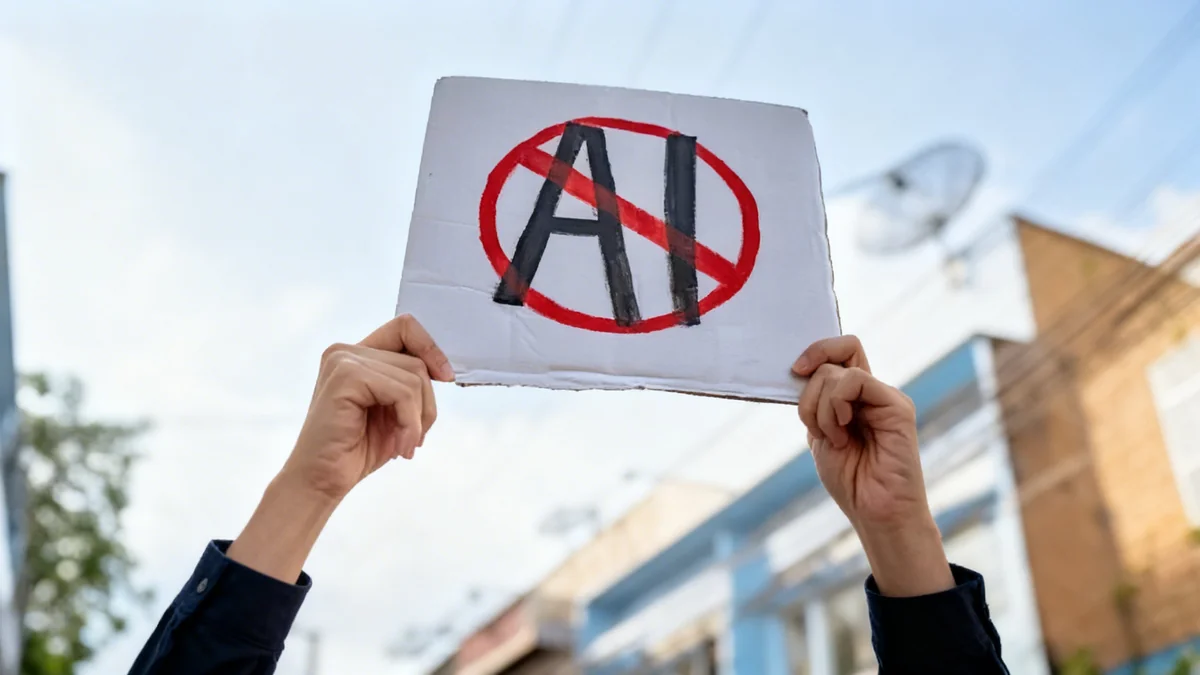

OpenAI is confronting a significant wave of user dissent following the announcement of a new agreement with the U.S. Department of Defense. The deal has prompted numerous users to cancel their ChatGPT subscriptions, citing ethical concerns over their data being used to support military applications and fueling a movement to switch to competitor platforms.
Key Takeaways
- OpenAI confirmed a new agreement to provide its AI technology to the U.S. Department of Defense, sparking immediate public criticism.
- A user-led movement to cancel ChatGPT subscriptions has gained traction online, with many citing the slogan they are no longer willing to "train a war machine."
- Rival AI chatbot Claude, developed by Anthropic, has seen a surge in popularity, reaching the number one spot on the App Store above ChatGPT.
- CEO Sam Altman acknowledged the poor timing and public perception of the deal, admitting the "optics don’t look good."
A Deal Sparks a Digital Protest
An agreement between OpenAI and the U.S. Department of Defense has ignited a firestorm of controversy, leading to a vocal and widespread user backlash. The deal, which involves the integration of OpenAI's advanced AI systems into military projects, was met with immediate criticism across social media platforms and online forums.
Many users expressed their disapproval by publicly announcing the cancellation of their ChatGPT subscriptions. A thread on the popular r/ChatGPT subreddit calling for users to abandon the service quickly became one of the forum's most upvoted posts, with the central argument being that subscribers were now inadvertently helping to "train a war machine."
The public outcry has translated into tangible gains for OpenAI's primary competitor, Anthropic. The company's AI chatbot, Claude, surged to the top of the App Store charts over the weekend, displacing ChatGPT from the number one position it has frequently held. This shift highlights a significant migration of users seeking an alternative they perceive as more ethically aligned.
The Anthropic Contrast
The controversy is amplified by the contrasting stance of Anthropic, a company founded by former OpenAI employees. Prior to OpenAI's announcement, Anthropic had reportedly refused to grant the Pentagon unrestricted use of its Claude AI. The company insisted on clear restrictions, specifically prohibiting the use of its technology for autonomous weaponry and the mass surveillance of U.S. citizens.
A Principled Stand with Consequences
Anthropic's refusal to comply with military demands was not without risk. Reports indicated that the Pentagon had threatened to designate the company a "supply chain risk," potentially excluding it from future federal contracts and even raising the possibility of seizing its technology. Despite these pressures, Anthropic held its ground, a decision that has now earned it considerable public goodwill.
While OpenAI CEO Sam Altman has stated that his company's agreement with the DoD includes the same restrictions Anthropic sought, the timing and optics have worked against him. For many observers, the act of finalizing a deal while a competitor held out on principle was seen as a capitulation.
Altman Addresses the Fallout
In an attempt to manage the escalating public relations crisis, Sam Altman hosted a rare Ask Me Anything (AMA) session on the social media platform X. He faced a barrage of critical questions from users concerned about the company's direction.
One user asked directly, "How did you go from ‘a tool for the betterment of the human race’ to ‘let’s work with the department of WAR’?" another pointedly noted Claude's rise in the App Store, to which Altman simply replied, "No," when asked if he was happy about it.
"Please come visit me in jail if necessary," Altman quipped when asked what OpenAI would do if ordered by the DoD to perform unconstitutional actions, such as mass domestic surveillance. He asserted that the company would refuse such orders.
Altman defended the partnership by expressing his faith in the U.S. military, stating that its members are "far more committed to the constitution than an average person off the streets." He also cited assurances from a DoD official who vowed not to infringe on civil liberties. However, these reassurances did little to quell the skepticism of users who pointed to the current administration's track record and historical precedents of government surveillance.
A Complicated Ethical Landscape
The situation was further complicated by reports emerging around the same time as the announcement. Just hours after the deal was made public, the U.S. and Israel conducted strikes in Iran. Subsequent reports suggested that military forces may have used AI—potentially even Anthropic's Claude despite its restrictions—to help in target selection, illustrating the complex and often opaque nature of AI's role in modern conflict.
An Admission of Misstep
Throughout the public questioning, Altman appeared to understand the damage done to the company's image. He conceded that the process and communication surrounding the agreement were flawed.
"It was definitely rushed, and the optics don’t look good," Altman admitted, a candid acknowledgment of the strategic error. This statement reflects an awareness that in the highly competitive and ethically scrutinized field of artificial intelligence, public trust is a critical asset.
The long-term consequences of this deal for OpenAI remain to be seen. While the company has secured a significant government partner, it has alienated a vocal segment of its user base and handed a powerful narrative victory to its closest rival. The episode serves as a stark reminder that for AI developers, navigating the intersection of technology, ethics, and geopolitics is becoming as important as building the technology itself.