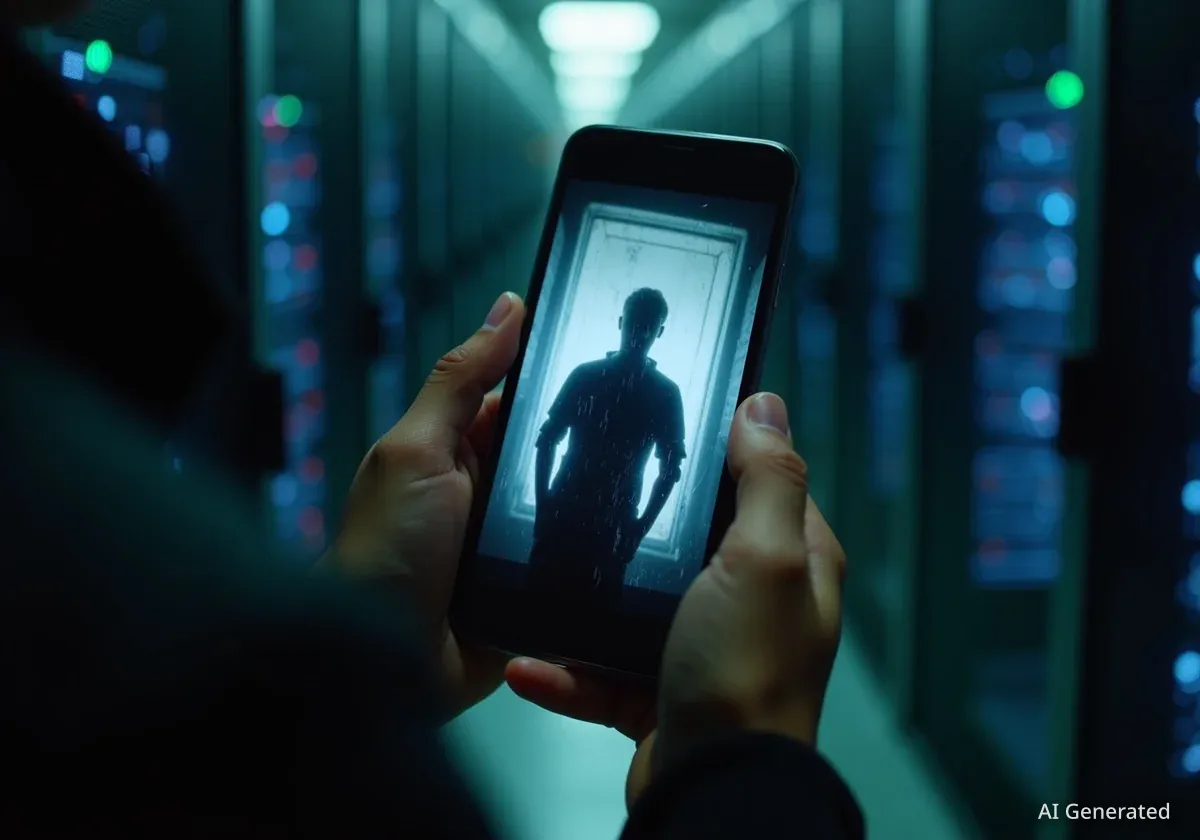


A new wave of artificial intelligence-generated videos is spreading across the internet, depicting false and racially charged scenarios designed to provoke outrage and influence political conversations. These clips, created with easily accessible AI tools, are amplifying harmful stereotypes and presenting a new challenge in the fight against digital misinformation.
Experts in technology and racial justice are raising alarms about the psychological impact of this content, which can reinforce biases even when viewers are aware the videos are fake. The ease of creation means that anyone with a simple text prompt can generate a realistic-looking video, making it a powerful tool for those looking to spread divisive narratives.
Key Takeaways
- New AI video generators like OpenAI's Sora and Google's VEO 3 can create realistic, fake videos from simple text prompts.
- These tools are being used to generate viral videos that promote racist stereotypes and misinformation.
- Experts warn that even if viewers know a video is fake, the imagery can have a lasting psychological impact and reinforce existing biases.
- This type of content is often used for "outrage farming" to stoke political division and social unrest.
The Ease of Creating Digital Falsehoods
The barrier to creating convincing fake videos has dropped dramatically. With the emergence of powerful AI models, what once required sophisticated visual effects software is now possible with a few lines of text. Platforms like OpenAI's Sora and Google's VEO 3 can interpret a user's prompt—even one with typos—and produce a short, high-quality video clip in moments.
This accessibility has opened the door for the rapid creation and dissemination of misleading content. Viral videos have recently surfaced showing fictional, inflammatory scenes, such as one depicting Black women screaming and pounding on a door with a caption claiming a store was under attack. Another fabricated clip showed distraught Walmart employees of color being loaded into a U.S. Immigration and Customs Enforcement (ICE) van.
These videos are not random creations; they are often tailored to tap into and amplify pre-existing societal prejudices. The speed at which they can be produced and shared on social media platforms makes them a potent form of modern propaganda.
Outrage Farming and Political Manipulation
Experts describe the strategy behind these videos as a form of "outrage farming." The goal is to generate strong emotional reactions, such as anger and fear, to drive engagement and deepen social divides. Rianna Walcott, associate director at the Black Communication and Technology (BCaT) Lab, notes that this is an evolution of tactics seen for years online.
"It's more of the outrage farming that we've always seen," Walcott explained, highlighting how AI accelerates and automates the process of creating provocative content.
A clear example of this occurred when fake videos circulated showing Black women discussing alleged abuse of their Supplemental Nutrition Assistance Program (SNAP) benefits during a government shutdown. The videos went viral, leading to online comments celebrating the financial hardship families faced from losing access to food assistance.
Fact Check: SNAP Demographics
Contrary to the narrative pushed by the fabricated videos, government data shows that the majority of SNAP recipients are predominantly non-Hispanic white individuals. This fact is often ignored in online discourse fueled by misinformation.
By targeting specific communities with false narratives, these AI-generated videos can directly influence political discourse, hardening opinions and making constructive dialogue more difficult. The content is designed not just to mislead, but to polarize.
The Lasting Psychological Impact
Even when a piece of AI-generated content is identified as fake, the damage may already be done. Experts in psychology and racial justice argue that the visual nature of these videos makes them particularly insidious. The images can linger in a person's mind, subtly reinforcing negative stereotypes.
Michael Huggins of the racial justice organization Color of Change emphasized this point in a recent interview. He warned of the subconscious effect of this imagery.
"Even if somebody knows that an image is false, it still goes into their psyche," Huggins stated. This process can strengthen implicit biases without the viewer's conscious awareness.
Organizational psychologist Janice Gassam Asare further noted that the seemingly trivial or entertaining nature of some of these clips is what makes them so dangerous. When misinformation is packaged as a joke or harmless fun, viewers may lower their critical defenses, making them more susceptible to the underlying message.
"That's exactly what it makes it so 'harmful'," Asare said, referring to the tendency to dismiss these videos as simple online content rather than recognizing them as tools for psychological manipulation.
An Uphill Battle for Tech Platforms
In response to the growing problem, technology companies have begun implementing safeguards. These measures include policies designed to prohibit racist content and reduce the spread of misinformation on their platforms. AI models are often trained to refuse prompts that are explicitly hateful or violent.
However, these precautions are not foolproof. Users often find ways to circumvent restrictions by using coded language or subtle prompts that AI systems may not recognize as harmful. The sheer volume of content being generated and shared makes manual moderation nearly impossible.
As AI technology continues to advance, the challenge of distinguishing between real and fake content will only become more difficult for both platforms and the public. The spread of AI-generated racist narratives represents a significant threat to social cohesion and an informed public, requiring a concerted effort from tech companies, educators, and media consumers to combat its effects.