

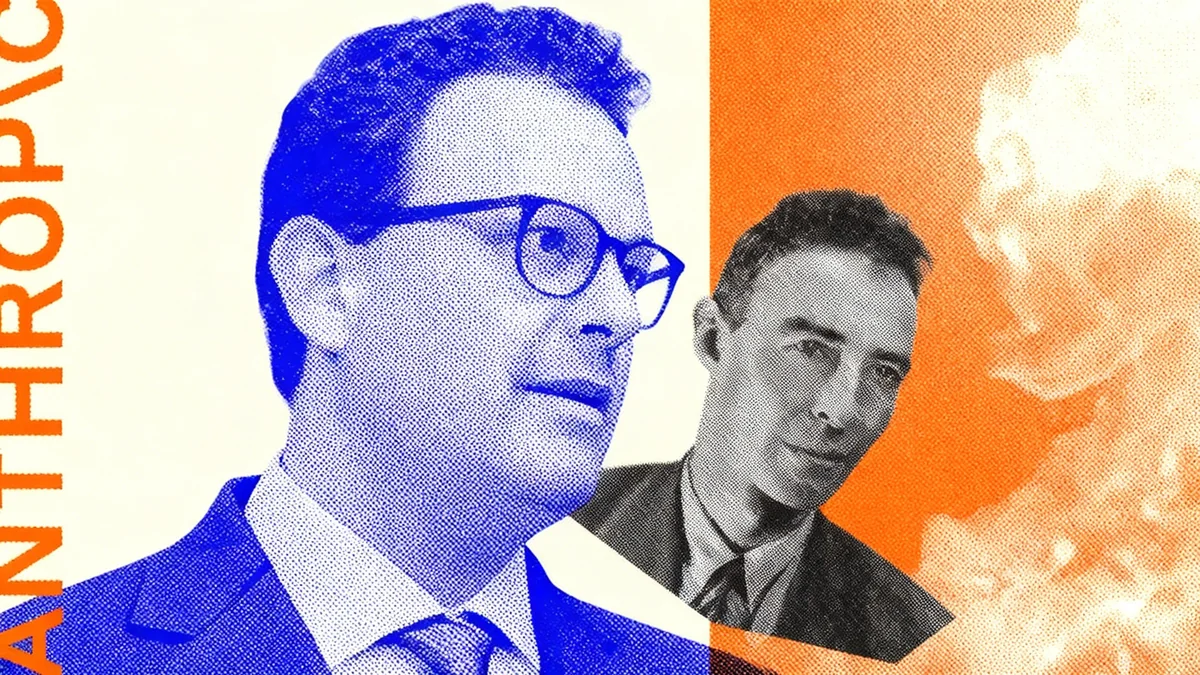


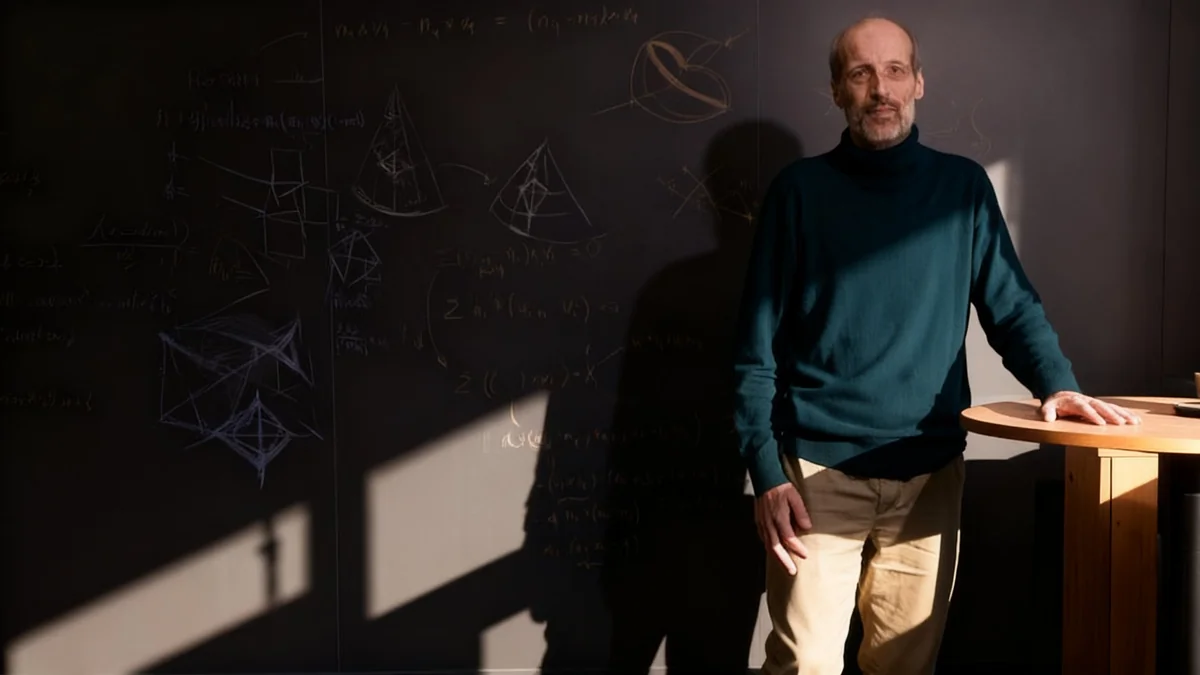
Yann LeCun, a foundational figure in modern artificial intelligence and a recipient of the Turing Award, has issued a stark warning to Silicon Valley. The computer scientist, who recently left his post as chief A.I. scientist at Meta, argues that the tech industry's current approach to building intelligent machines is fundamentally flawed and heading towards a dead end.
After more than a decade shaping AI strategy at one of the world's largest tech companies, LeCun contends that the massive investment in scaling up existing technologies will not lead to true artificial intelligence. His critique suggests that hundreds of billions of dollars could be spent on a path that ultimately fails to deliver on its promise.
Key Takeaways
- Yann LeCun, a Turing Award winner and former Meta AI chief, believes the tech industry's AI strategy is misguided.
- He argues the current focus on scaling large language models is a "dead end" and will not achieve true machine intelligence.
- LeCun's public criticism comes after his departure from Meta in November, following a 40-year career in the field.
- His perspective challenges the prevailing industry consensus and the investment of hundreds of billions of dollars into current AI development methods.
A Contrarian Voice from a Key Architect
Yann LeCun is not an outside observer. He is one of three researchers often called the "godfathers of AI," whose work on neural networks laid the groundwork for the very systems he now criticizes. His research is a cornerstone of the technology that powers today's most advanced chatbots and image generators.
For over a decade, he led AI research at Meta, the parent company of Facebook and Instagram, placing him at the epicenter of the industry's rapid advancements. His decision to become more vocal follows his departure from the company, allowing him to speak with greater freedom about the industry's trajectory.
LeCun's central argument is that the current "herd" mentality in Silicon Valley is misguided. The prevailing strategy involves building ever-larger models and feeding them more data, an approach he believes has fundamental limitations.
The Problem with Scale
The dominant belief among many leading tech companies is that increasing the size and complexity of AI models will eventually lead to Artificial General Intelligence (AGI), or machines with human-like reasoning and understanding. This has sparked an arms race, with companies pouring vast resources into computing power and data collection.
However, LeCun posits that this is a brute-force method that mistakes mimicry for intelligence. He suggests that these systems are becoming incredibly proficient at pattern recognition and text prediction but lack the underlying understanding of the world that is essential for genuine intelligence.
The Turing Award Connection
In 2018, Yann LeCun, alongside Geoffrey Hinton and Yoshua Bengio, received the A.M. Turing Award, often referred to as the "Nobel Prize of computing." The award recognized their foundational work on deep neural networks, the technology that underpins the current AI boom. LeCun's current critique is significant because it comes from one of the technology's original architects.
The Risk of a Costly Misdirection
The financial stakes are immense. The development and training of state-of-the-art AI models require enormous capital investment in specialized hardware and energy. LeCun's warning implies that the industry is marching down a path that could consume years of work and hundreds of billions of dollars before hitting an unavoidable wall.
This perspective challenges the narrative of inevitable progress that has fueled a massive wave of investment and public excitement. While current AI systems have demonstrated impressive capabilities, LeCun's critique focuses on the long-term goal of creating truly intelligent machines.
"He argues that the technology industry will eventually hit a dead end in its A.I. development — after years of work and hundreds of billions of dollars spent."
This potential dead end, he suggests, is not a minor setback but a fundamental miscalculation of what is required to build machines that can reason, plan, and understand the world in the way humans do.
Searching for an Alternative Path
While LeCun has been vocal in his criticism, his goal is not simply to tear down the current paradigm. Instead, he advocates for the exploration of different architectures and approaches to AI. He has long been a proponent of models that can learn more about the world through observation and interaction, similar to how animals and humans learn.
His research has often focused on creating systems that can build internal models of the world, allowing them to predict outcomes and reason about consequences. This stands in contrast to large language models, which primarily learn from vast amounts of text data.
A Career of Innovation and Dissent
- Early Work: Yann LeCun's research at Bell Laboratories in the 1980s and 1990s was pivotal in developing convolutional neural networks (CNNs), a technology now essential for computer vision.
- Industry Leader: He served as the chief A.I. scientist at Meta (formerly Facebook) for over a decade, guiding its research efforts.
- Academic Roots: He has maintained strong ties to academia, particularly as a professor at New York University.
The Industry's Response
LeCun's reputation ensures that his words carry significant weight within the AI community. While many companies remain committed to their current strategies, his arguments are forcing a conversation about the long-term viability of the scaling-up approach.
His public statements are part of a broader debate within the field about the true nature of intelligence and the best way to replicate it in machines. As one of the original pioneers, his perspective serves as a powerful reminder that the path to truly intelligent AI may be far more complex than simply building bigger models. The industry, he warns, must be willing to explore alternative routes before it invests too heavily in a single, potentially flawed, direction.