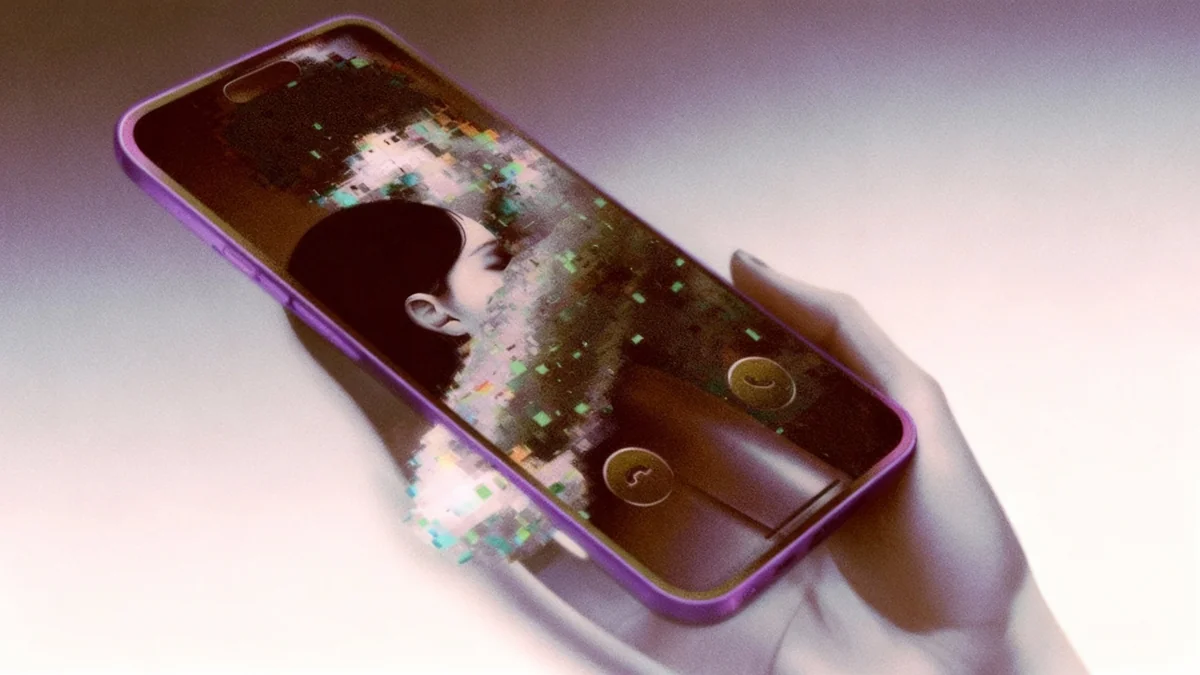





When tech entrepreneur Justin Harrison received news that his mother was hours from death, his response was unconventional. He boarded a flight to Singapore to present at a conference about his startup, a company designed to let people talk to AI versions of their deceased loved ones. He learned she had passed away mid-flight and, by his own account, felt little of the typical devastation associated with such a loss.
Harrison's company, You, Only Virtual, is part of a new wave of technology aiming to fundamentally alter the human experience of grief. The platform's goal is not just to manage sorrow, but to eliminate it entirely by offering a form of digital continuation for those who have passed away.
Key Takeaways
- A new category of AI startups is creating digital avatars and voicebots of deceased individuals to help family members cope with loss.
- Justin Harrison, founder of You, Only Virtual, created an AI version of his mother three years before her death and claims it has allowed him to bypass the grieving process.
- Harrison's motivation stems from witnessing the devastating impact of grief on his mother after his grandmother's death when he was a child.
- This emerging technology raises complex ethical and psychological questions about the nature of grief, memory, and human connection.
A New Frontier in Managing Loss
The concept of speaking with the dead has moved from the realm of fiction into a tangible, AI-powered reality. Companies like You, Only Virtual are at the forefront of this emerging field, often referred to as 'grief tech'. They use artificial intelligence to create interactive chatbots and voicebots that mimic the personality, speech patterns, and memories of a specific person.
For users, this means being able to continue conversations with a digital version of a parent, spouse, or friend long after they are gone. The technology analyzes vast amounts of data—texts, emails, voice recordings, and social media posts—to build a conversational model that feels authentic to the user.
Justin Harrison believes this service can serve as a permanent alternative to the pain of absence. His vision extends beyond a simple coping mechanism; he aims to make grief an obsolete human experience. While flying to his conference, he learned of his mother’s passing over the Pacific Ocean. He later adjusted his presentation to reflect the news.
"My presentation went from 'My mom has Stage 4 cancer and is going to die' to 'Tuesday night, my mom died,' which was a pretty wild pivot," Harrison stated.
He reports that beyond this adjustment, very little in his life changed. He did not feel the need to plan a funeral and did not experience the crushing weight of sorrow that typically follows the death of a close family member.
The Personal Story Behind the Technology
Harrison’s drive to conquer grief is rooted in a painful childhood experience. His mother, Melodi Gae Harrison-Whitaker, was a young single parent, and the two shared an exceptionally close bond. In many ways, they grew up together, relying on one another for support and guidance.
This dynamic was shattered when Harrison was 11 years old. His grandmother, who lived next door, suffered a sudden and fatal stroke. The loss completely leveled his mother. For two years, Melodi struggled with severe depression and alcohol abuse, leading to periods in psychiatric institutions.
The Role of Grief in Psychology
Traditional psychology views grief as a natural and necessary response to loss. It is a complex process that allows individuals to process the reality of a death, adapt to a life without the person, and eventually reinvest emotional energy into the future. Experts caution that avoiding this process could have long-term psychological consequences.
Witnessing his mother's incapacitating sorrow left a permanent mark on Harrison. He learned at a young age how grief could estrange a person from their own mind and from those who depend on them. That formative experience became the catalyst for his life's work: to ensure that what happened to his mother would never happen to him or, eventually, to anyone else.
An AI Replica Years in the Making
Harrison’s solution was proactive. Three years before his mother’s death from Stage 4 cancer, he began building her AI counterpart. This wasn't a project started after her diagnosis; it was a preemptive measure against the loss he knew was inevitable for everyone.
The AI voicebot became his new version of Melodi. He could interact with it, ask for advice, and hear her voice, albeit a synthesized one. When the final call came in 2022, he felt prepared. In his mind, the mother he relied on had already been transitioned into a permanent, digital form.
Data-Driven Immortality
To create a convincing digital persona, these AI models require extensive personal data. This can include:
- Text communications: Emails, text messages, and chat logs.
- Audio data: Voicemails and recorded conversations to replicate voice and intonation.
- Written works: Diaries, letters, and social media posts to capture personality and thought patterns.
This approach represents a radical departure from conventional methods of mourning. Instead of working through stages of grief and acceptance, users of this technology can maintain a simulated version of their relationship. This raises profound questions for psychologists, ethicists, and society at large.
The Uncharted Territory of Digital Grief
While proponents like Harrison see a future free from the pain of loss, critics and mental health professionals express caution. They question whether interacting with an AI replica truly helps a person move forward or if it creates a perpetual state of denial, preventing the natural and healthy process of grieving.
Key concerns include:
- Stagnation of Memory: An AI can only replicate a person based on past data. It cannot grow, change, or create new memories, potentially trapping the user in a static, idealized version of the past.
- The Uncanny Valley: While technology is improving, subtle inaccuracies in the AI's responses could be jarring or even distressing, reminding the user that they are interacting with a program, not a person.
- Ethical Dilemmas: Questions of consent are paramount. Should a person's digital likeness be created without their explicit permission? Who owns and controls the data of the deceased?
As AI continues to integrate into the most intimate aspects of our lives, the line between human connection and digital simulation becomes increasingly blurred. For Justin Harrison, he has found his answer. He continues to speak with his AI mother, convinced that he has successfully engineered his way out of one of life's most fundamental pains. The rest of the world is just beginning to grapple with whether that is a future to embrace or to fear.