

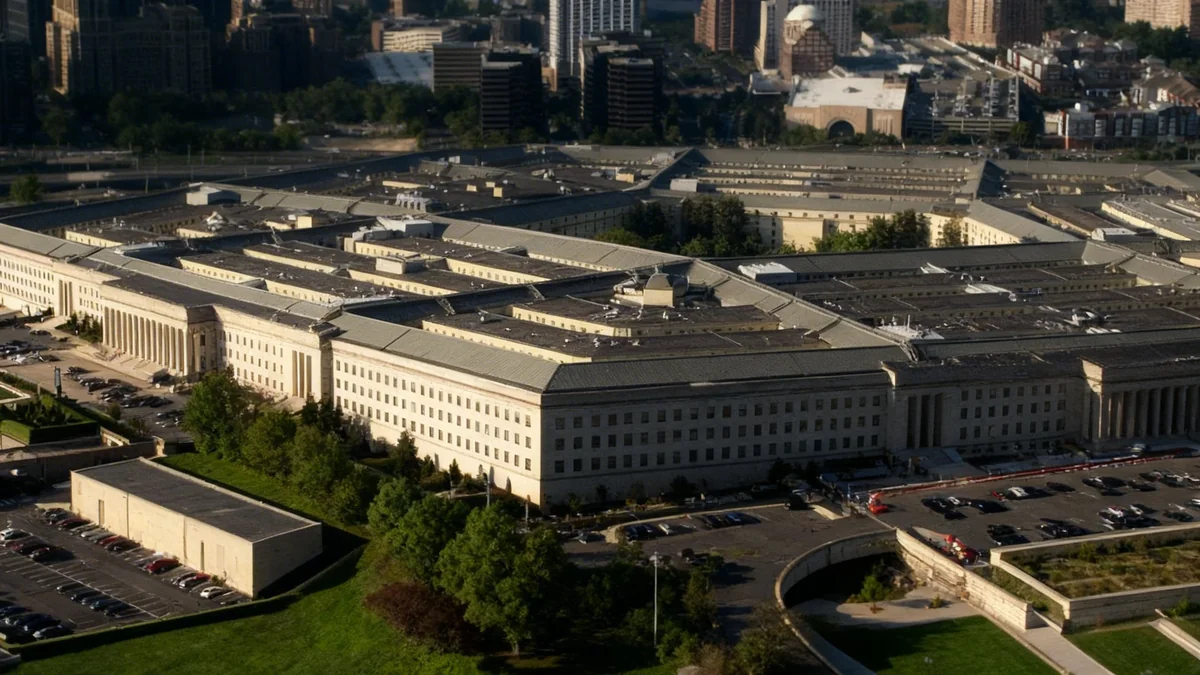

A leading U.S. artificial intelligence firm is in sensitive negotiations with the Pentagon over the future of its military contracts, a situation sparked by the controversial January raid intended to capture Venezuelan leader Nicolás Maduro. People familiar with the matter confirm that defense officials have raised serious concerns, casting a shadow over a once-solid partnership that is critical to national security infrastructure.
The discussions are now at a pivotal stage, with the outcome potentially reshaping how the U.S. military collaborates with private technology companies on high-stakes operations. The fallout from the January mission has moved beyond a simple operational review and into a fundamental questioning of trust and technological overreach.
Key Takeaways
- A major U.S. artificial intelligence company's partnership with the Pentagon is currently under review.
- The re-evaluation follows a controversial military operation in January to capture Venezuelan leader Nicolás Maduro.
- Pentagon officials are reportedly questioning the reliability and ethical framework of the AI systems used.
- The negotiations could set a new precedent for public-private partnerships in the defense technology sector.
Fallout from the January Operation
The relationship between the prominent AI firm and the Department of Defense soured following the complex operation in Venezuela. While the specific details of the mission remain classified, sources indicate that AI-driven intelligence was central to its planning and execution. The subsequent questions from Pentagon leadership suggest that the results did not align with expectations or that the technology's performance raised unforeseen ethical and operational risks.
This incident has forced a difficult conversation inside the defense community about the appropriate level of reliance on autonomous systems in live combat and intelligence-gathering scenarios. The firm, a pioneer in predictive analytics and data processing, had been deeply integrated into various military programs.
A History of Collaboration
For years, the Pentagon has actively sought partnerships with Silicon Valley to maintain a technological edge. These collaborations are seen as essential for modernizing the U.S. military, from logistics and supply chain management to advanced battlefield analytics and autonomous weapons systems. This particular firm was considered a flagship example of this successful integration.
A Crisis of Confidence
At the heart of the ongoing negotiations is a crisis of confidence. According to individuals close to the discussions, military officials are scrutinizing the AI's decision-making processes during the raid. The core of the issue appears to be whether the system's recommendations were sound, and if human oversight was sufficient to prevent potential errors in a high-pressure environment.
The firm has been asked to provide comprehensive data on the system's performance and the logic behind its operational inputs. This level of transparency is unprecedented and highlights the gravity of the Pentagon's concerns.
"When you delegate critical functions to an algorithm in a kinetic operation, the standards for accountability are absolute," a senior defense analyst commented on the condition of anonymity. "If that trust is broken, the entire framework for future AI integration is at risk."
The situation is further complicated by a growing public debate over the ethics of AI in warfare. Activist groups and some tech industry insiders have long warned about the dangers of an over-reliance on automated systems, citing the potential for catastrophic mistakes and the challenge of assigning accountability.
The Future of AI in Defense
The outcome of these negotiations will have far-reaching implications. If the partnership is dissolved or significantly scaled back, it could send a chilling message to other technology companies considering work with the military. This could potentially slow down the adoption of crucial innovations needed for national defense.
Conversely, if the two parties can establish a new framework with enhanced oversight and clearer ethical guidelines, it could become a model for future collaborations. The key points of discussion reportedly include:
- Enhanced Oversight: Implementing more robust human-in-the-loop protocols for all critical AI-driven decisions.
- Data Transparency: Granting the military deeper access to the AI's underlying models and training data.
- Ethical Guardrails: Jointly developing stricter rules of engagement for autonomous and semi-autonomous systems.
- Performance Metrics: Establishing clearer benchmarks for success and failure in operational deployments.
The Multi-Billion Dollar Question
The defense technology sector is a massive market. Contracts for AI and data analytics with the Department of Defense are often valued in the hundreds of millions, if not billions, of dollars. The financial stakes for the firm involved are incredibly high, as is the strategic cost to the Pentagon if it loses a key technology partner.
Broader Implications for National Security
This conflict between a key technology provider and its military client is more than a contractual dispute. It reflects a fundamental tension in modern warfare: the need to innovate rapidly versus the imperative to maintain control and ethical integrity. As adversaries of the United States also invest heavily in AI, any slowdown in American development is seen as a direct threat to national security.
Military planners are now grappling with a difficult choice. Continuing the partnership without significant changes could risk another operational controversy. However, ending it could mean losing access to best-in-class technology that is vital for staying ahead of global competitors.
As the negotiations continue behind closed doors, the tech and defense worlds are watching closely. The resolution will not only determine the fate of one company's contract but will also help define the very nature of the 21st-century battlefield and the role that artificial intelligence will play in shaping it.