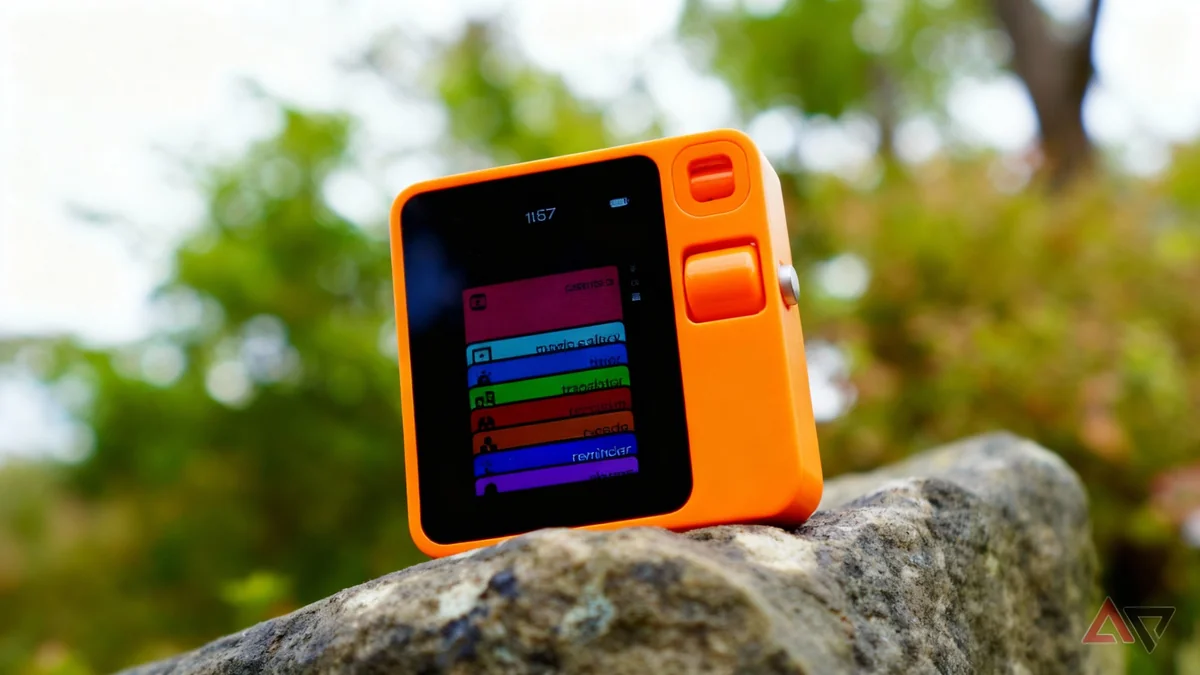





The Rabbit R1, a device once widely dismissed as a failure, has undergone a significant transformation more than a year after its initial release. Through a series of major software updates, the company has reshaped the gadget's core functions, moving it from a flawed AI assistant to a niche tool for developers and hobbyists, raising questions about second chances in the fast-paced tech world.
Key Takeaways
- The Rabbit R1's software has been completely overhauled with RabbitOS 2, changing its user interface and core functionality.
- The device has pivoted from being a general-purpose AI assistant to a specialized gadget for creating small applications through conversational AI.
- Despite improvements, significant challenges remain, including poor battery life and a new, costly subscription model for advanced features.
- The R1's initial negative reputation continues to affect public perception, even with the substantial software enhancements.
A Disastrous Debut
When the Rabbit R1 launched, it was met with near-universal criticism. The $200 device promised to simplify smartphone tasks using a conversational AI, but early adopters found it slow, unreliable, and largely non-functional. Promised features, such as ordering food or booking transportation, consistently failed to work, leading to reviews that labeled the product pointless.
The hardware itself—a compact, bright orange square with a tactile scroll wheel and a rotating camera—was praised for its unique and playful design. However, the software experience was so poor that the physical appeal was irrelevant. Many early buyers felt the device was an unfinished prototype, and its reputation quickly soured, often being compared to other disappointing AI hardware launches of the era.
The Burden of First Impressions
The initial failure of the Rabbit R1 highlights a critical challenge for hardware startups. Unlike software that can be quietly updated, a physical product launch is a major event. A negative first impression can be difficult to overcome, as the device becomes synonymous with its early flaws in the public's mind.
The Shift to RabbitOS 2
Instead of abandoning the project, Rabbit has continued to support the R1 with consistent software updates. The most significant of these is RabbitOS 2, released in September 2025, which fundamentally changes what the device is and who it is for. The update introduces a more logical, card-based menu system that simplifies navigation and clarifies the device's capabilities.
Most importantly, the company has pivoted away from the original AI assistant concept. The focus is now on a feature called "Creations," which allows users to build small applications and functions by having a conversation with the device's AI, a process referred to as "vibe coding."
A New Purpose for Tinkerers
This new direction has cultivated a small but active community of hobbyists and developers. Users can now create simple games, custom tools, and other small programs directly on the device. These creations can be easily shared and installed on other R1 units using QR codes, fostering a collaborative environment.
The AI chatbot's conversational abilities have also seen dramatic improvements. It can now handle more complex, multi-turn conversations, offering recommendations for entertainment and understanding context in a way that feels more natural than before. Standard features like a translator, voice recorder, and alarms have also been refined.
Magic Camera and the Rabbithole
One of the R1's original features, the Magic Camera, remains a highlight. It takes a photo and then uses AI to generate an artistically re-imagined version. These images, along with voice interaction logs and coding projects, are stored on the company's "Rabbithole" web portal.
Persistent Problems and New Costs
Despite the significant improvements, the Rabbit R1 is still far from a mainstream product. Several major issues persist, chief among them being its battery life. The device drains power quickly, especially when using the more intensive AI and coding features, and even standby time is poor. For a portable gadget, this remains a critical flaw.
Furthermore, Rabbit has introduced a new pricing structure that adds significant cost on top of the initial $200 hardware purchase. Using the R1 on the go requires a separate SIM card and data plan. More controversially, access to the advanced "Intern" AI for coding is now a subscription service.
- A user gets three free "vibe-coded tasks."
- An additional three tasks cost $30.
- A plan for 30 tasks per month costs a staggering $100 per month, or $840 annually.
This pricing model positions the R1 as an expensive tool for a very specific niche, rather than the accessible AI companion it was first marketed as. For those still unsatisfied, the company does offer a final option: replacing RabbitOS entirely with a version of Android.
Can Reputation Be Repaired?
The story of the Rabbit R1 is a fascinating case study in product development and reputation management. Had the device launched in its current state, it likely would have been received as an interesting, if niche, gadget for developers. Instead, it carries the baggage of its failed launch, making it difficult to attract new users.
The core challenge for Rabbit is convincing potential buyers that the R1 of today is not the same device that was so heavily criticized at launch. Reputations in the tech industry are sticky, and overcoming a disastrous first impression is a monumental task.
The company's commitment to improving the R1 is commendable and has generated some goodwill ahead of a teased successor, the Rabbit R2, which may be released in 2026. By continuing to support its first product, Rabbit may be trying to prove it can be trusted not to repeat its past mistakes. However, whether enough consumers are willing to pay a premium for a device that still does little more than their existing smartphone remains an open question.